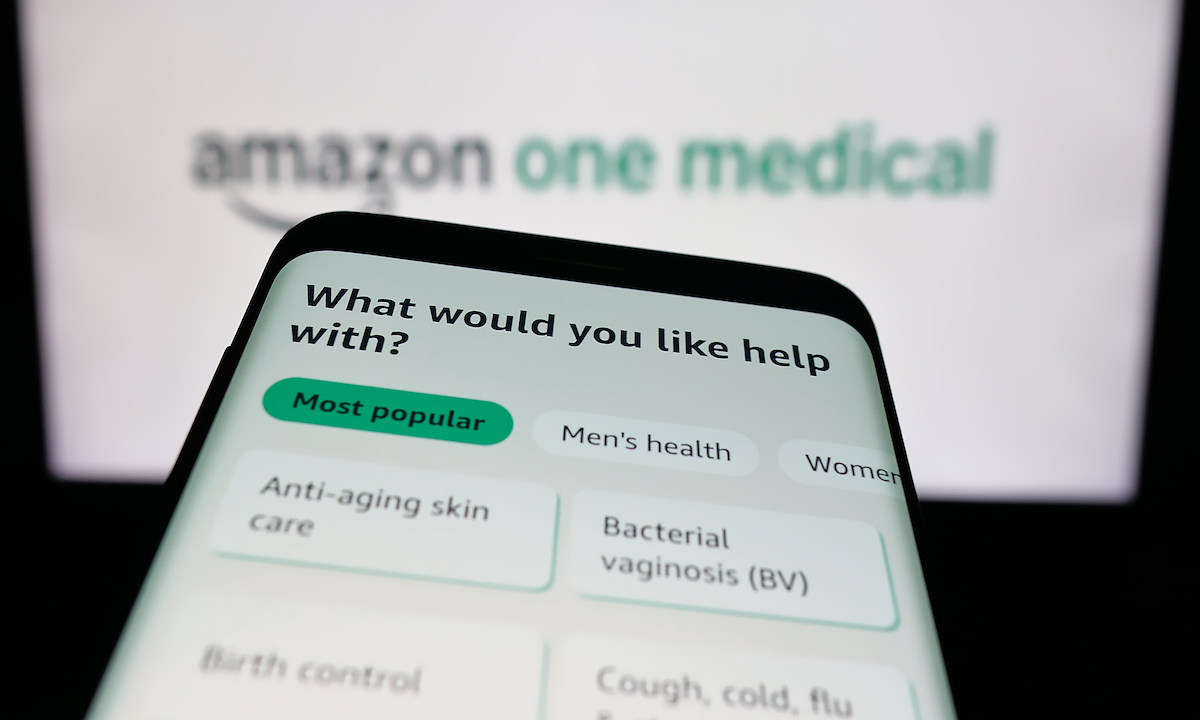
The agentic AI tool, announced Wednesday (Jan. 21), is designed to help with things like answering health questions, scheduling appointments and managing medications.
“The U.S. health care experience is fragmented, with each provider seeing only parts of your health puzzle,” said Neil Lindsay, senior vice president of Amazon Health Services. “Health AI in the One Medical app brings together all the pieces of your personal health information to give you a more complete picture—helping you understand your health, and supporting you in getting the care you need to get and stay well.”
Developed with One Medical’s clinical leadership, the Health AI assistant offers 24/7 personalized health guidance grounded in the patient’s unique medical history, the announcement said. When clinical expertise is required, the assistant connects patients to their care team via messaging or by reserving a same or next day appointment.
The launch comes as AI continues to become embedded into the health field. As covered here last year, research indicates that nearly half of healthcare and life-sciences organizations have generative AI in production use, in many instances for documentation, administrative work and early-stage clinical summaries.
Meanwhile, more than half of doctors surveyed by the American Medical Association said that artificial intelligence tools could meaningfully bolster core clinical functions.
“Among respondents, 72% said AI could improve diagnostic ability, 62% said it could enhance clinical outcomes and 59% said it could strengthen care coordination,” PYMNTS wrote last month in a report on artificial intelligence use in the health field.
In another recent report, PYMNTS noted that the rapid expansion of AI as a healthcare entry point provides clear benefits while presenting some unresolved risks.
On the benefit side, AI can help deal with the demand that healthcare systems have trouble managing efficiently. By resolving basic questions, clarifying medical language, and helping users deal with complex insurance and administrative issues, AI reduces friction for patients and providers alike.
“At the same time, scale magnifies risk. Generative AI can produce responses that sound authoritative but are incomplete or incorrect, and errors in healthcare carry higher stakes than in most consumer applications,” the report added. “Researchers and clinicians have warned that AI may generate unsafe guidance when users lack context or ask ambiguous questions.”