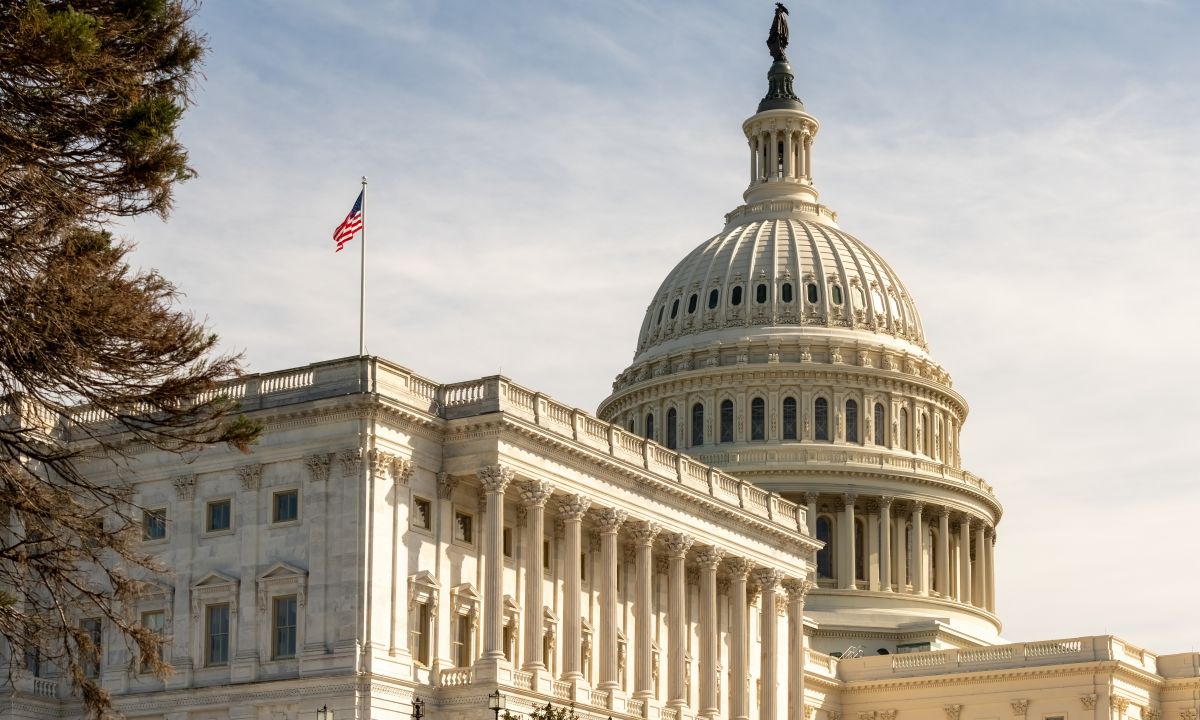
The Clarity Act may be a dead letter in the current Congress.
Senate Majority Leader John Thune (R-S.D.) has scheduled a make-or-break procedural vote for next Tuesday (Sept. 15) on whether to formally take up the bill. Even if the motion to proceed gets the 60 votes needed for passage, however, it would only allow the Senate to begin debate on the underlying legislation with time running out on the legislative calendar before the Nov. 3 midterm elections. Thune would still need to force an end to debate through additional procedural steps for the bill to come to a vote.
Currently, neither vote is looking likely to go his way. With a 53-47 Republican majority, the motion to proceed would need seven Democrats to cross the aisle to reach the 60-vote threshold needed for passage. Thune may also lose two Republican votes, from Sens. Rand Paul (R-Ky.) and Josh Hawley (R-Mo.), on procedural grounds, according to Galaxy Research’s August analysis, which would mean nine Democrats are needed for passage.
Even if Thune manages to get the bill over the goal line in the time remaining, moreover, it would still need to go back to the House for approval, and the House has already gone into recess until after the elections. The only option then would be a vote in the lame-duck session of the current Congress between the elections and the swearing in of the new Congress on Jan. 3.
The midterm elections, however, are likely to remake the complexion of Congress, perhaps dramatically so. The Republicans are widely expected to lose control of the House, where they currently have a bare four seat majority, and are in danger of losing control of the Senate as well, according to long-time election analyst Charlie Cook. Loss of control of either chamber would cost the GOP control of the floor schedule and with it, the ability to call a vote.
It wasn’t supposed to happen this way. The Clarity Act was supposed to be the easy part after enactment of the GENIUS Act stablecoin law in July. The Digital Asset Market Clarity Act is designed to draw statutory lines of jurisdiction between the Securities and Exchange Commission and the Commodity Futures Trading Commission on oversight of digital assets.
Currently, the two agencies rely on a joint interpretation issued in spring 2026 that names 16 tokens, including XRP, SOL and DOGE, as digital commodities under the jurisdiction of the Commodity Futures Trading Commission (CFTC). Digital securities, such as tokenized stocks or bonds, as well as assets offered via investment contracts, fall under the Securities and Exchange Commission (SEC). Both agencies have also issued regulations meant to achieve many of the goals of the Clarity Act.
The joint interpretation lacks statutory support, however, and could be revoked or revised by future administrations, leaving traders, investors and issuers with little of the regulatory clarity the Clarity Act is intended to provide.
Although the Clarity Act passed the House easily last year, an ethics provision added to the bill in the Senate has held up progress in the upper chamber. The provision would bar the president, vice president, members of Congress and their spouses from issuing or sponsoring digital assets while in office. The provision was added in response to President Trump and his family’s extensive crypto dealings, including issuing Trump meme coins and payment tokens.
Even at that, however, Democrats led by Sen. Elizabeth Warren (D-Mss.) argue the provision does not go far enough to curb corruption and conflicts of interest, and oppose the Clarity Act on those grounds. They want the provision’s current 2029 sunset extended and for state attorneys general to share enforcement authority with the Justice Department.
The White House, however, has called the provision a non-starter, and warned that including it would cost Republicans presidential support for the measure altogether.
All may not be lost for supporters of the bill, however. Singapore, the European Union and Japan have all put digital asset frameworks in place, increasing pressure on both parties to find a compromise that would allow the U.S. to maintain its leadership in crypto finance. Both the SEC and CFTC also have additional rulemakings teed up in the event the Clarity Act doesn’t pass, which could further sideline Congress and allow digital asset markets to continue to evolve without it if lawmakers don’t act.