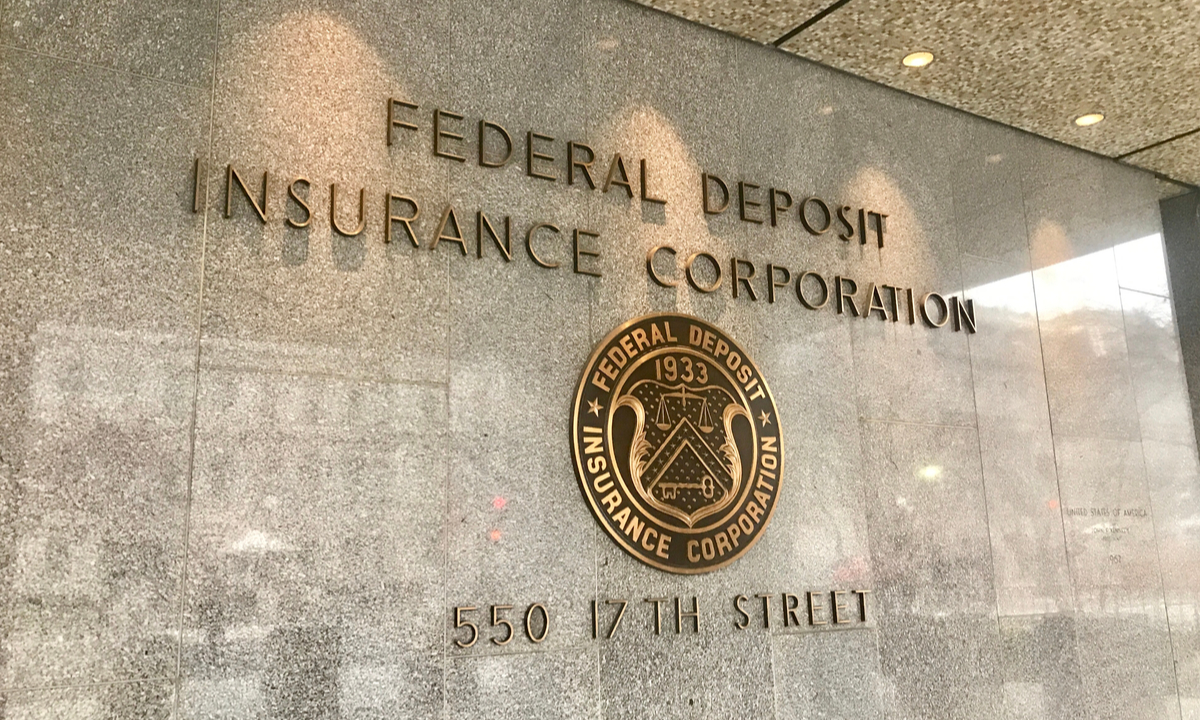
The Federal Deposit Insurance Corporation (FDIC) has approved deposit insurance for a proposed national bank built in part around digital assets and stablecoins. The approval provides one of the clearest signals yet that federal regulators are willing to bring cryptocurrency-focused business models inside the federally insured banking system.
The FDIC approved the application of Dallas-based Augustus National Bank, which plans to combine conventional deposits and lending with virtual currency, payments and treasury services. The bank received preliminary conditional approval for a national charter from the Office of the Comptroller of the Currency in May and must satisfy additional conditions and obtain other regulatory approvals, including from the Federal Reserve, before opening.
Augustus plans to serve customers including digital-asset and technology companies and international financial institutions. Its Juno Moneta subsidiary also intends to provide stablecoin issuance and redemption, custody, conversion and payment services, subject to authorization under the GENIUS Act.
According to Consumer Financial Insights, the approval signals increasing regulatory willingness to accommodate stablecoin and other digital-asset activities within the traditional insured-banking system.
That represents another step in a regulatory shift that has accelerated since 2025. Per CFI, federal banking agencies have moved away from treating crypto-related activities as exceptional businesses requiring special supervisory clearance and toward regulating them through the same prudential framework applied to other permissible banking activities.
The FDIC last year withdrew previous guidance requiring supervised banks to notify the agency before engaging in crypto-related activities. Banks can now undertake permissible digital asset activities without receiving prior FDIC approval, provided they adequately manage the associated risks.
The Federal Reserve similarly withdrew guidance requiring advance notification of planned crypto activities. The OCC, meanwhile, reaffirmed that national banks can engage in cryptocurrency custody, certain stablecoin activities and distributed-ledger networks without first obtaining supervisory non-objection.
Augustus pushes that evolution a step further. Regulators are no longer simply telling established banks that certain digital asset activities are permissible. They are approving institutions whose proposed business models incorporate those activities from the outset.
The shift does not mean digital asset banking is escaping regulation, however. The FDIC conditioned its Augustus approval on traditional prudential requirements, including at least $73.66 million in initial capital and a minimum 10% leverage ratio during its first three years of operation.
Regulators are also building out a federal framework for stablecoins following enactment of the GENIUS Act. In April, the FDIC proposed standards for permitted payment stablecoin issuers covering reserves, redemption, capital and risk management. It subsequently proposed extending the Bank Secrecy Act’s anti-money laundering (AML) and sanctions requirements for those issuers.
The emerging framework reflects a policy of regulatory integration more than deregulation. It moves digital-asset activities inside the banking regulatory perimeter, but institutions conducting them must accept familiar capital, liquidity, governance, AML and supervisory requirements.
That could have competitive implications for established financial institutions.
The OCC is simultaneously considering or approving digital-asset charter applications involving Coinbase and Morgan Stanley. National trust banks can provide services such as digital-asset custody and settlement, but Augustus represents a potentially broader model because it would combine digital-asset services with insured deposits and traditional lending.
Greater regulatory acceptance of such models could put pressure on conventional banks to expand their own offerings in crypto custody, tokenized deposits, stablecoin payments and blockchain-based settlement.
The development also comes as states modernize money-transmission laws to encompass virtual currency and Congress creates federal frameworks for stablecoins and digital asset markets.
Taken together, those changes suggest the regulatory debate is moving beyond whether digital assets belong within mainstream finance. Increasingly, regulators are determining how they can be brought inside established financial institutions and supervisory structures.