

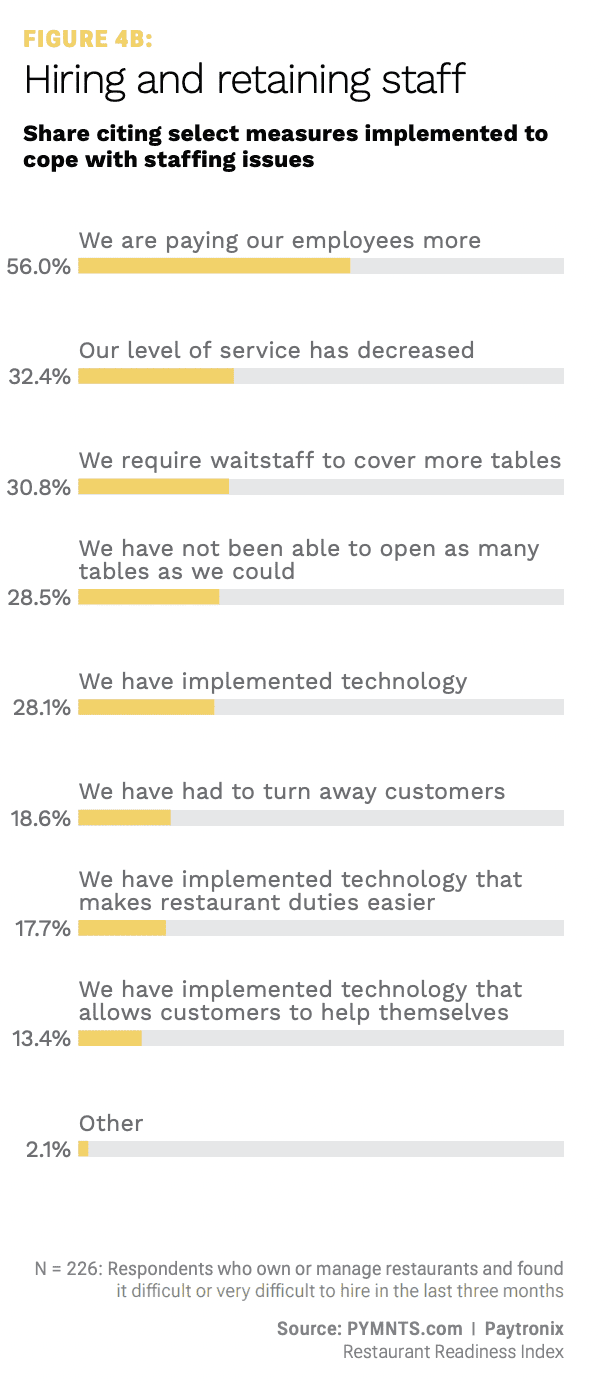
 As restaurants’ labor challenges continue, many are passing the burden onto consumers, offering a lower quality of service.
By the Numbers
Research from the 2022 edition of PYMNTS’ Restaurant Readiness Index, created in collaboration with Paytronix, drew from a survey of more than 500 managers of quick-service restaurants (QSRs) and full-service restaurants (FSRs) across the country, found that 32% of restaurants report that their level of service has decreased as a result of staffing issues.
Read more: More Than Half of Restaurants Depend on Digital Sales, Despite Uptick in On-Premises Orders
The Data in Action
This dilemma has many restaurants turning to robotics to mitigate their labor needs. Seattle-based kitchen automation company Picnic announced earlier this month a partnership with robotic restaurant company Speedy Eats to deploy the former’s automated food preparation and production station in 5,000 restaurants within the next five years.
See also: Robotic Pizza Makers Grab Larger Slice of Restaurant Automation Pie

We’re always on the lookout for opportunities to partner with innovators and disruptors.
Learn More