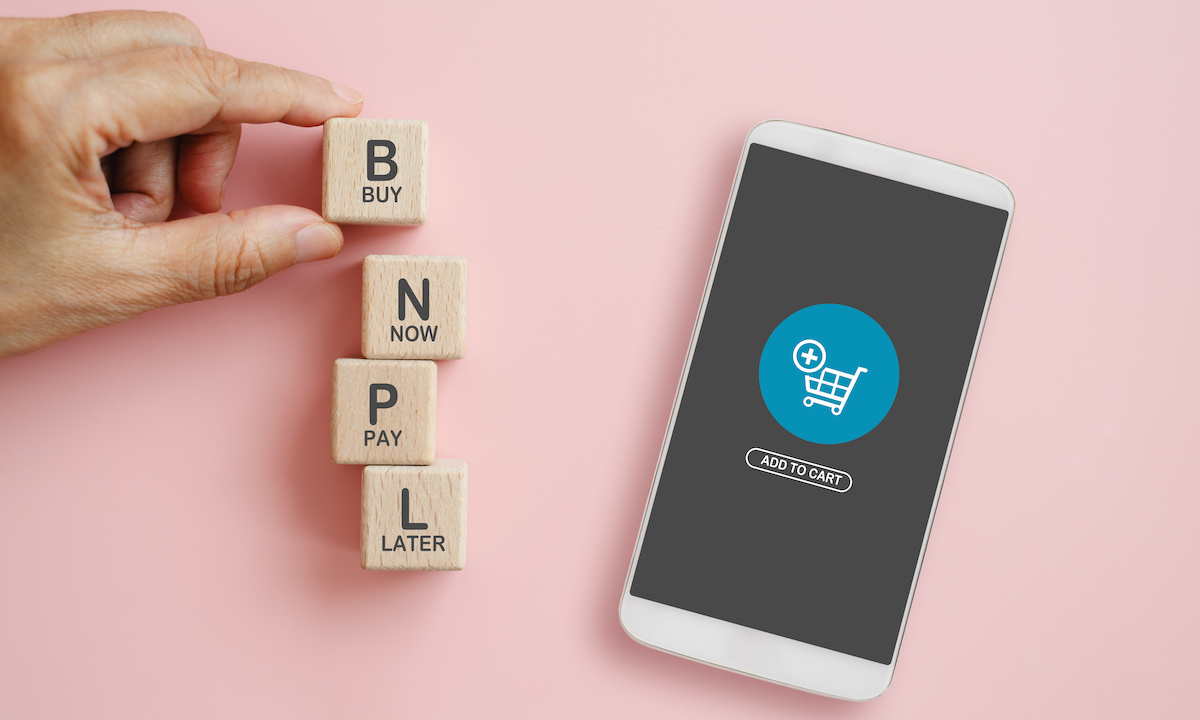
Merchants may treat buy now, pay later (BNPL) as a standard checkout option, but state licensing rules could determine where particular installment plans can actually be offered.
Oregon is the latest example. The state’s Division of Financial Regulation (DFR) has proposed a bulletin telling nonbank BNPL lenders and BNPL service providers that they must obtain a payday and/or consumer-finance license through the Nationwide Multistate Licensing System before transacting business in Oregon, with the applicable license determined by the repayment period. The requirement would apply even when a product is described as nonrecourse or carries no interest or fees at purchase.
BNPL, of course, has evolved well beyond a single pay-in-four product. Providers put several repayment choices alongside one another, from four interest-free installments to longer interest-bearing plans.
As PYMNTS CEO Karen Webster wrote this week, consumers assemble those options into a portfolio of payment choices. PYMNTS Intelligence data has demonstrated that 88% of recent BNPL users prefer providers that let them choose how many payments to split a purchase into. Consumers also use multiple providers: 57% had used two or more within three months.
Against that backdrop, licensing is more than a compliance department concern. Different products from the same provider can have different lenders, terms and regulatory treatment, creating the possibility that the menu visible at checkout will vary by state.
State BNPL Regulations Are Diverse and Complex
Oregon is not alone in moving licensing closer to the center of BNPL regulation, although states are taking different routes.
New York provides an example. The state enacted a BNPL law in 2025 establishing a specific licensing and supervision framework rather than applying an existing lending statute through agency interpretation. The New York Department of Financial Services filed proposed regulations on July 15, with comments due Sept. 14. Those rules would require entities engaged in covered BNPL activity to obtain a BNPL license and impose requirements covering disclosures, fees, disputes and data.
California already requires finance lenders to be licensed, and BNPL providers publicly acknowledge that requirement in their own disclosures. Afterpay licensing disclosures show a California Finance Lenders Law license, while Affirm’s disclosures identify a California Financing Law license for Affirm Loan Services. Klarna’s Pay in 4 disclosures likewise state that California loans are made or arranged under a California Financing Law license.
BNPL Providers Push Back Against Oregon Proposal
Industry objections submitted to Oregon tied to its bulletin illustrate concerns from the providers themselves.
The Financial Technology Association (FTA) asked DFR to withdraw the proposed bulletin, arguing that standard pay-in-four loans do not fit Oregon’s existing consumer-finance definition because those loans typically run about 42 days, while the statute cited by FTA covers loans with periodic payments and terms longer than 60 days.
FTA also challenged Oregon’s interpretation of the state’s “purchase money loan” exclusion, arguing that BNPL financing tied directly to a specific purchase should fall within it. The association pointed to Oregon’s own 2023 guidance stating that companies making installment loans for the purchase of a specific product did not need to be licensed.
Separately, the American Fintech Council raised its own procedural concern. Its comment letter argues that Oregon is effectively expanding existing payday and consumer-finance licensing statutes through a bulletin and should instead use formal rulemaking, giving merchants, lenders and other participants an opportunity to address how the framework would work in practice.
FTA also warned against sweeping platforms, marketplaces, processors and merchant-service providers into licensing merely because they facilitate access to somebody else’s BNPL product. It urged Oregon to focus licensing on the party controlling the financing terms and consumer credit relationship.
That is where Oregon’s proposal could have its most far-reaching impact. BNPL providers can seek licenses, restructure particular products or rely on bank-originated models where legally available. But as states adopt different definitions and licensing regimes, the checkout experience may become less nationally uniform underneath the surface.