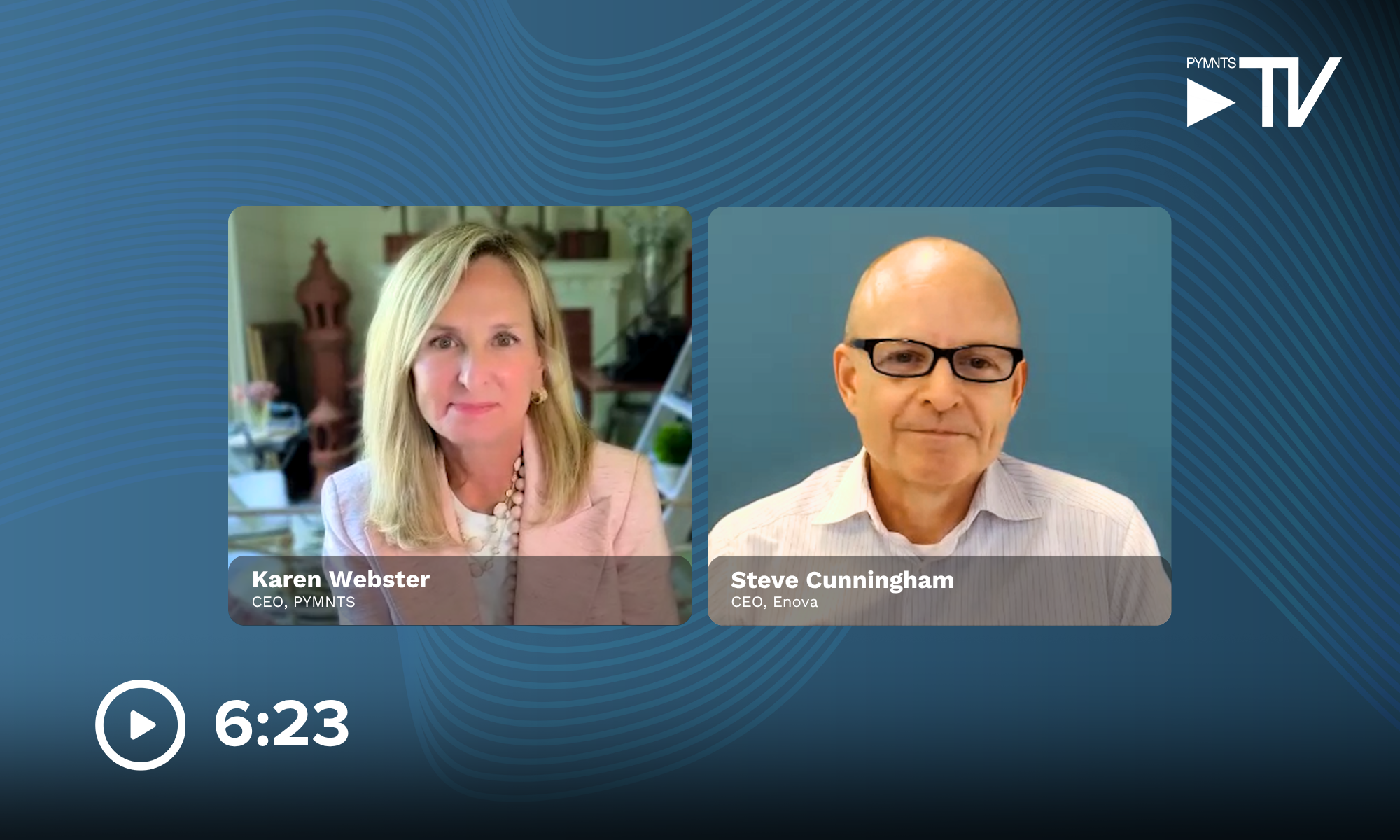
Enova doesn’t want its customer relationships to end when the loan is repaid.
That’s the larger ambition behind the lender’s pending acquisition of Grasshopper Bank, Enova CEO Steve Cunningham told PYMNTS CEO Karen Webster. What may look like a familiar play for deposits, funding costs and a bank charter is, in Cunningham’s telling, a chance to simplify how Enova goes to market and stay with customers beyond a single moment of need.
“When we pull the two companies together, we are going to have a lot of opportunities to think about cross-selling new products that tie together payments, banking and lending,” Cunningham said.
The opportunity starts with the operating model. Enova has spent years navigating state licenses, bank partnerships, product structures and compliance frameworks that vary by jurisdiction. A charter wouldn’t erase the regulatory work, but it could make the machinery behind a national lending business less fragmented.
“It was really about how to simplify how we go to market,” Cunningham said. “There’s a lot of complexity in the product variations that you need to comply with the jurisdictions and in the compliance behind the scenes.”
Grasshopper’s deposit franchise would strengthen Enova’s funding profile. Cunningham described that benefit as secondary to creating a more consistent operating model. That model, in turn, creates room to build a broader customer relationship.
Many consumers meet specialty lenders once, when an unexpected cash flow gap has to be bridged. Enova’s aim is to keep the relationship alive after the immediate need passes, using additional credit products, deposit accounts and payment services.
Consider the 19-year-old Cunningham described: a customer who starts with a modest CashNetUSA loan, manages it responsibly and returns years later with very different financial needs.
“The goal is to help people start their financial journey,” he said. “Graduate them, tailor more specific products with lower costs and, ideally, with becoming a bank, have adjacent products that let them continue a little bit longer with us as well.”
But a longer relationship begins with a clearer picture of the customer. That is where Cunningham’s case moves from banking structure to underwriting.
“We call them underserved,” he said of Enova’s target demographic. “They don’t have consistent access to credit from what I call the traditional banking system.”
Many of those consumers have steady income and established financial habits, yet remain outside conventional lending parameters because traditional models cannot capture risk that falls beyond familiar credit files. The blind spot, Cunningham argued, is often the information, not the borrower.
“The every-other-week payday that a lot of people are used to isn’t the norm anymore,” Cunningham said.
Income may come from several employers, contract work or digital platforms at different points in the month. A model built around one payroll deposit can read normal variation as elevated risk; credit can tighten even for people who remain employed and continue paying their bills.
That is why Cunningham urged Webster to look below the macro headlines.
“You need to peel back” the macroeconomic data, he told Webster.
Employment, wage growth and repayment performance can tell a different story than broad measures of consumer stress. Enova sees repayment data throughout the loan cycle, giving it a transaction-level view that can flag changes in borrower behavior before quarterly economic reports do.
This is also where Cunningham cut through the AI buzz. Predictive models are only as useful as the information feeding them.
“We’ve been a machine learning underwriting shop for a long time,” he noted. “Everything that feeds up into that final machine-driven decision is fair game for agentic AI.”
Consumer credit decisions still require careful oversight, he added. Electronic bank statement data, including income frequency, account balances, overdrafts and spending patterns, can help lenders distinguish a temporary cash flow fluctuation from deeper credit deterioration.
The competitive edge, then, is not simply a faster answer. It’s a better question.
Who is this customer when the old proxies no longer tell the full story? For Enova, the answer could shape more than whether it makes a loan. If the Grasshopper strategy works, it could shape how long the customer stays.
Watch the full interview with Steve Cunningham to learn more about:
- How Enova plans to use the Grasshopper deal to move beyond a one-time lending relationship.
- Why Cunningham sees a bank charter as a way to simplify a fragmented operating model.
- How transaction-level data can help lenders separate irregular cash flow from genuine credit deterioration.