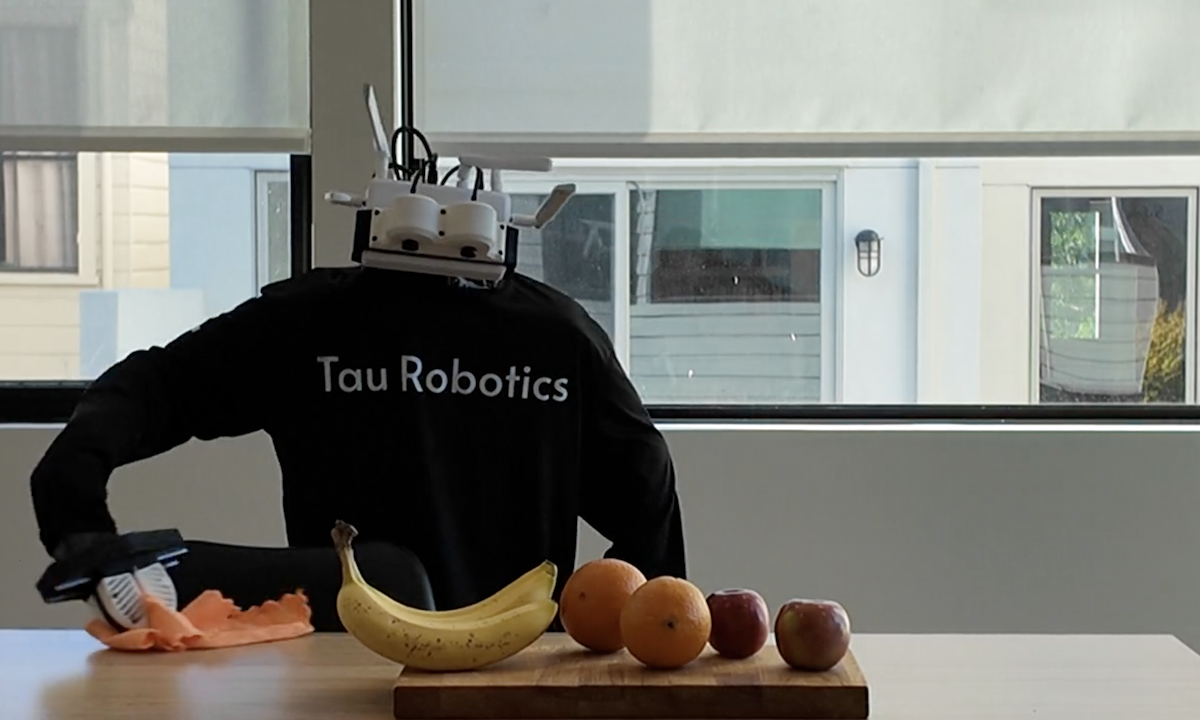
The robots are not autonomous. One trained operator controls each robot in real time, watching the live camera feed for the duration of a visit. Every operator is a background-checked employee working on-site from Tau’s own San Francisco facility, according to Tau’s disclosure. AI assists with balance and motor control while the operator drives the robot, a setup Tau Co-Founder and CEO Alex Koch has described as “conceptually similar to autonomous driving,” Cryptopolitan reported.
In May, San Francisco startup Gatsby launched a competing service that runs autonomously, with no live human operator, at a flat $150 per visit regardless of apartment size, a price Gatsby says roughly matches what a human cleaning service already charges in the city. Tau’s robots are cheaper and always supervised; Gatsby’s are more expensive and, the company says, fully hands-off.
Not everyone is convinced the timing works for either approach. Ken Goldberg, a UC Berkeley engineering professor with 40 years in the field, told ABC7 he doubts the technology is ready. “I really think it is too early,” he said. “I would be very surprised if these could do anything close to a useful job of cleaning a house. So, being able to pick up objects off the floor is even still a challenge for robots today. And being able to sweep and wipe out areas of, you know, counters and underneath things, that is very, very difficult.”
Tau’s Robots Run on Hardware the US Just Restricted
The robots run on hardware built by Unitree, the Chinese robotics manufacturer, with Tau designing the cameras, claws and onboard computer in-house, Cryptopolitan reported. That choice lands awkwardly: the same week Tau launched, the Federal Communications Commission barred new U.S. imports of Chinese-made humanoid and quadruped robots over unpatched security vulnerabilities. The ban does not revoke authorization for robots already in the country, so Tau’s current fleet is unaffected, but it raises a question about how the company would import additional units to scale beyond its current handful of robots.
The teleoperation setup is the company’s real business model, one it has no stated plan to phase out. Every visit is recorded, and Tau logs video, depth and spatial data, telemetry and every motion command the operator sends, using that data to both run the clean and train the AI system it hopes will eventually work without an operator, The Register reported. That footage is stored indefinitely unless a customer requests deletion, and Tau’s terms grant the company a perpetual, worldwide license to use it.
Real-World Data Has Become the Actual Product
That data has commercial value independent of the $30 cleaning fee. Robotics companies are now spending more than $100 million a year buying real-world training data from specialized collection firms, Micro1 CEO Ali Ansari told MIT Technology Review, PYMNTS reported.
Virtual simulation cannot substitute for that data because simulated environments still struggle to model the physics of grasping and manipulating real objects accurately. That’s why teleoperated data collection through a paid consumer service, rather than a lab, has become an attractive shortcut for physical AI companies broadly.
A different company is testing a related bet at a very different scale. AGIBOT, one of China’s largest humanoid makers, launched a rental platform called Sharebot in December, letting customers rent a humanoid for as little as 3,500 yuan, or roughly $517, a day, including shipping and a human operator, PYMNTS reported. Sharebot logged more than 5,500 orders in its first three months, but the early demand did not come from households doing chores. Customers rented humanoids for corporate galas, retail promotions and livestream content, not home cleaning.
Tau’s $30-an-hour bet is a far cheaper entry point than Sharebot’s roughly $517 a day and offers an economically viable option for households.
For all PYMNTS AI coverage, subscribe to the daily AI Newsletter.