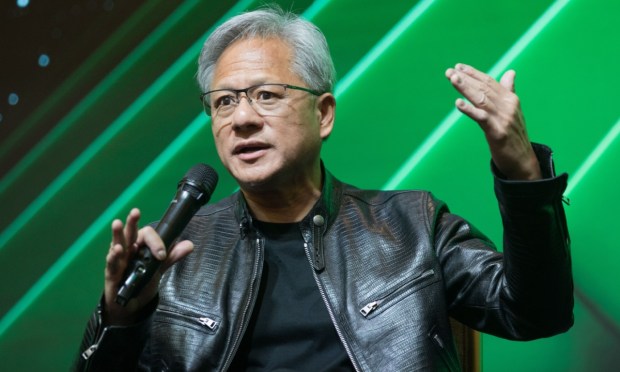
The investment is part of the $300 million raised by Baseten in a funding round that doubled the startup’s valuation to $5 billion, the Wall Street Journal reported Tuesday (Jan. 20), citing unnamed sources.
Reached by PYMNTS, an Nvidia spokesperson declined to comment on the report.
Baseten did not immediately reply to PYMNTS’ request for comment.
According to the WSJ report, Nvidia’s investment in Baseten is part of a larger push into inference that has seen the company license inference technology from Groq, commit to invest up to $100 billion in OpenAI, and take stakes in dozens of smaller companies that develop technology for AI apps.
When the company licensed inference technology from Groq in December, an Nvidia spokesperson told PYMNTS: “We’ve taken a non-exclusive license to Groq’s IP and have hired engineering talent from Groq’s team to join us in our mission to provide world-leading accelerate computing technology.”
For Baseten, the latest funding round is the company’s third in the past 12 months, according to Tuesday’s WSJ report.
Baseten announced a $75 million Series C in May and a $150 million Series D in September.
The Series D round nearly tripled the company’s valuation from where it was six months earlier, bringing it to $2.15 billion.
When announcing the Series D, Baseten CEO and Co-founder Tuhin Srivastava wrote in a blog post that the company powers applications that reach hundreds of millions of users and provides AI companies with the infrastructure they need to “take performance and reliability for granted.”
“This capital gives us the resources to pursue what we believe is the largest opportunity yet — as AI becomes embedded in every part of our lives,” Srivastava wrote.
For companies to get to the AI-powered future, they will likely need infrastructure that takes away the complexity of model orchestration, allowing them to concentrate on their differentiators, Srivastava told PYMNTS CEO Karen Webster in an interview posted in September.
“Every organization in the world is either going to become AI-first or AI-enabled,” Srivastava said. “As companies move toward this, you really only have one competitive advantage. That advantage is speed. And when it comes to speed, you can only move fast if you delegate away stuff that is not core to you.”