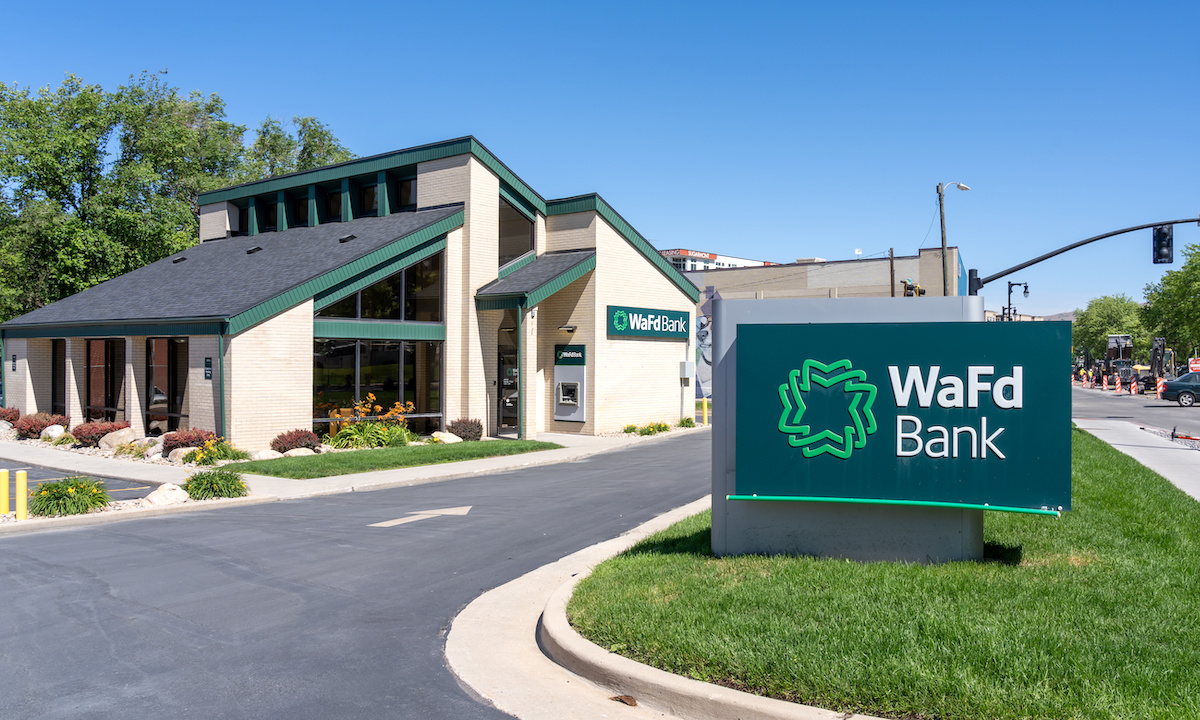
The proposed $3.9 billion merger of EverBank and WaFd brings together institutions with different distribution models. EverBank operates primarily as a digital bank, supplemented by a few dozen financial centers, while WaFd has a branch network spanning nine Western states. The combined company would have approximately $75 billion in assets.
EverBank brings its direct consumer online bank and broader national reach. WaFd brings core deposits, more than 200 branches and commercial banking relationships. EverBank also adds financial centers in California, where the companies said the combination will provide greater scale.
In a read-across toward the larger financial services industry, banks may have less reason to organize their businesses around a choice between digital and physical distribution. Digital banking can extend geographic reach and provide frequent customer contact, while branches can retain a role in local banking relationships and services that customers may not conduct entirely through an app.
That proposition will gain increasing relevance as digital activity becomes more closely tied to the economics of the banking relationship.
Second-quarter bank earnings results capture a snapshot of large banks continuing to report substantial digital customer activity alongside their deposit, payments and customer acquisition businesses. Digital channels are no longer confined to routine servicing. They have become places where customers open accounts, make payments, move money and interact repeatedly with their primary financial institutions.
The EverBank and WaFd combination also arrives as some large banks expand physical networks alongside digital activity. Banks in the United States added a net 535 branches in 2025, while JPMorganChase increased its branch count and active digital customers over the following year. PNC offers an even clearer connection between the channels, as digital sales per capita are roughly six times higher in markets where it has branches than in markets where it does not. The figures suggest that physical distribution can support digital customer acquisition and deeper relationships rather than simply compete with online banking.
When the Customer Moves Between Channels
The EverBank and WaFd combination adds another dimension to the trend because it brings a digital banking franchise and an extensive branch system together rather than requiring one institution to build the other capability organically. In terms of cross-pollination, EverBank’s direct consumer business can reach customers without requiring a dense national branch footprint. WaFd contributes a deposit base developed through a regional banking franchise and physical distribution. Management itself identified those deposit capabilities as complementary, rather than presenting one as a replacement for the other.
Consumer behavior provides another reason to reconsider channel distinctions, and offers incentive to chip away at those distinctions.
The PYMNTS Intelligence report “The Gen Z Decoder Ring: Digital by Default” described in August 2025 young consumers whose daily activities were organized around digital access. Generation Z isn’t uniformly rejecting established financial behaviors. It is removing friction from them and expects financial services to operate within the digital environment that structures much of everyday life.
That creates pressure on banks to make account opening, payments, money movement and financial management work digitally.
The result also highlights pressures that banks carried into 2026. Deposits remain valuable, digital engagement has become a larger component of customer acquisition and retention, and banks will undoubtedly look for ways to capture more financial activity from existing relationships.
For all PYMNTS digital transformation coverage, subscribe to the daily Digital Transformation Newsletter.