For the first time in years, the U.S. bank branch count is moving up meaningfully, and some of the biggest banks are putting billions of dollars behind the physical network.
FDIC data shows 69,167 branches at the end of 2025, an increase of 535 from 68,632 a year earlier. The 2025 increase marks a break from the retrenchment that eliminated thousands of locations during the previous decade – when, in 2015, for example, the tally stood at 80,958.
But the current buildout also bears little resemblance to adding teller windows to capture transaction traffic. Earnings results from the past several weeks indicate the scope of the expansion.
JPMorganChase finished June with 5,135 branches, 141 more than a year earlier, according to its second-quarter 10-Q. During the same period, active digital customers rose 5% to 76.7 million and active mobile customers rose 6% to 63.7 million.
Those parallel increases are useful because they remove a premise that has hung over branch banking for years: more digital activity doesn’t automatically translate into fewer locations.
JPMorganChase CFO Jeremy Barnum explicitly included branch expansion among the pieces of its retail growth strategy, along with winning primary-bank relationships, deepening existing relationships and improving the product proposition.
Chairman and CEO Jamie Dimon was even more direct about where branches fit into the bank’s investment spending.
“Organic growth is hard,” Dimon said during the most recent conference call with analysts. “It’s technology. It’s people. It’s systems. It’s branches. It’s bankers. It’s hiring. It’s training and recruiting.”
More Digital Sales, More Selective Branches
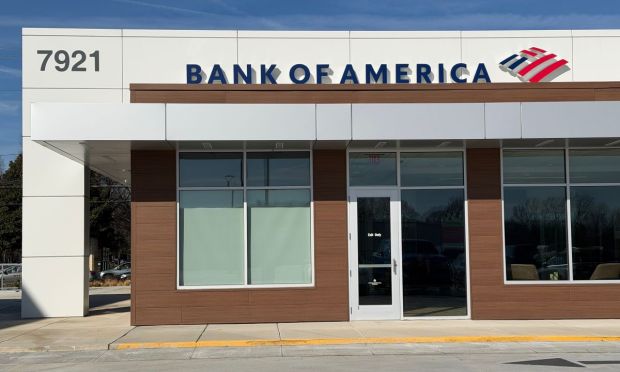
Bank of America shows why gross openings and net branch counts tell different stories.
The bank has committed to opening more than 150 financial centers across 60 markets by the end of 2027, including 70 planned for 2026. It said last year that it had invested more than $5 billion in its financial-center network through the past decade.
CEO Brian Moynihan described the current expansion strategy on the second-quarter call as a “rational full market build-out,” rather than entering cities one location at a time.
We’d love to be your preferred source for news.
Please add us to your preferred sources list so our news, data and interviews show up in your feed. Thanks!
At Bank of America, roughly 50 million customers were active digitally during the quarter, more than 24 million used Erica, and digital accounted for 70% of consumer sales.
Technology is also reaching the interaction inside the financial center. Bank of America said AI is reducing manual work and allowing employees to spend more time on what management has termed higher-value client interactions. In wealth management, its AI tools help advisers prepare for conversations, identify opportunities and deliver personalized advice.
Elsewhere, PNC plans to invest approximately $2 billion through 2030, opening more than 300 new branches and renovating its entire network by 2029.
PNC’s own investor materials project less than four years to break even on new branches, a mid-teens internal rate of return and more than $20 billion of long-term deposit opportunity. It also says digital sales per capita are roughly six times higher in markets where PNC has branches than in markets where it doesn’t.
That last figure gets closer to the economics driving the buildout. A physical network can support digital customer acquisition rather than compete with it.
PNC is also using M&A to buy density. Its FirstBank acquisition brought 95 Colorado and Arizona branches into PNC in June, along with roughly 780,000 customers. The deal more than tripled PNC’s Colorado branch network to 120 locations and expanded Arizona to more than 70.
The customer behavior in PYMNTS Intelligence’s credit union research done in collaboration with Velera helps illustrate what banks expect those locations to do.
Sixty-four percent of credit unions identified improving digital member engagement as a top strategic priority, but 62% planned to open branches. Among those repurposing existing locations, 76% planned to turn them into advisory hubs.
Customers aren’t necessarily walking through those doors to transact. Among Gen Z consumers, 65% preferred opening an account in a branch, while 28% preferred receiving financial advice there. When an in-branch conversation produced personalized guidance, 76% said they would act on it.
The industry’s 535 net branch additions don’t reverse a decade of closures. They do show that physical distribution is attracting investment again. The business case now includes deposits, customer acquisition, market density and advice, with digital doing some work, too, before and after the customer walks through the door.


 Add as Preferred Source