Artificial intelligence can already recommend the running shoes. The payments industry still must figure out how to let it buy them.
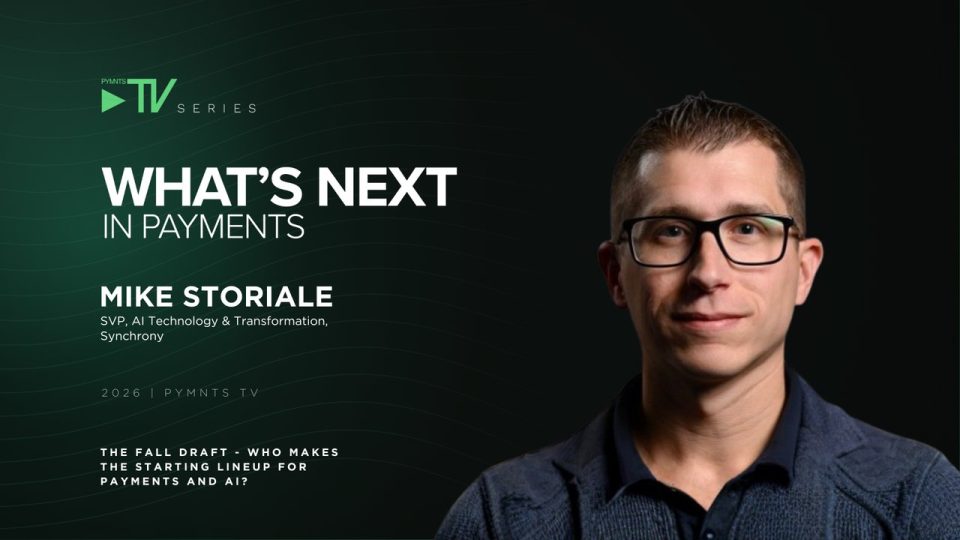
While much of the industry’s attention has focused on AI agents, Mike Storiale, senior vice president, AI Technology and Transformation at Synchrony, told PYMNTS for the September edition of the “What’s Next in Payments Series: The Fall Draft” that the technologies with the greatest potential are the less glamorous infrastructure underneath them. That includes common commerce protocols, financing options, authentication, proof of intent and ultimately a new trust layer for transactions initiated by machines.
“If we can get these protocols working, agentic commerce is moving on to the next level,” Storiale said.
The gap between discovery and transaction is emerging as one of the most important, and potentially underestimated, constraints on agentic commerce. AI platforms are becoming places where consumers research products, compare options and make decisions. However, moving from advising a customer to spending that customer’s money requires an entirely different infrastructure.
Agentic Commerce Is Moving Checkout Upstream
Much of the early agentic commerce conversation has centered on making existing payment methods available to AI agents.
The market, however, remains focused on “network payment methods” while potentially overlooking private-label credit, promotional financing, and buy now, pay later, Storiale said.
Today, financing frequently appears toward the end of a transaction. Consumers pick the product, proceed to checkout, then decide how to pay. An AI agent could invert that sequence. A consumer asking which refrigerator, laptop or sofa is “best for me” could receive recommendations informed by available credit, monthly payments, merchant promotions and financing offers alongside price and product features.
“You’re having a conversation with a chat agent; you’re asking what’s best for you,” Storiale said. “And in that ‘what’s best,’ you need to be able to actually now get more information than ever before.”
Synchrony is already testing that proposition. Storiale pointed to its ChatGPT plugin, which can surface financing terms, offers and deals within the AI environment. For banks, card issuers and alternative lenders, the implication is that winning checkout may matter less if another financial provider influenced the agent’s recommendation several steps earlier.
That’s why Storiale said he identifies “agentic engine optimization” as one of the capabilities companies should already be putting into production.
“If you’re not focused on that today, if you’re not prepping your brand to show up in these platforms, if you’re showing up 10th there, but first in traditional search, that’s the place you got to be putting your priorities,” he said.
Google trained businesses to compete for placement among links. Generative AI can collapse those links into a handful of answers today and can eventually make a single recommendation and transaction. That raises the economic value of being legible and authoritative to AI systems.
The Real Agentic Commerce Bottleneck Is Payment Permission
We’d love to be your preferred source for news.
Please add us to your preferred sources list so our news, data and interviews show up in your feed. Thanks!
Discovery and distribution are only half the problem. The moment an AI assistant goes from recommending a purchase to executing one, payments encounter a fundamental question. How does the system know the machine is doing what the human actually wanted?
“You’re going to need intent, you’re going to need authentication,” Storiale said. “But so many of the building blocks to get to that trust point have to be there first.”
A consumer might authorize software to reorder groceries less than $150, book a hotel below a certain nightly rate or replace household supplies without approving every individual transaction. Payments infrastructure built around humans clicking “buy” must now evolve toward proving delegated authority.
That is in part why Storiale said his candidate for the most overhyped agentic commerce assumption isn’t a technology. It is the speed at which people expect adoption. AI capabilities can change in months, while payments standards, merchant integrations, consumer habits and risk controls can take years to reach scale.
“We sometimes forget how long adoption cycles take,” Storiale said, pointing to smartphones and digital wallets.
And, ultimately, Storiale said his long-term bet isn’t on a particular payment rail at all. It is on rebuilding the trust architecture surrounding commerce.
“What we’re going toward in agentic commerce and payments is reestablishing a trust layer that works in this new space,” Storiale said.
That layer could encompass identity, proof of intent, tokenization, fraud controls and consumer protections, infrastructure that allows merchants and financial institutions to distinguish an authorized AI purchase from a mistake, manipulation or fraud attempt.
Consumers are already asking machines what to buy. The next phase begins when merchants, banks and payment networks become comfortable letting those machines act on the answer.
Watch the full PYMNTS TV interview with Synchrony’s Mike Storiale to hear more about:
- Why agentic commerce’s biggest breakthrough may be infrastructure, not smarter AI. Open commerce protocols could become the connective tissue between AI platforms, merchants, banks and payment networks, allowing agents to move from recommending purchases to actually completing them, Storiale said.
- Why AI could move financing from checkout into the shopping decision itself. BNPL, private-label credit and promotional financing are being overlooked as agents become more consultative, potentially letting consumers compare affordability and financing alongside products before they ever reach checkout, Storiale said.
- Why payments may need to rebuild trust for a world where machines spend money. Identity, authentication and proof of intent will be critical to establishing what consumers actually authorized agents to do, making a new “trust layer” the infrastructure that could ultimately determine whether agentic commerce scales, Storiale said.
For all PYMNTS AI coverage, subscribe to the daily AI newsletter.

 Add as Preferred Source