
A PYMNTS Company

OCC Issues Proposed Rules for Stablecoin Activity Under the GENIUS Act

 |  February 26, 2026

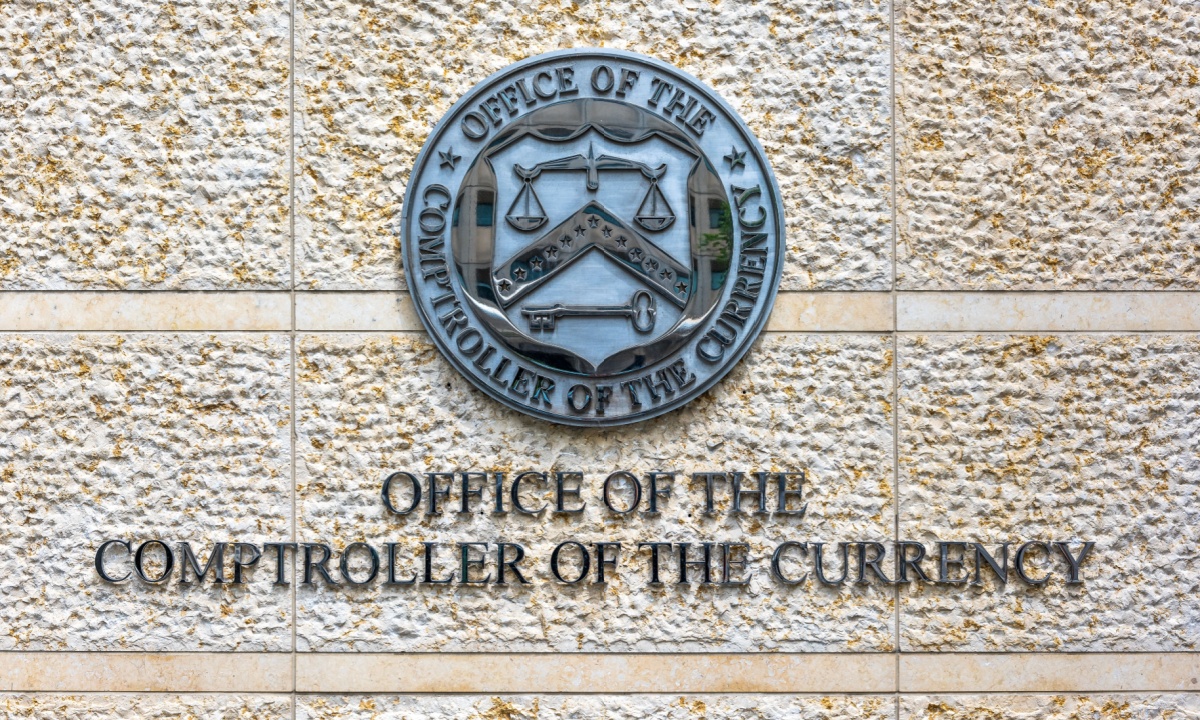
The Office of the Comptroller of the Currency on Wednesday released proposed rules for how payment stablecoins will be issued and overseen in accordance with the GENIUS Act passed by Congress last year. In a Notice of Proposed Rulemaking (NPRM) the OCC opened a 60-day window for public comment on the proposed rules to start when the NPRM is published in the Federal Register.


    Get the Full Story

    Complete the form to unlock this article and enjoy unlimited free access to all PYMNTS content — no additional logins required.

    yesSubscribe to our daily newsletter, PYMNTS Today.

    By completing this form, you agree to receive marketing communications from PYMNTS and to the sharing of your information with our sponsor, if applicable, in accordance with our Privacy Policy and Terms and Conditions.

    Under the GENIUS Act, stablecoins must be backed on a 1:1 basis by fiat currency or equivalent security such as Treasury bills and it extended exclusive regulatory authority to the OCC for issuing institution within its jurisdiction. The law also established criteria for “permitted stablecoin issuers,” including that they must be a subsidiary of an insured depository institution approved by the OCC, or a “federally qualified” issuer such as a non-bank entity that is not a subsidiary of a depository institution or non-insured institution chartered and approved by the OCC.

    The 376-page notice includes proposed rules covering reserve-asset standards, mandatory redemption at par, liquidity and risk management controls, custody requirements, audits, supervisory examinations, and application pathways for new issuers. It also amends current capital adequacy and enforcement rules.

    We’d love to be your preferred source for news.

    Please add us to your preferred sources list so our news, data and interviews show up in your feed. Thanks!

    Issues related to the Bank Secrecy Act, anti-money laundering and Office of Foreign Asset Control sanctions will be addressed in a separate rulemaking in coordination with the Treasury Department, per the notice.

    Related: Why Fintech Charters Are Back at the Forefront: The OCC’s Evolving Digital Assets Posture, the Genius Act, and the States’ Stablecoin Regimes

    Notably, the proposal reiterates the law’s prohibition on the payment of interest or yield by stablecoin issuers to holders of their coins. But it acknowledges that issuers could attempt to bypass the prohibition through arrangements with third-parties—an issue raised by various banking groups, including the American Bankers Association, concerned over stablecoins’ potential to drain deposit from traditional banks and credit unions.

    According to the proposal, the OCC will presume an issuer is paying interest or yield if two conditions are met:

    • The stablecoin issuer has a contract, agreement or other arrangement with an affiliate or a related third party to pay interest or yield to the affiliate or related third party.
    • The affiliate or related third party has a contract, agreement or other arrangement to pay interest or yield to a holder of any payment stablecoin issued by the permitted stablecoin issuer solely in connection with the holding, use or retention of such payment stablecoin.

    The proposal also acknowledges that “Other arrangements that are not captured by the presumption may also violate the statutory prohibition or constitute an evasion thereof,” but said OCC will “assess those arrangements on a case-by-case basis.”

    Whether that will be enough to quiet the controversy remains to be seen as comments come in. Last August, shortly after the GENIUS Act was passed, banking groups wrote to Congress to demand that “loopholes” in the law that could allow for backdoor payment of interest be closed through subsequent legislation rather than leaving it to the discretion of regulators.

    “The OCC has given thoughtful consideration to a proposed regulatory framework in which the stablecoin industry can flourish in a safe and sound manner,” Comptroller of the Currency Jonathan Gould said. “We welcome feedback on the proposal to inform a final rule that is effective, practical and reflects broad industry perspective.”