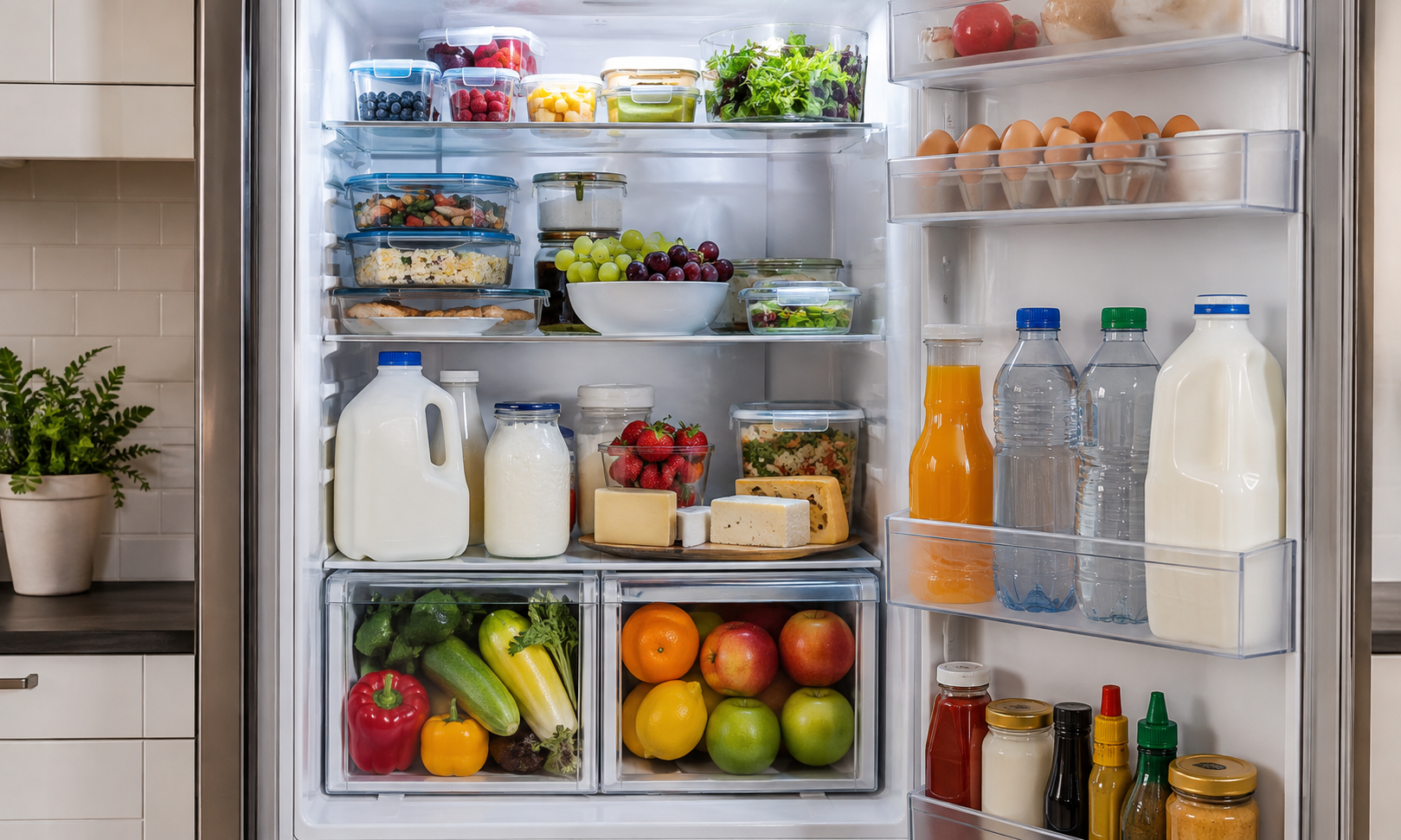
But for Walmart, it represents a considerably bigger strategic problem. Amazon is trying to move competition in grocery away from the place where Walmart is strongest such as stores, inventory and local fulfillment and toward a new layer of retail that barely existed a few years ago. This new layer is, of course, the AI agent or machine-generated decision about what a household should buy in the first place.
Amazon Worldwide Stores CEO Doug Herrington said Wednesday (Aug. 12) that Alexa for Shopping can combine photographs, conversations and purchasing history to make personalized recommendations. His longer-term vision is more ambitious still: a household that effectively replenishes itself.
Read more: What Happens to Stores When AI Agents Do the Shopping?
The Grocery Moat Is Really a Frequency Moat
The push by Amazon around conversational commerce driven by AI is not a strategy simply built around a better search interface. It is an attempt to automate one of retail’s most valuable behaviors: recurring demand. And grocery may be the category where that matters most.
A television may be researched for weeks and purchased once every several years. Milk disappears every few days, bananas ripen, yogurt runs out and dog food gets low. Dinner still needs to happen again tomorrow.
PYMNTS Intelligence research found that during this summer’s retail sale events, Walmart lost ground in every category tracked since 2025. Groceries, however, fell the least, dropping 11% from 55% to 49% of Walmart event shoppers and keeping groceries as Walmart’s top category. The biggest declines came in travel services, down 56%, and books, music, hobby and toy items, down 52%.
According to the report, more than 1 in 5 (21%) participants in either or both events used an AI chatbot or assistant to shop, rising to 35% for Generation Z. Among AI users, 57% call the technology very or extremely influential and 74% bought at least one product mainly on an AI recommendation.
Amazon cannot easily manufacture the several thousand supermarkets that Walmart relies on. But what Amazon is trying to do is make the shopping trip itself disappear.
See also: Why the Mall of the Future Won’t Have a Parking Lot
AI Moves Retail From Search Engine to Household Demand Engine
Traditional eCommerce starts when consumers articulate demand: “I need chicken breasts,” “I’m out of coffee,” “find me cereal.” Agentic commerce starts one step earlier and infers demand from context. The refrigerator photograph promoted by Amazon suggests what has been consumed and captures signals that allow Amazon to move from responding to shopping intent toward manufacturing the cart before explicit shopping intent exists.
The retailer that builds the first credible version of a persistent household purchasing agent gains something potentially more valuable than another checkout conversion: the ability to decide when a shopping occasion begins.
See more: Amazon and Walmart Want to Beat the Consumer to Their Next Purchase
Amazon’s strategy is vertically integrated: own the assistant, customer history, recommendation environment, cart and fulfillment. With grocery, Amazon’s approach has been to attach food to an infrastructure consumers already use for everything else and then use artificial intelligence to increase the frequency with which that infrastructure is invoked.
Walmart’s own strategy resembles distribution for the AI era: make the retailer available across multiple conversational interfaces, then rely on assortment, pricing and nearby inventory to win fulfillment. More than 90% of the U.S. population lives within 10 miles of a Walmart or Sam’s Club location, giving the company a formidable local inventory and fulfillment network.
Neither approach is obviously superior.
Amazon risks asking consumers to trust a retailer-owned assistant to decide which products they should buy from that same retailer. Walmart risks allowing third-party AI platforms to become the primary interface with its customers. But both strategies are chasing the same time, an understanding of what a household owns, consumes, prefers, needs and is likely to purchase next, all updated in real time.
The winner is no longer the retailer physically, or digitally, closest to the consumer. It is the retailer closest to the consumer’s intent.