The strategies both Amazon and Walmart are embracing are converging around a full commercial stack, including AI to guide demand, advertising to create it, marketplaces to capture it, payments to complete it and logistics to fulfill it.
Amazon’s retail operations remain essential because they provide the consumer relationships, merchant activity, and transaction data that support advertising, logistics and AI-powered shopping. Walmart is approaching the same model from the opposite direction. It begins with stores and merchandise, then adds media, software, data and automated fulfillment.
Both companies are trying to compress the customer journey from product discovery to purchase and delivery, all while gaining more influence over every decision inside it. The winner will not necessarily be the retailer with the largest assortment or the lowest price. It may be the company that removes the most consumer effort without sacrificing trust.
Amazon and Walmart are spending August making that strategy visible.
See also: Amazon and Walmart Face a New Gatekeeper for Loyalty
AI Is Moving Retail’s Consumer Interface Upstream
For years, the dominant retail interface was a search box. A customer entered a product name, browsed a results page and compared options. AI shopping assistants are changing that sequence. Consumers can describe a need, such as something healthy for dinner, a television for a bright room or a last-minute birthday gift, and expect the retailer to narrow the choices.
The best shopping agent will not merely reduce choice. It will make consumers more confident in the choice it reduces.
Walmart’s finalization of its purchase of streaming-TV advertising platform Vibe.co this week extends the customer journey in this direction. Vibe’s self-service platform allows advertisers to launch campaigns across connected-TV publishers. Walmart plans to integrate that capability with Walmart Connect, its retail media business. The purchase was reportedly valued at approximately $1.4 billion, although Walmart did not disclose the price.
We’d love to be your preferred source for news.
Please add us to your preferred sources list so our news, data and interviews show up in your feed. Thanks!
Walmart already knows what millions of households buy. Its 2024 acquisition of Vizio gave it a larger presence in the connected living room. Vibe adds software that helps brands buy the advertising appearing there. Together, those assets give Walmart an increasingly closed loop, as they expose a household to an advertisement, connect that exposure to digital or store activity and tell the advertiser whether the campaign produced a sale.
That sounds like a better experience. It is also a transfer of decision-making power. A cheerful chatbot cannot compensate for incomplete product records, unclear sourcing information or recommendations that customers cannot interrogate. Retailers need systems that can explain why an item was suggested, which product information was used and where uncertainty remains.
Read also: The Overlap Effect: How Amazon and Walmart Expanded the Crowd and Shrank the Basket
The High-Touch, High-Tech Convenience Infrastructure of the 21st-Century Retail Experience
Amazon this week also said it received roughly $600 million in tariff refunds after the Supreme Court invalidated certain emergency-powers tariffs, CNBC reported. The company said it would automatically reimburse customers in cases where it could trace a tariff-related charge directly to a purchase. Amazon also said it had absorbed some costs and was not the importer of record for many products sold through its marketplace.
This can be viewed as a consumer experience decision. Amazon is using transaction data to turn an obscure trade policy reversal into a visible act of accountability.
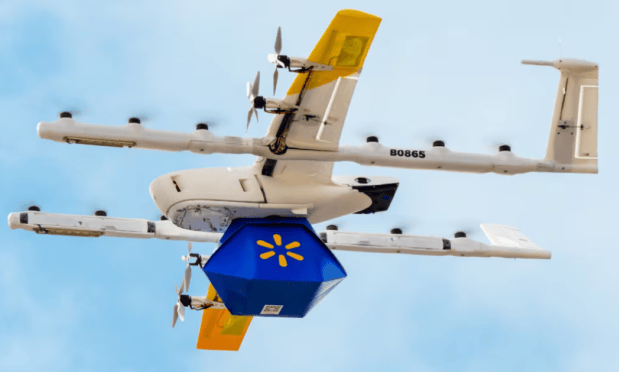
Both retailers are now building systems that can anticipate demand, guide product selection, personalize advertising, absorb economic disruption and accelerate delivery. But owning every layer does not guarantee success. AI recommendations may attract regulatory scrutiny. Advertising acquisitions must produce returns. Drone networks must prove economical. Marketplace complexity can make consumer accountability harder rather than easier.
The strongest moves Amazon and Walmart are making right now are those that convert complex infrastructure into something the consumer barely notices.
For all PYMNTS AI coverage, subscribe to the daily AI Newsletter.


 Add as Preferred Source