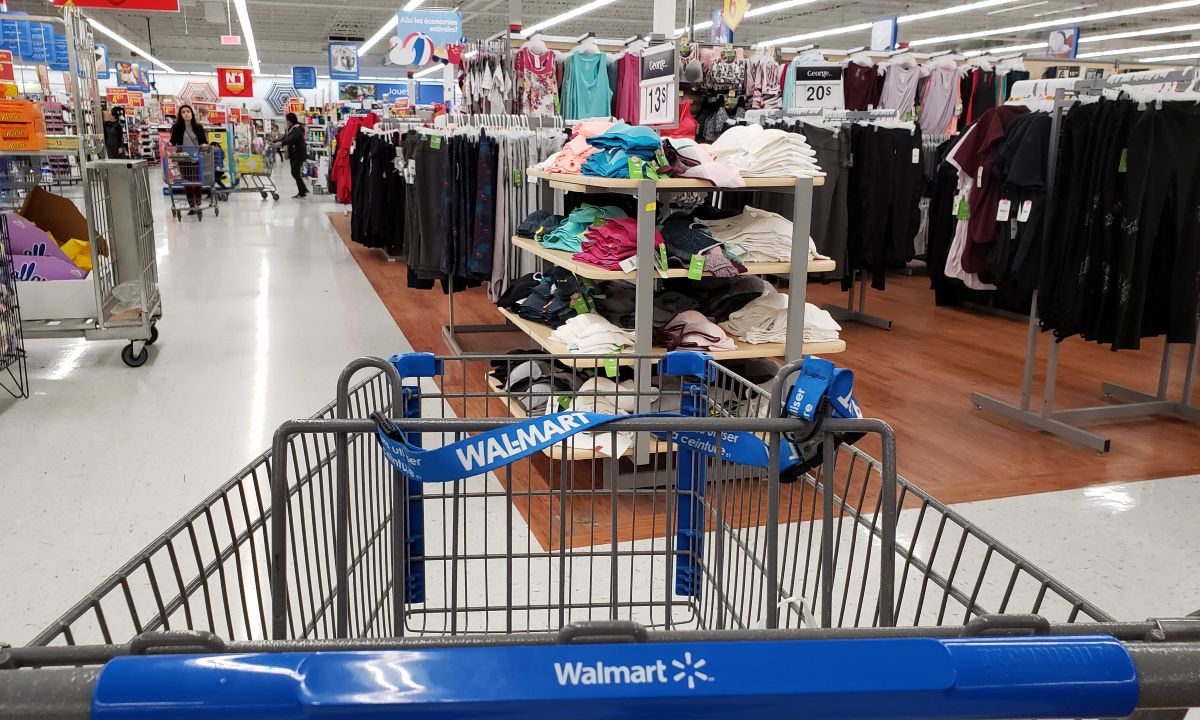
The retailer’s Scenario brand is set to debut this week, with most items costing under $25 as Walmart seeks to appeal to its core of discount shoppers and regain ground from Amazon, The Wall Street Journal (WSJ) reported Sunday (Aug. 23).
While the company has historically been known for selling items like lower-priced jeans, Walmart has in the last decade gradually shifted to stocking higher-cost items to appeal to customers who might also shop at chains like Gap, WSJ said.
“We knew we weren’t servicing all their closet needs,” Denise Incandela, who became executive vice president of fashion for Walmart U.S. in 2021, told WSJ. She pointed to data that showed that “while our customer gave us credit for extraordinary value, they weren’t giving us credit for style and quality.”
According to the report, Walmart’s fashion efforts under Incandela began almost a decade ago, when she presented executives with this figure: 80% of the money Walmart shoppers spent on apparel was at higher-priced retailers, not Walmart. She told the assembled executives that this meant consumers were willing to spend more on fashion, but weren’t doing so at Walmart.
Since then, the retail behemoth has begun attracting more higher-income consumers. And in the last five years, more of the money Walmart customers spend on clothing there is for items priced at $25 or higher, WSJ said, citing internal company documents.
The news comes days after Walmart held a quarterly earnings call at which its management admitted customers were facing increased pressure, especially after higher fuel prices forced some shoppers to make more visible spending choices in June.
“Customers tell us they’re still feeling some pressure,” CEO John Furner said. “But it’s clear customers are looking for value and convenience, and they want things fast.”
As covered here last week, that strategy has at least some headwinds to deal with, as Walmart’s same-store sales grew 2.6%, tied in part to drug price decreases, which is the slowest pace seen in nearly six years.
In related news, PYMNTS wrote last week about the evolving battlefield retailers find themselves on as consumers grow better at finding deals, which has made the contest “less about who has the lowest price today and more about who gets to establish the price consumers regard as normal tomorrow.”
“After all, in many ways, retail spent the past decade systematically undermining the very idea of a normal price,” that report added.