The dominant narrative about artificial intelligence assumes that automation shrinks the need for human workers. History suggests the opposite. Technology replaces discrete tasks, but it expands demand for human work that requires judgment, dexterity, presence and trust.
That work now defines the Labor Economy.
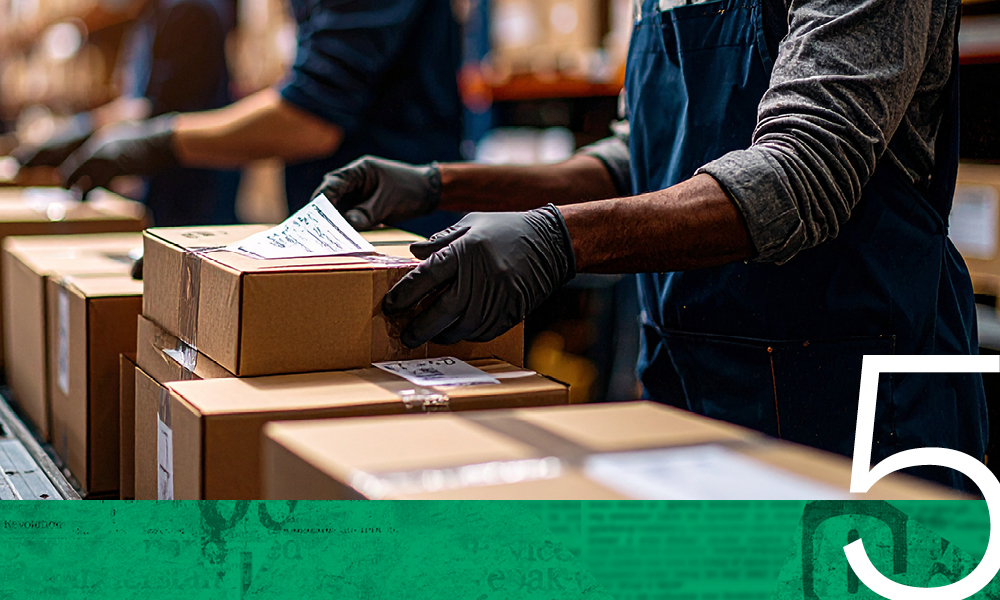
Roughly 60 million Americans earn income through hourly, shift-based roles that keep the physical economy running. They stock warehouses, unload trucks, staff hospitals, clean hotel rooms, prepare meals, maintain buildings, support live events, care for the elderly and deliver goods at speed.
According to the Wage to Wallet Index, a PYMNTS, WorkWhile and Ingo Payments collaboration, they drive approximately $1.7 trillion in annual consumer spending, accounting for roughly 15% of consumer spending. The Index finds that a 1% change up or down in Labor Economy wages translates into a $17 billion GDP impact, underscoring just how economically consequential this segment is.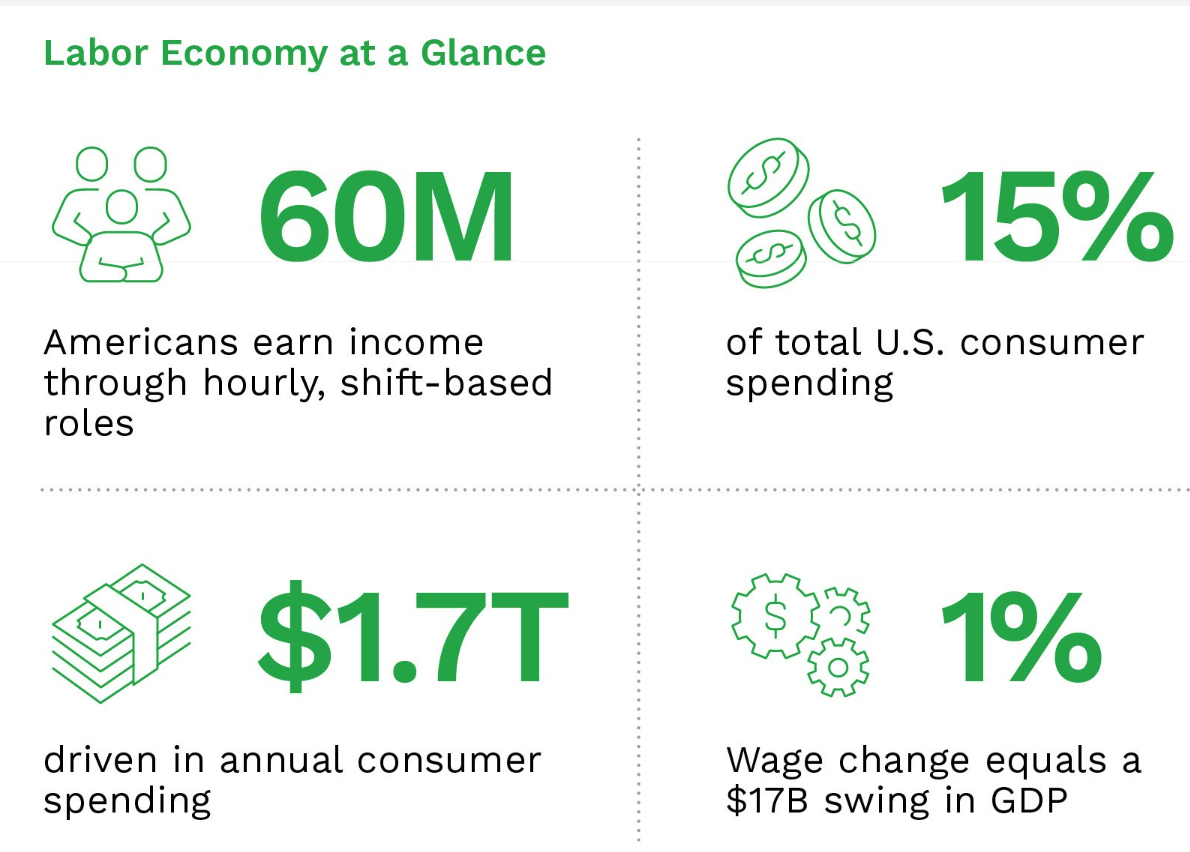
This workforce is not shrinking. It is expanding.
Robots do not prepare hospital rooms between patients, manage a kitchen during a dinner rush, reset a stadium overnight, or improvise when a delivery arrives late. AI can optimize systems, but it cannot adapt quickly to chaos. The recent Waymo and the San Francisco power outage is a real-life proof point. For that, we need people.
Enrollment in vocational and trade‑focused community college programs has surged, growing nearly 20% since 2020, even as more traditional academic tracks have struggled to recover. Construction, extraction and related trades are projected to grow faster than average, with hundreds of thousands of openings annually. Hospitality employment has rebounded from Covid lows to more than 17 million workers as travel and live events return at scale.
An aging population is driving sustained growth in healthcare and personal care roles. The build-out of AI and cloud infrastructure is fueling record investment in data centers, logistics hubs, manufacturing facilities and construction projects that require skilled trades. Ecommerce, reshoring and same-day delivery are raising expectations for speed and reliability that only human labor can meet.
As intelligence moves deeper into software, the value of the human layer that executes, responds and adjusts in the physical world increases. The Labor Economy is not a transitional class waiting to be automated away. It is the human infrastructure that makes our AI economy function.
Why the Stakes Are Rising, Not Falling
Because this workforce is growing, not contracting, the systems that support it matter more than ever.
Most Labor Economy workers earn under $50,000 annually and live paycheck to paycheck. Their income arrives unevenly across shifts, employers and platforms, while expenses arrive on fixed schedules. PYMNTS Intelligence finds that nearly half delayed or missed a bill payment in the prior month because their paycheck had not yet cleared, even though the work had already been completed.
This fragility is not caused by instability in work. It is caused by decades old systems designed for a different kind of worker.
Financial services, benefits and training models were built around linear careers, single employers and predictable monthly pay cycles. The Labor Economy operates in fragments. Workers often hold multiple roles, stack shifts across employers and build skills incrementally over time. Without infrastructure that lets income, credentials and benefits move with them, growth creates stress instead of resilience.
That mismatch has turned the Labor Economy into the next major innovation frontier.
Payments Were the First Signal
The earliest wave of innovation focused on access to money.
Instant pay allows workers to access earned wages as soon as work is completed, shrinking the gap between labor performed and money available. For workers living close to zero balances, that gap often determines whether a bill is paid on time or a fee is incurred.
Adoption reflects the need. More than 20 million U.S. workers now use on-demand pay, with penetration reaching roughly 60% in sectors such as retail, hospitality, and healthcare. PYMNTS Intelligence data shows that access to earned wages reduces reliance on overdrafts, late fees, and short-term credit used solely to bridge timing gaps.
At the same time, shift-matching and on-demand staffing platforms have reshaped how labor supply meets demand. PYMNTS Intelligence estimates that platform-based shift work accounts for 15% to 30% of total income for many Labor Economy workers, acting as a financial buffer against income uncertainty and a way to monetize spare capacity.
Payments can solve the most immediate problem: liquidity.
They cannot solve mobility.
The Next Phase Is Portability
What defines the next phase of Labor Economy innovation is not working more shifts. It is carrying progress forward.
Labor Economy workers are more stable than they are often portrayed. They accumulate experience, reliability and skill over time.
What they lack is a way to recognize and preserve that progress as they move between employers.
Skills, certifications, safety training, reliability scores and tenure are still locked inside individual employers or platforms. When workers change roles or stack shifts across employers, that value resets. Benefits remain tethered to single jobs in a multi-employer reality. Training often sits outside the flow of work and income, making advancement costly and slow.
This is where innovation must move next.
Portable credentials that document skills learned on the job. Certifications that are recognized across employers and industries. Training pathways that fit into work schedules and translate directly into higher pay. Benefits that follow workers as reliably as their earnings do, rather than disappearing with every job change.
AI becomes an enabler here, documenting skills, validating experience, matching workers to higher-value roles and making progression visible and transferable.
Why This Matters to the Economy at Large
When income becomes usable in real time, households stabilize. When skills are documented and portable, productivity compounds. When benefits and credentials move with workers, labor markets become more efficient.
This is not just a workforce story. It is an economic one.
The Labor Economy powers the physical systems that digital growth depends on. If these workers cannot absorb volatility, the economy absorbs it instead — through disrupted supply chains, understaffed hospitals, delayed construction and higher costs passed on to consumers.
The Shift Already Underway
The next decade will not be defined solely by how efficiently machines think, but by how well economic infrastructure supports the people who act, adapt and execute alongside “the machine.”
The opportunity for FinTechs is in new business models built around alignment for a workforce that powers the physical economy. Aligning pay with bills, aligning income volatility with financial stability, and aligning worker needs with employer incentives.
When pay timing mirrors real-world expense timing, spending stabilizes. When skills are standardized and transferrable, employment stabilizes. And when employment and spending stabilize for a segment responsible for in annual consumption, the broader economy benefits.
That is the Labor Economy ecosystem and the opportunity for FinTechs to step in to serve it. Those who do, will unlock one of the largest, most underserved innovation growth opportunities of the next decade.
Find more observations and insights from Karen Webster about what may lie ahead: