
A PYMNTS Company

New Jersey Takes Kalshi Sports-Betting Fight to US Supreme Court

 |  September 2, 2026
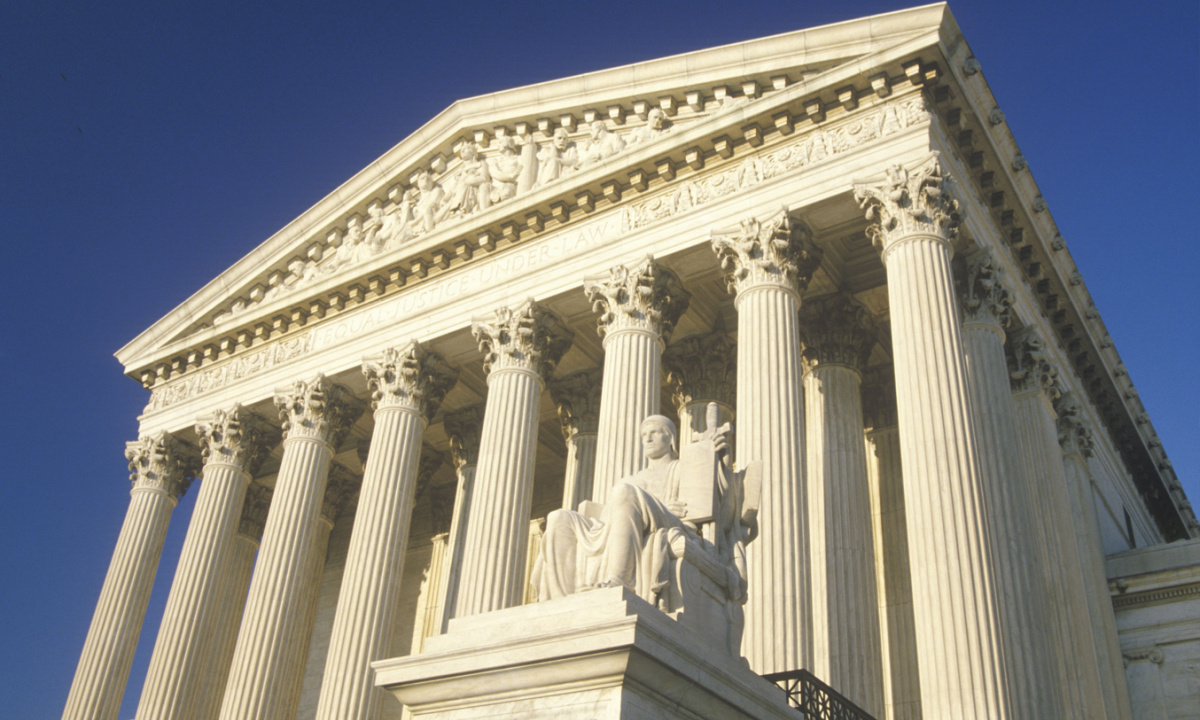
U.S. Supreme Court

New Jersey has asked the US Supreme Court to intervene in a widening regulatory battle over prediction markets, seeking to preserve states’ authority to police sports wagering offered through platforms such as Kalshi.


    Get the Full Story

    Complete the form to unlock this article and enjoy unlimited free access to all PYMNTS content — no additional logins required.

    Subscribe to our daily newsletter, PYMNTS Today.

    By completing this form, you agree to receive marketing communications from PYMNTS and to the sharing of your information with our sponsor, if applicable, in accordance with our Privacy Policy and Terms and Conditions.

    The state filed its appeal Wednesday after a federal appellate court ruled in April that the U.S. Commodity Futures Trading Commission has exclusive jurisdiction over sports-related event contracts offered by Kalshi, according to Reuters. New Jersey wants the Supreme Court to overturn that decision and clarify whether states can apply their gambling laws to such products.

    The dispute has significant implications for the rapidly expanding prediction-market industry. Platforms including Kalshi allow customers to trade contracts tied to the outcome of future events, ranging from elections to sporting contests. While the companies characterize those products as federally regulated financial contracts, state officials contend that sports-related contracts function as wagers and therefore should comply with state gaming rules.

    New Jersey and other states have argued that prediction-market operators are offering sports wagering without obtaining licenses required under local law. Those regulations can include consumer protections and age restrictions, including prohibitions on betting by people younger than 21, Reuters reported.

    New Jersey Attorney General Jennifer Davenport said the platforms should not be able to avoid state requirements simply because their products are structured as event contracts. She said, according to Reuters, that “dozens of states across the ideological spectrum” have opposed allowing the companies to offer sports bets without complying with state law.

    Kalshi, which is based in New York, did not immediately respond to Reuters’ request for comment on New Jersey’s Supreme Court filing.

    We’d love to be your preferred source for news.

    Please add us to your preferred sources list so our news, data and interviews show up in your feed. Thanks!

    Conflicting Appeals Court Decisions

    The Supreme Court petition arrives as federal appellate courts have taken opposing positions on the central regulatory question.

    The U.S. Court of Appeals for the Third Circuit ruled in April that New Jersey could not regulate Kalshi’s sports-event contracts, finding that federal commodities law gave the CFTC authority over the products. But the Ninth Circuit reached a different conclusion last week in a case involving Nevada, ruling that Kalshi was unlikely to establish that federal law prevented Nevada from requiring a gaming license for sports-related contracts.

    That disagreement between appellate courts increases the significance of New Jersey’s request for Supreme Court review because companies operating nationally could otherwise face different regulatory regimes depending on the jurisdiction.

    The broader dispute centers on how prediction-market products should be classified. Kalshi and the CFTC have argued that sports event contracts can fall within the federal framework governing swaps and designated contract markets. States including Nevada and New Jersey maintain that the products have the practical characteristics of conventional sports betting and therefore remain subject to their longstanding authority over gambling.

    The CFTC under President Donald Trump’s administration has supported the industry’s position that prediction-market trading falls exclusively within the federal regulator’s jurisdiction, according to Reuters.

    The Ninth Circuit rejected that argument in the Nevada dispute. In its Aug. 28 decision, the court said federal commodities law was unlikely to displace Nevada’s authority to require a gambling license for sports-event contracts. That ruling directly conflicts with the Third Circuit’s decision involving New Jersey and further raises the prospect of Supreme Court review.

    Source: Reuters