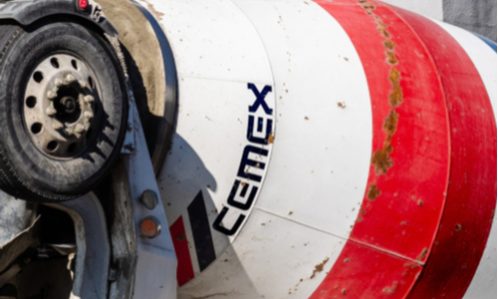
Cemex has become one of several companies facing formal antitrust objections from the European Commission as regulators intensify scrutiny of alleged collusion in the European construction chemicals market.
According to CemNet, which first reported on the development, the Mexico-based building materials producer disclosed that it had received a Statement of Objections from the European Commission concerning an ongoing investigation into potential anti-competitive practices in the construction chemicals sector.
The Commission announced on 20 July that it had informed a number of construction chemicals manufacturers and industry associations of its preliminary view that they may have breached European Union competition rules by coordinating price increases for additives used in cement, concrete and mortar. The allegations relate to activities between 2021 and 2022.
The case stems from unannounced inspections carried out in October 2023 at companies operating in the construction chemicals industry in several EU member states. At the time, regulators said they were investigating possible violations of Article 101 of the Treaty on the Functioning of the European Union, which prohibits cartels and restrictive business practices.
Companies and trade groups under investigation
The European Commission’s preliminary findings cover different sets of companies in France, Germany and Spain.
In France, the objections involve Cemex, Chryso, Mapei, Master Builders Solutions, MC Bauchemie, Sika, TAM Groupe and industry association SYNAD. In Germany, the investigation concerns Cemex, Ha-Be, Mapei, Master Builders Solutions, MC Bauchemie, Liesen, Remei, Sika and trade body Deutsche Bauchemie. In Spain, Chryso, Mapei, Master Builders Solutions, MC Bauchemie, Sika and the association ANFAH have been named.
EU regulators allege that companies may have coordinated future price increases in response to sharp rises in raw material and energy costs following the COVID-19 pandemic and Russia’s invasion of Ukraine. According to reporting by Reuters and The Wall Street Journal, the Commission is examining whether companies used trade associations and jointly prepared communications to justify higher prices across the market.
We’d love to be your preferred source for news.
Please add us to your preferred sources list so our news, data and interviews show up in your feed. Thanks!
Competition concerns in a concentrated market
Construction chemicals—including admixtures and additives used to improve the performance, durability and manufacturing efficiency of cement and concrete products—represent an important input for the broader construction sector. Any coordinated price increases could have implications for infrastructure projects, residential construction and industrial building costs throughout Europe.
The European Commission has increasingly focused on cartel enforcement in sectors linked to critical supply chains and inflation-sensitive industries. Competition authorities have been particularly attentive to whether companies facing common external shocks, such as energy price spikes and supply disruptions, used industry forums or trade associations to exchange commercially sensitive information or align pricing strategies.
Under EU competition law, companies found to have participated in cartel activity can face penalties of up to 10% of their global annual turnover.
Cemex cooperation and prior disclosures
Cemex had previously disclosed the investigation in its regulatory filings. In its annual report, the company said European Commission officials inspected its offices in France in October 2023 and subsequently requested information relating to its construction chemicals activities in Europe. Cemex stated that its construction chemicals operations are primarily for internal consumption and generate only limited third-party sales, adding that it has been cooperating with authorities.
A Statement of Objections constitutes a formal step in EU antitrust proceedings but does not represent a final determination of wrongdoing. Companies under investigation are entitled to review the Commission’s file, submit written responses and request oral hearings before any final decision is reached.
According to CemNet, Cemex said it would continue cooperating with the European Commission as the process moves forward. The Commission has not indicated when it expects to conclude the investigation or issue any final ruling.
Source: CemNet


 Add as Preferred Source