
Russia
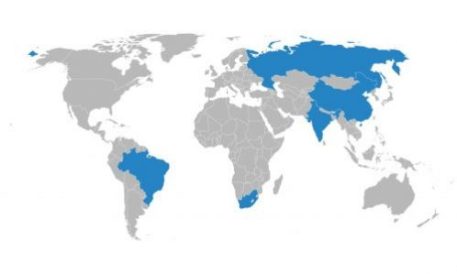 The 7th BRICS International Competition Conference was Successfully Held in China
By Dr. Aston Zhong1 From November 16 to 17, 2021, the 7th BRICS International Competition Conference (“ICC”) was successfully held in China. The year 2021 is the 15th anniversary of the establishment of the BRICS cooperation mechanism. The BRICS ICC is an important pragmatic event under the framework of the BRICS Leaders’ Meeting. Since […]
 Coercive mediation – why it is a way of life for bilateral monopolies in Russia?
March 2019 CPI Europe Column edited by Anna Tzanaki (Competition Policy International) & Juan Delgado (Global Economics Group) presents: Coercive mediation – why it is a way of life for bilateral monopolies in Russia? By Kirill V. Dozmarov (ART DE LEX Law Firm)1 Introduction The simple model of an abstract market, where only one buyer and one seller are […]
Kiev Economic court of appeal has dismissed the complaint of Russian gas holding against the decision of the Kiev Economic Court dated December 5, 2016, which upheld the lawsuit of Ukraine’s antimonopoly committee to oblige the Russian company to pay a fine of about $6.4 bln, a spokesman with the court said. “The appeal of […]
 Google, Mobile And Competition: The Current State Of Play
By Benjamin Edelman – Google’s widely-used Android operating system is open source software. Any developer who wishes to examine the source code can download it in full. Any device manufacturer that wishes to install “bare Android” can do so free of any Google apps whatsoever, and subject to minimal restrictions and few obligations to Google or […]
Svetlana Golovanova, Andrey Shastitko, Nov 27, 2013 This article demonstrates that even established and verified facts of agreements among producers are not sufficient conditions for either cartel identification and, as a consequence, prosecution of agreement participants. Qualifying sellers’ interactions on a market as collusion is not a simple task, although it might seem so if […]
Alexander Egorushkin, Mar 28, 2013 Over the last 10-20 years, the regulation of fines for antitrust violations has been amended several times in the United States and the European Union, significantly increasing the amount of imposed fines. Within the same time period, antitrust regulation and policy have spread across the globe and, as an enforcement […]
Svetlana Avdasheva, Andrey Shastitko, Jul 27, 2012 The Law ‘On Trade,’ adopted in the Russian Federation at the end of 2009, introduced a set of rules that regulate the terms of contracts between food suppliers and retail chains. The legal requirements are very different to any regulations employed in other countries (including the Grocery Supply […]
Aldash Aitzhanov, May 29, 2012 There is some empirical evidence that the effectiveness of antimonopoly policy (hereinafter referred to as the “EAP”) depends on different aspects of policy design, like engaging in leniency policy and competition authority independence. However, these features of competition policy design do not explain how countries can effectively implement competition policy […]
Svetlana Avdasheva, Andrey Shastitko, Aug 30, 2011 Collusion of market participants is one of the most dangerous forms of restriction of competition, adversely affecting incentives and, as a consequence, allocation and production efficiencies. According to some estimates, the average price rise under price-fixing is 10 percent ; several studies give even higher estimates. For example, […]
MAndrey Shastitko, Aug 30, 2011 A new stage in the development of the Russian antitrust policy began in 2006, due to the development and adoption of the package of laws aimed to harmonize Russian antitrust legislation with European practices. This adoption changed not only the design of the antitrust legislation, but also its role in […]
Denis Matvienko, Yuri Rubin, Jan 27, 2011 In structured market systems, state competition policy is an inherent part of the government’s activity in the context of competition protection and development and, as such, acts as an essential pillar of an existing, viable market system. The rational observer understands the defense of competition to be the […]
Featured News
House GOP Rushing to Advance Federal Privacy Law Before Midterms
Apr 17, 2026 by
CPI
UK Advances Comprehensive Regulatory Framework for Crypto Assets
Apr 17, 2026 by
CPI
EU Eyes Major Merger Rule Overhaul to Compete with US and China
Apr 16, 2026 by
CPI
White House Weighs Michael Murray for Top Antitrust Role at Justice Department
Apr 16, 2026 by
CPI
French Regulator Fines Organic Food Cartel €12.67 Million
Apr 16, 2026 by
CPI
Antitrust Mix
Antitrust Chronicle® – Competitor Collaborations
Mar 26, 2026 by
CPI
Between Scylla and Charybdis – Navigating Transatlantic Antitrust Currents
Mar 26, 2026 by
Tilman Kuhn & Niklas Brüggemann
Cartel Enforcement Moves Into the Labor Market: Trends and Implications
Mar 26, 2026 by
Andreas Kafetzopoulos & Caroline Janssens
Rethinking Buy-Side Antitrust “Group Boycotts”
Mar 26, 2026 by
Craig Falls & Brendan McGuire
Positive Collaborations: The Tools Available to Competition Authorities to Encourage Beneficial Interactions Between Competitors
Mar 26, 2026 by
Rona Bar-Isaac & Thomas Withers