January 2026 B2B and Digital Payments Tracker® Series
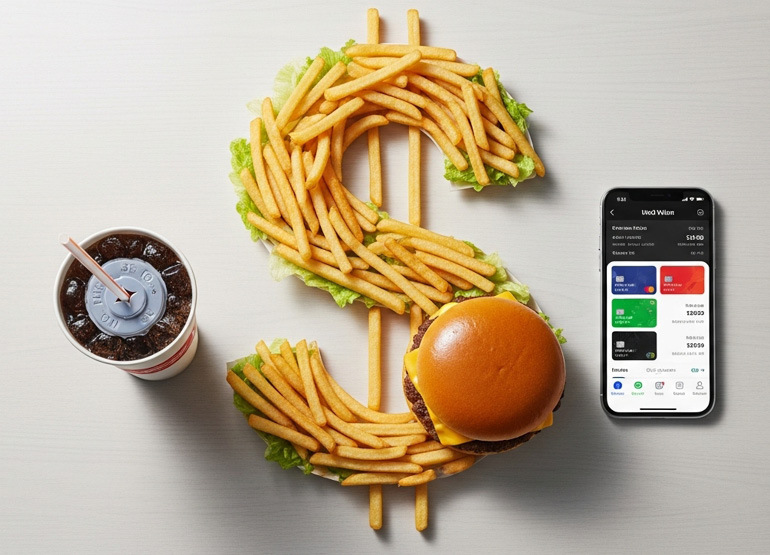
Value-Driven Innovation: How Restaurants Are Adapting to Digital Expectations
As consumers tighten their budgets, restaurants must deliver more than just low prices: They need quality, convenience and digital ease. This value-driven innovation is reshaping loyalty, tech adoption and the future of dining in 2026.
01
Customers are expecting restaurants to deliver better experiences at lower price points than ever before. Reduced household income, less frequent dining out and a renewed emphasis on overall value are shaping customers’ expectations of their restaurants.
02
Restaurants are scrambling to meet these new customer expectations for value and strong loyalty offerings. Embracing digital features can meet these dual objectives.
03
Intense competition in the restaurant space means that consumer brand loyalty is no longer guaranteed. Brands need to make an active effort to promote and reward loyalty to ensure repeat visits.
04
PYMNTS Intelligence interviews Kevin Bryla, Chief Marketing Officer and Head of Customer Experience at SpotOn, about how restaurants can leverage technology to deliver the value consumers crave.
Get Unlimited Access
Complete the form below for free, unlimited access to all our Data Studies, Trackers, and PYMNTS Intelligence reports.
Thank you for registering. Please confirm your email to view all our Trackers.
Rising costs, shrinking household incomes and shifting consumer expectations are transforming how and where consumers choose to dine. In 2026, value is no longer defined by price alone: Consumers are seeking quality, convenience and experiences that justify every dollar spent. While many still enjoy eating out, habits are evolving. More meals are happening at home, and quick-service restaurants (QSRs) that offer consistency and speed are edging ahead. Amid this recalibration, loyalty is up for grabs, with customers less swayed by routine and more by meaningful value.
At the same time, digital transformation has moved from trend to necessity. Mobile ordering, kiosks, voice-activated artificial intelligence (AI) and data-driven loyalty programs are redefining what modern diners expect from their favorite brands. However, technology alone isn’t enough, with consumers also craving personalization and a human touch. Restaurants must innovate around the needs of today’s value-driven customer without sacrificing experience. This edition of the B2B and Digital Payments Tracker® explores the key forces shaping the restaurant industry, from smarter spending to digital engagement to loyalty reimagined, and what brands must do to stay ahead.
Consumers Under Pressure: Spending Smarter, Dining Differently
Customers are expecting restaurants to deliver better experiences at lower price points than ever before. Reduced household income, less frequent dining out and a renewed emphasis on overall value are shaping customers’ expectations of their restaurants.
Consumers in 2026 have leaner wallets and heightened expectations.
In 2025, nearly four in 10 consumers reported lower household income compared to the year before, leading to more intentional spending and prioritization of value over indulgence. While dining out remained popular, habits were shifting: Roughly 70% of consumers were eating at home more often to save money, while QSRs and fast-food options that emphasize convenience and affordability were seeing modest gains.
However, price-conscious diners aren’t simply cutting back—they’re reassessing loyalty as well. According to the National Restaurant Association, 90% of consumers enjoy restaurants for social connection as much as for food. Operators that focus on ambience, atmosphere and service can cultivate repeat visits. Indeed, 64% of full-service restaurant customers say attributes related to the dining experience are more important than the cost of the meal.
Customer experience matters when it comes to QSRs.
QSRs’ affordability, consistency and convenience make them a logical choice for diners seeking quality within a budget. However, poor experiences are a key driver of customer churn. A recent Qualtrics survey found that 10% of fast-food customers reported very poor experiences, and 51% decreased spending afterward. Importantly, 54% of poor experiences were tied to product quality issues.
Similarly, Tillster found that while price is the top driver of perceived value, diners nevertheless prioritize food quality (56%) over price (42%) when choosing their favorite fast-food and fast-casual brands. Once loyalty is established, consumers are less likely to be swayed by competitors, but innovations in service and menu can shift preferences. For example, the rise of digital ordering has elevated the importance of customization, making order accuracy the third top driver of consumers’ perceived value after price and quality.
Digital Transformation: From Novelty to Necessity
Restaurants are scrambling to meet these new customer expectations for value and strong loyalty offerings. Embracing digital features can meet these dual objectives.
Digital channels are now foundational, though human connection is still essential.
70%
of all QSR sales were expected to come from digital ordering by the end of 2025.
Mobile apps, kiosks and AI-driven tools now shape consumer expectations of restaurants. Digital channels were projected to account for 70% of QSR sales by the close of 2025, with mobile and pickup outperforming traditional methods in speed, satisfaction and customization.
According to PAR Technology, consumers appreciate the efficiency of automation and AI, including faster ordering and shorter waits. However, 60% still prefer interactions with human staff over AI-based customer support, citing concerns about job loss and the absence of human connection. Savneet Singh, the company’s CEO, emphasizes that the future of dining depends on balancing technology with the human touch to create more personalized experiences.
Artificial intelligence is finding its niche in enhancing the customer experience.
Deloitte reports that conversational AI chatbots are the most widely adopted use case for AI in restaurants, with 60% of brands using them daily for orders and reservations. Machine learning (ML), intelligent automation and natural language processing (NLP) also rank highly, while technologies such as voice AI and computer vision remain in the developmental phase. Voice AI ordering shows promise: 60% of diners are comfortable using it at drive-thrus, and 78% of those who tried it rated their experience positively.
As mentioned, customization is also becoming a baseline expectation. Sixty-eight percent of consumers are highly interested in restaurant apps and websites that remember past orders, and 65% of diners have a similar interest in price-based filtering. Unified experiences across digital and in-person channels are critical, as even minor sources of friction—such as inconsistent cross-channel access to order history—can weaken loyalty.
Papa Johns is rolling out a new AI-powered ordering experience with Google.
The pizza chain announced the launch of a unified voice and text food-ordering agent built on Google’s Gemini platform, becoming the first restaurant to deploy the company’s new omnichannel ordering solution. Available across mobile apps, websites, phones, kiosks and in-car systems, the AI agent is designed to reduce friction by helping customers determine order quantities, manage preferences and accommodate food allergies through conversational prompts. Additional capabilities include automated deal selection, loyalty recognition and the ability to reorder past purchases. Papa Johns plans to roll out the platform systemwide by the end of 2026, underscoring a broader effort to simplify ordering and strengthen digital engagement.
Loyalty Redefined: Experiences That Earn Repeat Business
Intense competition in the restaurant space means that consumer brand loyalty is no longer guaranteed. Brands need to make an active effort to promote and reward loyalty to ensure repeat visits.
Rising costs and abundant dining options are reshaping consumer loyalty.
While speed and convenience remain key drivers of loyalty, one-third of diners in 2025 said their favorite QSR or fast-casual brand had changed in the previous 12 months, often due to perceived value and quality rather than discounts.
As a result, loyalty program enrollment climbed to 48% of diners, up from 46% the previous year. With brand quality a known factor, discounts and free items have become top motivators. Generation Z diners also value exclusive perks, updates and expanded ordering options. Weekly engagement with loyalty programs has jumped to 47%, compared to 34% in 2023, showing that these programs can reliably drive visits.
48%
of restaurant customers are currently enrolled in loyalty programs.
Loyalty programs are valuable tools for countering reduced customer spending.
In fact, loyalty programs and personalized digital interactions are becoming key to retention, with 93% of program members checking for deals before deciding where or what to eat at least some of the time. The National Restaurant Association notes that loyalty programs influence dining decisions across segments: 61% of delivery customers, 54% of QSR/deli/coffee shop patrons, and 41% of full-service customers consider membership when choosing a restaurant. Among operators that offer loyalty programs, most report increased traffic, including 80% of fine-dining operators.
Fast-casual chains like Chipotle, Starbucks and Cava are leaning heavily on loyalty programs to offset consumer spending pullback, according to CNBC. Loyalty program members visit restaurants 22% more frequently and at twice the rate of nonmembers. “In tough times, loyalty programs become more essential,” said Wharton School marketing professor Peter Fader. Rewards-based engagement is helping brands build durable customer habits even as consumers become more cost-conscious.
An Insider on Hitting the Sweet Spot in Restaurant Customer Loyalty
PYMNTS Intelligence interviews Kevin Bryla, Chief Marketing Officer and Head of Customer Experience at SpotOn, about how restaurants can leverage technology to deliver the value consumers crave.
When a customer feels like the restaurant knows them, remembering their go-to order or rewarding their tenth visit, it transforms a transaction into a relationship.”
Kevin Bryla
Chief Marketing Officer and Head of Customer Experience, SpotOn
Restaurant operators today cannot afford guesswork when looking to deliver on consumer expectations.
In a recent interview, Bryla told PYMNTS Intelligence that when looking to fill the bill on consumer value, restaurants cannot afford to guess what their guests want: They need to know. That’s where access to real-time data makes all the difference.
“Using Profit Assist—an AI profit-and-loss analysis tool—and point-of-sale sales reporting, our clients can see exactly where their margins are being squeezed, which menu items are driving revenue, and the trends that inform changing customer habits,” he said.
Access to insightful data empowers operators to make smarter, faster decisions, Bryla stated, whether highlighting a popular, high-margin menu item, adjusting portion sizes to hit the right price point, or simplifying the menu to improve speed and consistency.
“When operators use insightful data to guide these choices, they not only protect their bottom line but also show guests they’re listening, building trust and a loyal customer base,” he explained.
In the current climate, restaurant technology is not merely optional.
Bryla firmly believes that restaurant technology is no longer a nice-to-have. Instead, it’s become the backbone of operational efficiency and consumer engagement.
“Consumers expect convenience, personalization and seamless experiences, whether they’re ordering at a counter, on a mobile app, using a kiosk or at the table,” he observed. “We help operators integrate the technology that fits their concept and the people using them—whether that’s a handheld point-of-sale for more efficient table service or AI analysis of a restaurant’s profit-and-loss statement to identify cost-saving opportunities.”
He explained that the key is to leverage technology that enhances, rather than replaces, hospitality, freeing up staff to spend more time on the high-value interactions that keep customers happy and coming back.
Customer loyalty cannot be presumed. It must be earned.
Bryla maintained that customer loyalty is gained only through relevance and respect. Limited-time and special offers can get consumers in the door but don’t guarantee their return. Personalization does.
“When a customer feels like the restaurant knows them, remembering their go-to order or rewarding their tenth visit, it transforms a transaction into a relationship,” Bryla asserted. “And in a competitive market, those relationships are what drive repeat business.”
He noted that his clients find great value in leveraging their guest data through digital loyalty programs, including SpotOn’s automated marketing solution that allows them to tailor offers based on their preferences, giving them a reason to return.
Above all, restaurant technology must be viewed as a tool for improvement, not an end in itself.
Bryla’s advice to restaurants is simple: “Start with your guests, and let technology work for you. Understand the customer experience, identify the points of friction, and work with your technology partners to identify the solutions to smooth them out.”
The goal, Bryla said, is to make ordering simple, payments fast, rewards relevant—and communication personal.
“Remember, you don’t need to adopt everything all at once,” he said. “Start with those that will make the biggest impact on your guests and your bottom line. Operators who take those steps today will be the ones building loyalty and profitability tomorrow.”
Turning Value Into Loyalty
Restaurants can meet rising consumer expectations by aligning value with experience. As price sensitivity increases and digital convenience becomes standard, brands must redefine what drives loyalty, prioritizing seamless service, meaningful personalization and operational agility.
PYMNTS Intelligence offers the following actionable roadmap for companies considering value-driven innovation in the restaurant sector:
Invest in digital tools that prioritize speed and accuracy. Consumers increasingly value order customization, fast service and error-free fulfillment, especially through mobile and kiosk channels.
Balance automation with human interaction. While AI can streamline service, customers still crave hospitality and atmosphere, making the human touch a strategic asset.
Design loyalty programs that go beyond discounts. Rewards should offer immediate, personalized value—such as exclusive offers or preferred ordering experiences—to drive repeat visits and emotional connection.
Unify the digital and in-person experience. Consumers expect consistency across every touchpoint, from app-based orders to counter pickups. Friction in one channel can break trust across all.
Leverage real-time customer insights to adapt quickly. Use loyalty data and feedback loops to anticipate evolving needs and fine-tune engagement strategies faster than competitors.
Restaurants that embrace value as a multidimensional experience—combining price, personalization and performance—will be best positioned to capture loyalty in a competitive, cost-conscious market.
About
PYMNTS Intelligence is a leading global data and analytics platform that uses proprietary data and methods to provide actionable insights on what’s now and what’s next in payments, commerce and the digital economy. Its team of data scientists include leading economists, econometricians, survey experts, financial analysts and marketing scientists with deep experience in the application of data to the issues that define the future of the digital transformation of the global economy. This multilingual team has conducted original data collection and analysis in more than three dozen global markets for some of the world’s leading publicly traded and privately held firms.
The PYMNTS Intelligence team that produced this Tracker:
John Gaffney, Chief Content Officer
Andrew Rathkopf, Senior Writer
Alexandra Redmond, Senior Content Editor
Joe Ehrbar, Content Editor
Augusto Solari, Senior Research Analyst
We are interested in your feedback on this report. If you have questions
or
comments, or if you would like to subscribe to this report, please email
us at
feedback@pymnts.com.
Disclaimer
The B2B and Digital Payments Tracker® Series may be updated periodically. While reasonable efforts are made to keep the content accurate and up to date, PYMNTS MAKES NO REPRESENTATIONS OR WARRANTIES OF ANY KIND, EXPRESS OR IMPLIED, REGARDING THE CORRECTNESS, ACCURACY, COMPLETENESS, ADEQUACY, OR RELIABILITY OF OR THE USE OF OR RESULTS THAT MAY BE GENERATED FROM THE USE OF THE INFORMATION OR THAT THE CONTENT WILL SATISFY YOUR REQUIREMENTS OR EXPECTATIONS. THE CONTENT IS PROVIDED “AS IS” AND ON AN “AS AVAILABLE” BASIS. YOU EXPRESSLY AGREE THAT YOUR USE OF THE CONTENT IS AT YOUR SOLE RISK. PYMNTS SHALL HAVE NO LIABILITY FOR ANY INTERRUPTIONS IN THE CONTENT THAT IS PROVIDED AND DISCLAIMS ALL WARRANTIES WITH REGARD TO THE CONTENT, INCLUDING THE IMPLIED WARRANTIES OF MERCHANTABILITY AND FITNESS FOR A PARTICULAR PURPOSE, AND NONINFRINGEMENT AND TITLE. SOME JURISDICTIONS DO NOT ALLOW THE EXCLUSION OF CERTAIN WARRANTIES, AND, IN SUCH CASES, THE STATED EX CLUSIONS DO NOT APPLY. PYMNTS RESERVES THE RIGHT AND SHOULD NOT BE LIABLE SHOULD IT EXERCISE ITS RIGHT TO MODIFY, INTERRUPT, OR DISCONTINUE THE AVAILABILITY OF THE CONTENT OR ANY COMPONENT OF IT WITH OR WITHOUT NOTICE.
PYMNTS SHALL NOT BE LIABLE FOR ANY DAMAGES WHATSOEVER, AND, IN PARTICULAR, SHALL NOT BE LIABLE FOR ANY SPECIAL, INDIRECT, CONSEQUENTIAL, OR INCIDENTAL DAMAGES, OR DAMAGES FOR LOST PROFITS, LOSS OF REVENUE, OR LOSS OF USE, ARISING OUT OF OR RELATED TO THE CONTENT, WHETHER SUCH DAMAGES ARISE IN CONTRACT, NEGLIGENCE, TORT, UNDER STATUTE, IN EQUITY, AT LAW, OR OTHERWISE, EVEN IF PYMNTS HAS BEEN ADVISED OF THE POSSIBILITY OF SUCH DAMAGES.
SOME JURISDICTIONS DO NOT ALLOW FOR THE LIMITATION OR EXCLUSION OF LIABILITY FOR INCIDENTAL OR CONSEQUENTIAL DAMAGES, AND IN SUCH CASES SOME OF THE ABOVE LIMITATIONS DO NOT APPLY. THE ABOVE DISCLAIMERS AND LIMITATIONS ARE PROVIDED BY PYMNTS AND ITS PARENTS, AFFILIATED AND RELATED COMPANIES, CONTRACTORS, AND SPONSORS, AND EACH OF ITS RESPECTIVE DIRECTORS, OFFICERS, MEMBERS, EMPLOYEES, AGENTS, CONTENT COMPONENT PROVIDERS, LICENSORS, AND ADVISERS.
Components of the content original to and the compilation produced by PYMNTS is the property of PYMNTS and cannot be reproduced without its prior written permission.
The B2B and Digital Payments Tracker® Series is a registered trademark of What’s Next Media & Analytics, LLC (“PYMNTS”).