February 2026
PYMNTS Data Books

Tax Refunds and the Paycheck-to-Paycheck Consumer

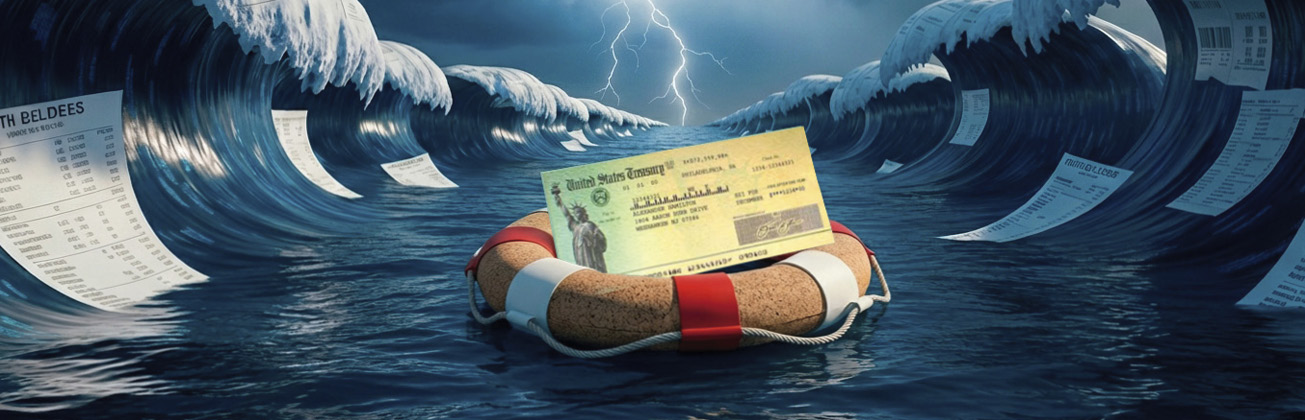
Tax refunds and one-time government payments are largely stopgaps for paycheck-to-paycheck households, who largely use these funds to cover bills and debt, not to build savings.

Get Unlimited Access
Complete the form below for free, unlimited access to all our Data Studies, Trackers, and PYMNTS Intelligence reports.

Thank you for registering. Please confirm your email to view all our Trackers.

    yesSubscribe to our daily newsletter, PYMNTS Today.

    By completing this form, you agree to receive marketing communications from PYMNTS and to the sharing of your information with our sponsor, if applicable, in accordance with our Privacy Policy and Terms and Conditions.

    About two-thirds of American consumers live paycheck to paycheck. Roughly one-quarter struggle to pay their monthly bills for housing, utilities and groceries. In that setting, tax refunds and one-time government payments tend to shore up the essentials more than build savings.

    Tax Refunds and the Paycheck-to-Paycheck Consumers

    High Baseline

    The share of American consumers living paycheck to paycheck has stayed at approximately 60%-70% of all consumers, with 20%-25% struggling to pay essential bills each month. The shares have barely changed over the last two years.

    Necessity Shift

    Consumers living paycheck to paycheck due to necessity rose to roughly 42% in January 2026, overtaking those living paycheck to paycheck by choice. More households report living on the pocketbook edge because they have no other choice.

    Tax Refund Shortfall

    Fifty-six percent of consumers said they received a tax refund last year. Consumers living paycheck to paycheck out of necessity are roughly seven percentage points less likely than average to receive a refund. The most strained consumers are less likely to receive refunds.

    Bills First

    Around two-thirds of consumers living paycheck to paycheck and struggling to pay bills use their tax refunds to pay bills or reduce consumer debt. Roughly 12% put the money into savings. For most consumers living paycheck to paycheck, refunds act as catch-up money, not a savings boost.

    Transfer Triage

    For paycheck-to-paycheck consumers who struggle to pay bills, about 40% of a one-time government payment would go toward everyday expenses and 27% to debt. These consumers would save or invest just 16% of the money. These payments primarily relieve immediate pressure, not build longer-term wealth.

    Methodology

    This Data Book is based on findings from the February 2026 edition of New Reality Check: The Paycheck-to-Paycheck Report, a PYMNTS Intelligence exclusive. The analysis draws on a survey of 2,432 U.S. adult consumers conducted from Jan. 15, 2026, to Jan. 29, 2026. The findings are descriptive and self-reported, showing associations rather than causality.

    About

    PYMNTS Intelligence is a leading global data and analytics platform that uses proprietary data and methods to provide actionable insights on what’s now and what’s next in payments, commerce and the digital economy. Its team of data scientists includes leading economists, econometricians, survey experts, financial analysts and marketing scientists with deep experience in the application of data to the issues that define the future of the digital transformation of the global economy. This multi-lingual team has conducted original data collection and analysis in more than three dozen global markets for some of the world’s leading publicly traded and privately held firms.

    We are interested in your feedback on this report. If you have questions or comments, or if you would like to subscribe to this report, please email us at feedback@pymnts.com.

    Disclaimer

    PYMNTS Data Books may be updated periodically. While reasonable efforts are made to keep the content accurate and up to date, PYMNTS MAKES NO REPRESENTATIONS OR WARRANTIES OF ANY KIND, EXPRESS OR IMPLIED, REGARDING THE CORRECTNESS, ACCURACY, COMPLETENESS, ADEQUACY, OR RELIABILITY OF OR THE USE OF OR RESULTS THAT MAY BE GENERATED FROM THE USE OF THE INFORMATION OR THAT THE CONTENT WILL SATISFY YOUR REQUIREMENTS OR EXPECTATIONS. THE CONTENT IS PROVIDED “AS IS” AND ON AN “AS AVAILABLE” BASIS. YOU EXPRESSLY AGREE THAT YOUR USE OF THE CONTENT IS AT YOUR SOLE RISK. PYMNTS SHALL HAVE NO LIABILITY FOR ANY INTERRUPTIONS IN THE CONTENT THAT IS PROVIDED AND DISCLAIMS ALL WARRANTIES WITH REGARD TO THE CONTENT, INCLUDING THE IMPLIED WARRANTIES OF MERCHANTABILITY AND FITNESS FOR A PARTICULAR PURPOSE, AND NONINFRINGEMENT AND TITLE. SOME JURISDICTIONS DO NOT ALLOW THE EXCLUSION OF CERTAIN WARRANTIES, AND, IN SUCH CASES, THE STATED EXCLUSIONS DO NOT APPLY. PYMNTS RESERVES THE RIGHT AND SHOULD NOT BE LIABLE SHOULD IT EXERCISE ITS RIGHT TO MODIFY, INTERRUPT, OR DISCONTINUE THE AVAILABILITY OF THE CONTENT OR ANY COMPONENT OF IT WITH OR WITHOUT NOTICE.
    PYMNTS SHALL NOT BE LIABLE FOR ANY DAMAGES WHATSOEVER, AND, IN PARTICULAR, SHALL NOT BE LIABLE FOR ANY SPECIAL, INDIRECT, CONSEQUENTIAL, OR INCIDENTAL DAMAGES, OR DAMAGES FOR LOST PROFITS, LOSS OF REVENUE, OR LOSS OF USE, ARISING OUT OF OR RELATED TO THE CONTENT, WHETHER SUCH DAMAGES ARISE IN CONTRACT, NEGLIGENCE, TORT, UNDER STATUTE, IN EQUITY, AT LAW, OR OTHERWISE, EVEN IF PYMNTS HAS BEEN ADVISED OF THE POSSIBILITY OF SUCH DAMAGES.
    SOME JURISDICTIONS DO NOT ALLOW FOR THE LIMITATION OR EXCLUSION OF LIABILITY FOR INCIDENTAL OR CONSEQUENTIAL DAMAGES, AND IN SUCH CASES, SOME OF THE ABOVE LIMITATIONS DO NOT APPLY. THE ABOVE DISCLAIMERS AND LIMITATIONS ARE PROVIDED BY PYMNTS AND ITS PARENTS, AFFILIATED AND RELATED COMPANIES, CONTRACTORS, AND SPONSORS, AND EACH OF ITS RESPECTIVE DIRECTORS, OFFICERS, MEMBERS, EMPLOYEES, AGENTS, CONTENT COMPONENT PROVIDERS, LICENSORS, AND ADVISERS.
    Components of the content original to and the compilation produced by PYMNTS is the property of PYMNTS and cannot be reproduced without its prior written permission.