
December 14, 2021 - 4 years ago

TeraWulf, which has seen investments from Gwyneth Paltrow, has seen falling shares during its public Nasdaq debut on Tuesday (Dec. 14), Bloomberg reported.
TeraWulf’s objective is to offer more environmentally-conscious ways to process crypto transactions. The firm went public after a merger with Ikonics, an imaging tech company.
After initially being listed at $25, the stock was as low as $20.02 — a 20% decline.
The slump comes with a large drop in other crypto miner shares, and those kinds of companies often use huge amounts of power and compete to win freshly-minted tokens to process transactions. The quantity of electricity used is comparable to what some entire nations use.
According to Bloomberg, TeraWulf plans to have around 800 megawatts of mining capacity deployed by 2025, powered by alternate energy forms like nuclear, hydro and solar power.
The crypto mining stocks have been hit badly after a selloff in bitcoin prices, along with doubts about profitability. DA Davidson & Co analyst Chris Brendler said the hash rate, or the speed of mining, is back to highs not seen since before China banned mining.
“Profitability has fallen dramatically,” Brendler said. “The price of Bitcoin going down and global hash rate going up means bad news for miners.”
Meanwhile, Tesla Inc. CEO Elon Musk announced that the electric car manufacturer will begin accepting dogecoin as payment for some merchandise on a trial basis, per a Reuters report Tuesday (Dec. 14).
“Tesla will make some merch buyable with Doge & see how it goes,” Musk said in a tweet, although he did not clarify what merchandise is eligible to be bought with dogecoin.
Following this announcement, the price of the meme-based cryptocurrency was up 24% early in the day.
Read more: Tesla Testing Dogecoin Payments for Merchandise
Last month, PYMNTS reported that in El Salvador’s “bitcoin city,” bitcoin mining will take place by tapping into the Conchagua volcano’s geothermal energy.
According to El Salvador President Nayib Bukele, the idea will be to expand on El Salvador’s launch of bitcoin as a mainstream payment method.
“Invest here and make all the money you want,” Bukele said. “This is a fully ecological city that works and is energized by a volcano.”
The funding will come from value-added tax (VAT), used to fund bitcoin bond issuance. Half of that will go towards infrastructure and half to funding city services.
Related: Volcano to Power Miners in El Salvador’s Bitcoin City
December 14, 2021 - 4 years ago
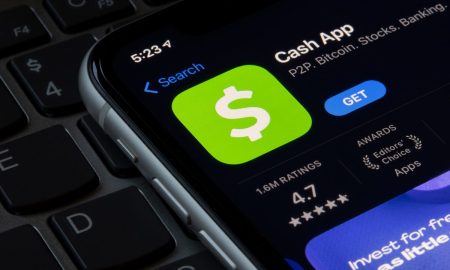
Block has debuted a new Cash App feature to allow users to gift in stock or bitcoin this holiday season, per a Money.com report Tuesday (Dec. 14).
The new gifting feature will allow users to send as little as $1 in stock or bitcoin, and the company claims it is “as easy as sending cash” — and those who use it won’t even have to own stock or bitcoin to gift it.
Block is the company formerly known as Square, who changed its corporate name at the beginning of December and renamed its crypto operation to Spiral.
On Monday (Dec. 13), a Bloomberg report noted that trading app Robinhood also had the capabilities to debut a crypto gifting feature, although its users would be sending crypto via digital gift cards. However, Robinhood has not yet said whether the feature will go live.
PYMNTS recently reported on Square’s name change to Block, writing that the Square name would still be a part of the company’s seller business.
“We built the Square brand for our Seller business, which is where it belongs,” said Jack Dorsey, co-founder and CEO of Block. “Block is a new name, but our purpose of economic empowerment remains the same. No matter how we grow or change, we will continue to build tools to help increase access to the economy.”
See also: Square Inc. is Now Block; Brand to Remain
The company said the change was a way to show the growth of the company as it incorporated new assets like Cash App and TIDAL. The name change was also a way to separate the corporate entity from the new businesses it was taking on, letting Cash App and others remain their own brands.
A company press release called Block “an overarching ecosystem” of several businesses, all of which have a unified purpose of boosting economic empowerment and various artists, fans, developers and sellers.
Dorsey also stepped down from his CEO role at Twitter last month — a move that was intended to help him spend more time with Square.
Related: Jack Dorsey’s Twitter Departure Sets the Stage For Expanding His Crypto Influence
December 14, 2021 - 4 years ago

Welcome to the fifth of PYMNTS’ eight-part series on decentralized finance (DeFi).
Over the coming days, we’ll be looking at every part of DeFi — the biggest, hottest, most rewarding and risky part of the blockchain revolution.
At the end of it, you’ll know what DeFi is, how it works, and the risks and rewards of investing in it.
SEE PART 1: What is DeFi?
SEE PART 2: What Are the Top DeFi Platforms?
SEE PART 3: What Is a Smart Contract?
SEE PART 4: What is Yield Farming and Liquidity Mining?
So, what is staking? At the simplest level, it’s a good way of earning passive income on crypto holdings, and it’s generally a whole lot safer and easier than yield farming.
Lock some of the appropriate crypto into a smart contract to join a staking pool, and you’ll earn interest on it.
At a less simple, but still fairly easy-to-grasp level, staking is the lifeblood of DeFi — but that’s a few steps down a fairly straight road.
A good way to think of it is a new, more efficient and far more eco-friendly way to earn rewards than by “mining” bitcoin. Staking is essentially the new mining.
Mining Begins
We’re going to move into some necessary background here, looking under the hood at bitcoin. If you know what a “consensus mechanism,” jump ahead to the next section.
Most people know that you can “mine” bitcoins and make a lot of money now that they’re priced in the $50,000 to $60,000 range. However, that’s just the reward for doing something somewhat difficult and very vital — adding new transactions to the bitcoin blockchain.
Like all blockchains, bitcoin is immutable — once a transaction is written onto the blockchain, it cannot be changed or deleted. As such, it’s very important that they are verified as legitimate. To ensure that this is done honestly, Bitcoin’s creator made the chance to write a new block and mine its bitcoins random.
Miners run computer nodes with copies of the full blockchain, and compete to solve a very complex math puzzle every 10 minutes. The winning node creates the new block. Every node agrees and is updated by this process called a proof-of-work (PoW) consensus mechanism.
This has several problems. It is slow and difficult to scale as the number of transactions grow, leading to high transaction fees — the other way miners earn. Beyond that, as bitcoin’s value grew, mining became so lucrative that an arms race for better computers erupted.
Now, major miners have whole server farms of expensive and powerful computers competing, and the power used is staggering. Annually, Bitcoin mining uses nearly as much as power as Sweden, which is wasteful and bad for the environment.
Staking Takes Over
Thus, proof-of-stake — known by the unfortunate shorthand “PoS” — consensus mechanism was born.
In a proof of stake network, transactions are verified and written into new blocks by stakers, who essentially put up a large bond for good behavior. Do something wrong or dishonest, and the smart contract running the process “slashes” your stake.
Winners are chosen randomly by algorithms that ensure that stakers are selected to write blocks in proportion to the size of their stake. For example, if you have 5% of the staking pool, you’ll earn 5% of the rewards over time.
In theory, this is just as safe as mining, but much faster, allowing the blockchain to process vastly more transactions per second. Bitcoin can do about 6 to 8 tps and Ethereum can do 10 to 20 tps, leaving them clogged and transaction fees very high. Visa handle about 1,700 tps, and its network can handle 24,000.
Virtually all of DeFi and the increasingly popular non-fungible token (NFT) projects are built on Ethereum, which is now seeing transaction fees as high as $70 or more — which is why Ethereum is transitioning to Ethereum 2.0, a PoS system that will handle up to 100,000 tps.
But that’s a years-long process, so a number of PoS blockchains that aim the be “Ethereum killers” — like Cardano, Polkadot and Solana — have surged nowhere into the top 10 cryptocurrencies by market capitalization, growing by hundreds and even thousands of percentages this year.
Their goal is to attract projects — most notably lucrative and fast-growing DeFi projects like lending protocols and decentralized exchanges — to build on them, offering speed, enormous tps numbers (Solana’s is 65,000 tps) and tiny transaction fees.
Investing in Staking
While the actual stakers have to run nodes 24/7 and generally have to put up large sums to get in on the action, staking pools allow small retail investors to earn by joining staking pools. Signing up to stake the beta Ethereum 2.0 requires a minimum of 32 ETH — more than $120,000 at a $3,800 ETH price.
Remember how stakers earn rewards in proportion to the size of their stake? Well, staking pools let them increase their size, paying members a portion of the resulting rewards. Seeing as the amount of rewards a staker will earn is a known quantity, staking pools pay off in interest rates.
Like anything in crypto there are risks — starting, as ever, with volatility. There’s also the fact that many staking pools require investors to lock up their cryptocurrency for a set period, magnifying the risks of volatility. Smaller, newer projects offer higher interest rates, but their tokens are more likely to crash while your investment is locked.
The flip side is that it is very easy to get in on, as most large exchanges offer staking as a practically one-click option.
For example, Coinbase is currently offering 5% on Cosmos, 4% on Algorand, 2% on the DAI stablecoin, and 0.15% on USDC stablecoins.
Next Up: What Are Defi’s Use Cases?
The two best-known uses of DeFi are decentralized exchanges, also known as DEXs, and lending/borrowing protocols. But we’ll also look at payment solutions, insurance, gaming prediction marketplaces, digital identity and more.
December 14, 2021 - 4 years ago
One of the biggest moments at the Senate Banking Committee’s stablecoin hearing Tuesday (Dec. 14) was a declaration by Sen. Elizabeth Warren (D-Mass.) that decentralized finance, or DeFi, is “the most dangerous part of the crypto world.”
DeFi, Sen. Warren said, “is where the regulation is effectively absent and — no surprise — it’s where the scammers and the cheats and the swindlers mix among part-time investors and first-time crypto traders.”
Calling stablecoins “the lifeblood of the DeFi ecosystem,” Sen. Warren noted that they are used to trade DeFi cryptocurrencies and related derivatives, and in DeFi lending and borrowing platforms.
That is true.
But that’s true of all crypto trading, especially among large and institutional traders who are making frequent trades on short-term price changes, exchange arbitrage, and other strategies. While you can swap one crypto directly for another — say buy bitcoin with ether — that’s largely an option for the biggest cryptocurrencies on many exchanges.
According to an October study, half of all bitcoin trades are executed using the largest stablecoin, tether, with a market capitalization of $76 billion. On Dec. 14, the 24-hour bitcoin trade volume was $32.7 billion.
Read more: Half of All Bitcoin Trades Are Executed Using Tether
Speaking to Hilary Allen, a witness and professor at American University Washington College of Law, Sen. Warren asked, “does DeFi threaten our financial stability and can DeFi continue to grow without stablecoins?”
Allen said she did not “think DeFi can grow without stablecoins,” saying, “Right now, I think DeFi is contained to the point where it won’t impact financial stability.”
But, she added, if DeFi is allowed to grow, “I think there’s a real threat there, particularly if it becomes intertwined with our traditional financial system — and there is industry interest in pursuing this integration on both the traditional finance and the crypto side.”
Therefore, she said, “I think it’s critical that stablecoins not be allowed to feed that growth.”
See also: Ex-Treasury Official: Crypto Fits Under Existing Financial Regulations. Deal With It
Not everyone agrees.
In a recent interview with PYMNTS’ Karen Webster, Amias Gerety, a partner at QED Investors and an acting assistant secretary for financial institutions in the Obama Administration’s Treasury Department, said he was “disappointed” by a recent report by the President’s Working Group on Financial Markets for saying there is no regulation of stablecoins instead of “firmly asserting that there are laws in place to govern these activities.”
Arguing that existing financial regulations apply to stablecoin issuers just as much as they do banks, Gerety said, “I think that there’s been a willful desire not to accept laws that are already on the books.”
He added, “I think the clearer regulators can be, these are the laws, and they apply, the better off we’ll be.”
The Tether problem
Sen. Warren also took aim at Tether, the company that issues the tether (USDT), the stablecoin, pointing out — as many non-foes of crypto have — that its financial statement has not gone through an independent audit.
Related: What Senate Banking Committee Chair Sherrod Brown Should Be Asking Tether
The same can’t be said of Circle-issued USD Coin. As Dante Disparte, Circle’s chief strategy officer and head of global policy, noted in his opening remarks, Circle is regulated and its audited assets are all in dollars or highly liquid, short-duration U.S. Treasuries.
Of course, USDC has a market cap if $41.7 billion, but is used far less in trading than tether. USDC’s 24-hour trade volume was only $6.4 billion.
Sen. Warren got one thing wrong when talking about Tether when she said that it only held 10% of its assets in cash. Actually, it was 2.9%.
Which does give some credence to Prof. Allen’s argument that in a crisis, a run on tether could lead to the company’s inability to immediately redeem its stablecoin for dollars.
However, if that happened right now it would not threaten the U.S. financial system, Allen said.
“I think the impact would probably be felt in the DeFi ecosystem,” she added. “And that’s why it’s critical that we not provide this government support to the DeFi ecosystem.”
December 14, 2021 - 4 years ago

Members of hotel rewards program Wyndham Rewards can convert available points to cash via a new partnership with digital asset marketplace Bakkt, according to a Tuesday (Dec. 14) press release.
By linking their account within the Bakkt app, members of the rewards program can convert points to cash, which can be deposited into their bank account, sent to a friend, used to buy discounted gift cards or to make online and in-store purchases through Apple Pay or Google Pay, according to the announcement.
In addition, rewards members can also use the Bakkt App to buy additional Wyndham Rewards points, either through funds received from converting loyalty currencies to cash or through another preferred payment method, according to the press release.
“We’re constantly looking for new ways to help our more than 90 million enrolled members engage with and receive value from the program,” said Eliot Hamlisch, executive vice president, Loyalty & Revenue Optimization, Wyndham Hotels & Resorts. “By teaming with Bakkt and further broadening the program’s appeal, we’re not only creating opportunities to pull in new members, we’re giving existing members even more reasons to stay and earn points with our expansive portfolio of hotels.”
Gavin Michael, Bakkt CEO, told PYMNTS earlier this year that as much as $1.2 trillion in value could be realized by converting digital assets (such as rewards) into spendable cash.
In addition to its recent partnership with Wyndham Rewards, Bakkt works with financial institutions and retailers to convert rewards and loyalty offerings into a variety of spendable digital assets, including crypto.
See also: Bakkt CEO: Convergence Of Crypto, Rewards and Loyalty Will Enable ‘Pay With Anything’ Era
In an effort to bolster the ability to pay for items with bitcoin, Bakkt, in August announced a partnership with sandwich chain Quiznos to allow customers visiting locations in the Denver area to pay for food using the Bakkt app. Doing so would provide $15 in bitcoin as a reward.
Read more: Quiznos, Bakkt Debut Pay With Bitcoin In Some Restaurants
December 14, 2021 - 4 years ago

The below article is a guest post by Amias Gerety, partner at QED Investors.
A wave of crypto-enforcement cases involving successful crypto companies in the U.S. (not just obvious scams) was the opening salvo from U.S. regulators trying to come to grips with the explosive growth of the crypto and DeFi ecosystem. These enforcement actions have now been paired with a stablecoin report recommending that Congress take action to require stablecoin issuers to be insured depository institutions (banks) and forthcoming actions from the bank regulators to defend the regulatory perimeter.
I was the first-ever staffer to support the Financial Stability Oversight Council – a justice league of regulators. I believe that the most important regulatory failure leading up to the great financial crisis was a failure to require that large new markets operate within established standards for disclosure, safety and soundness. It is safe to say that the financial crisis was defined by a run on the shadow banking system. Moreover, many stablecoins – particularly algorithmic stablecoins or those backed by commercial paper – fit the classic definitions of shadow banking.
But by recommending new legislation, the stablecoin report actually increases uncertainty in the U.S. regulatory regime.
First, given other priorities and heading into an election year, the chances of Congress passing a new legislative regime into law are near zero. Second, even if legislation were to succeed, what would it say? The report is not clear. But it appears that U.S. regulators are making the exact same errors as the DeFi boosters – namely, prioritizing technology over substance and overcomplicating a muddled conversation.
The U.S. government should move urgently to clarify the regulatory approach to stablecoins, but the tools to do so will mostly not require new legislation.
There’s an old truism that “financial services is a highly regulated industry.” This is also true.
At its core, we regulate financial services because financial services are the business of taking people’s money in exchange for promises, rather than in exchange for goods and services.
Stablecoins offer the simplest version of this promise – a promise of safekeeping. And while much of the discussion of stablecoins, and much of their function, has focused on their use as a new payment system, it is the ability to fulfill this safekeeping promise that enables all the other functionality they can offer.
Overlooked by the stablecoin report’s recommendation of new legislation is the fact that this promise is already regulated in the United States. It’s already clear that only banks and trusts have the ability to make this promise legally to U.S. consumers, and money market funds are another fully regulated way to make a version of this promise. In fact, many stablecoin issuers are already complying with this framework, either by partnering with banks and trusts or by getting licensed themselves.
Though the language and the history of financial regulation is complex, there are only five fundamental promises you can make with money:
That’s it. In fact, looking at the framework of financial services as a series of regulated promises, we could rapidly bring clarity to the regulatory perimeter and the DeFi ecosystem.
Of course, the crypto world is full of arguments that many tokens should not be regulated because they have utility. But there’s very little in the world of crypto that looks like handing someone a bushel of corn.
Successive generations have experimented with new technology and new language to apply to these promises, but the current iteration of DeFi has shown very little that has made new kinds of promises.
Arguably, the U.S. government should be much more aggressive in enforcing banking law, and so very few crypto projects are themselves regulated as banks or trusts. Partly, this is because one quirk of U.S. law is that banking regulators do not have direct authority to bring enforcement actions against unregulated banking, even as they do have authority to bring enforcement actions against regulated banks. Therefore, one of the most important steps on stablecoins would be to work with the Department of Justice on enforcement against entities that are not working within the regulated system of banks and trusts. Unfortunately, the stablecoin report has only a single passing reference to the DOJ.
The comparison between banking law and securities law here is instructive. U.S. securities law operates with a particularly well-enforced regulatory perimeter, where the SEC has plenary authority to enforce the laws it oversees. Any person can issue a security. And in securities law, there are already clear exemptions and frameworks for people who operate only a small scale.
Stablecoins may also end up participating in a long-running debate among the financial regulatory community around money market funds. There is a long history of financial regulators worrying about the difference between money market funds as securities and as bank deposits. For the purposes of this analysis, the point is that both are regulated activities.
While the industry has traditionally decried “regulation” by enforcement, this is in fact the most direct way to bring clarity to a rapidly growing part of the financial services industry.
While interesting and clever software programming and a powerful movement of global consumer participation have enabled the decentralization of financial transactions (what a decade ago, we would have called peer-to-peer), the conflict with U.S. regulators largely stems from the desire to have a truly permissionless financial system, free from government oversight.
But mass civil disobedience on financial regulation is not itself an innovation. Creating a set of products with the goal of circumventing regulation to benefit from a lower-cost structure is an age-old strategy.
We can salute the clever programming and the consumer excitement for decentralization as a concept, without dropping our commitment to financial regulation.
For the many in the crypto ecosystem who want to play by the rules and just seek clarity, we can simplify the world with the application of only two principles.
None of this says that financial regulation in the U.S. is simple, nor that innovation can’t deliver benefits. But in order to provide clarity, we should start with a clear intent to enforce the laws that stand today.
Moreover, excitement about Web3/crypto/DeFi should not dim our hope for future innovations of “Web4” or “Web5.” We don’t know what future tech waves will bring. Then, if there is legislative movement, we should be trying to remove references to technological standards, rather than enshrining new regulatory regimes around the technology of the current moment.
Also see: Ex-Treasury Official: Crypto Fits Under Existing Financial Regulations; Deal With It
December 14, 2021 - 4 years ago
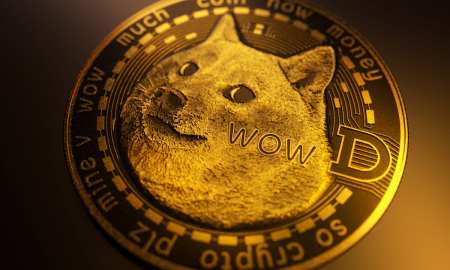
When Time named Elon Musk the 2021 Person of the Year yesterday, the fourth sentence read: “With a flick of his finger, the stock market soars or swoons.” And that’s nothing to what a casual tweet can do for Dogecoin, the meme-flavored joke coin that Musk has more or less single-handedly turned into an actual cryptocurrency.
One, in fact, that is in the top 10 cryptocurrencies, with a $6.1 billion market capitalization at a price of $0.19. It’s all-time high, on May 8, was nearly $0.74. Which isn’t bad when you consider that Dogecoin, or DOGE, started 2021 at $0.01.
On Feb. 4, Musk tweeted a picture from the Lion King, in which the newborn Simba is introduced as “Circle of Life” plays with his own face pasted on Rafiki and the Dogecoin Shiba Inu dog on Simba’s, with the message “ur welcome.” Dogecoin soared 57% in 24 hours.
ur welcome pic.twitter.com/e2KF57KLxb
— Elon Musk (@elonmusk) February 4, 2021
On April 1 — note the date’s significance — Musk tweeted about his rocket company: “SpaceX is going to put a literal Dogecoin on the literal moon.” Doge jumped 28% in an hour, retreating to about 12% 24 hours later. He has tweeted before that both doge and bitcoin will “moon” — crypto lingo for skyrocket in value.
SpaceX is going to put a literal Dogecoin on the literal moon
— Elon Musk (@elonmusk) April 1, 2021
So, when the world’s richest man announced to his 66.4 million Twitter followers that his electric car maker, Tesla, would make some of its merchandise — not cars, mind you — “buyable with Doge & see how it goes,” no one in the crypto industry was too surprised that the cryptocurrency spiked 20%.
Musk has even parodied his own Dogecoin tweets’ power. In March he tweeted “Doge meme shield” over a cartoon of a soldier protecting a sleeping child from flying knives and bullets. The words Dogecoin Value Dropping” was pasted over the weapons, “Memes” over the soldier, and “Dogecoin” over the child.
Doge meme shield (legendary item) pic.twitter.com/CeomU9q84c
— Elon Musk (@elonmusk) March 1, 2021
And, he’s not always good for Doge. A tweeted criticism about the concentration of Doge holdings by a few “whales” knocked the price for from $0.63 to $0.49, although it bounced back to $0.59 about six hours later. And his Saturday Night Live appearance in May was supposed to be good for Doge, but ended up tanking it after he called it “a hustle” in a skit.
If major Dogecoin holders sell most of their coins, it will get my full support. Too much concentration is the only real issue imo.
— Elon Musk (@elonmusk) February 14, 2021
Twitter Power
His impact on Bitcoin can — at times — be similar. Particularly given its market cap of $886 billion, which is currently down substantially from the $1 trillion it held for much of the year.
In January, Musk added “#bitcoin” to his Twitter bio, causing it to spike 20%. Then in May he announced that Tesla had bought $1.5 billion in bitcoin and would accept the cryptocurrency for its cars, causing it to spike, and then retreated from bitcoin payment due to environmental concerns, whereupon it tanked.
That led Blockchain Research Labs to issue a report on Musk’s Twitter influence on bitcoin and dogecoin prices. Noting that his addition “#bitcoin” to his Twitter bio increased the largest cryptocurrencies market cap by about $111 billion in a few hours, the firm said it “[led] to the question under which conditions people in the public eye should comment on specific cryptocurrencies.”
It added: “If a single tweet can potentially lead to an increase of $111 billion in Bitcoin’s market capitalization, a different tweet could also wipe out a similar value.”
Certainly, the SEC shares that opinion. In August 2018, Musk tweeted that he was taking Tesla private at $420 a share — referencing the number’s use as a word for marijuana — which was a lot more than TSLA’s value at the time. The SEC filed securities fraud charges, which Musk fought for a while before settling by paying a $20 million fine, stepping down as chairman of Tesla, and having company oversight of his Twitter account.
No, Seriously
Dogecoin is a joke. Literally. The cryptocurrency started life in 2013 as a joke, when Jackson Palmer and Billy Markus turned a flippant Twitter comment into a cryptocurrency designed to be as un-investable as possible. For example, the block reward for mining new Dogecoin varies randomly between zero and one million DOGE.
And its logo of a Japanese shiba inu dog is an actual, popular meme, also dating back to 2013. The next year, Weird Al Yankovich used the meme — with no Dogecoin intent — in his parody video “Word Crimes,” a parody of Robin Thicke’s “Blurred Lines.”
Markus has taken a bemused view of his creation, noting that he didn’t keep any. Telling CNBC this May that he coded it in “about two hours,” he explained that “the crypto community can be pretty elitist and not very inclusive, and we wanted to make a community that was more fun, lighthearted and inclusive.”
Neither he nor Palmer — who is not at all amused — expected the small but determined community that formed around their creation, nor its explosion into the mainstream.
So, how successful is Dogecoin, really?
Well, a development effort has sprung up to make it actually useful as a decentralized app platform. It’s also been accepted as payment by other companies, including the r/WallStreetBets darling AMC movie theater chain, online computer and electronics store NewEgg and crypto-fan Mark Cuban’s Dallas Mavericks basketball team.
But, it even has its own dog-themed parody coin that is turning into a serious cryptocurrency: Shiba Inu coin, or SHIB, is pitched as an alternative to Dogecoin but running on the Ethereum blockchain. Created last August, it now has a market cap of $18.2 billion.
December 14, 2021 - 4 years ago

Cryptocurrencies’ borderless nature, fast transaction speeds and lower costs have seen them emerge as a viable solution for businesses looking to both pay and get paid, especially when dealing with international clients and suppliers.
The advantages of using crypto for business-to-business (B2B) payments are clear — but even as the concept is becoming more mainstream, many organizations remain hesitant to adopt what they consider to be a nascent and fairly risky technology. Christophe Lassuyt, co-founder at Request Network, told PYMNTS that’s largely due to one thing: fear that stems from a lack of education.
“[Businesses] must overcome their fear of this new world where financial freedom and responsibility change the economy,” Lassuyt said. “To do so, they need to learn about the industry, understand how to start, be careful what information they trust and set up safety procedures from the beginning.”
Further reading: Blockchain Technology Could Solve Many Challenges in Africa’s Payments Space
Learning something new takes time, but it could prove to be a worthwhile investment, as Lassuyt sees a lot of demand for crypto payments in the B2B world. While startups involved in the blockchain technology space have led the charge in cryptocurrency adoption, plenty of other organizations have come to realize the advantages of digital tokens for business payments.
Lassuyt, whose company has built an app for billing customers in crypto, said he has seen a lot of interest from what he calls “internationally remote companies,” which have found crypto to be an extremely useful tool for international transactions due to its speed and cost-effectiveness.
Lassuyt continued that crypto is far more convenient than cumbersome money transfers, which require that the recipient provide banking details, send an invoice and then wait days for their money to arrive. It also eliminates the need for currency conversion and the associated fees.
You might also like: Six Crypto Execs Warn Congress Not to Overregulate Crypto
“Any company that needs to pay a number of small payments internationally needs crypto to make things more efficient and simple,” Lassuyt said.
He added that many companies also see crypto as a sound investment. A growing number of executives prefer to keep their company’s funds stored in digital wallets where they can earn savings interest upwards of 10%, as opposed to keeping it in a bank account with close to zero interest.
Lassuyt conceded that the process of getting into crypto for business purposes is a little more challenging than doing so as an individual. The first step, he said, is to acquire some crypto, which means creating a custodial account on an exchange such as Coinbase.com or Kraken.com. After that, it’s easy to acquire crypto and start making payments.
See more: 73% of FIs That Offer Cryptocurrency Plan to Add More
Lassuyt advises businesses to explore the emerging “Web3 universe” if they want to achieve true financial freedom and enjoy the full benefits of the crypto world. Web3 refers to a version of the internet that is decentralized and based on peer-to-peer technologies such as public blockchains.
The next step is to transition from a custodial wallet, such as Coinbase or Kraken, to a noncustodial wallet like Ledger, Treezor or Metamask. In a noncustodial wallet, the user has full custody of their funds and can interact with a new generation of decentralized finance apps, which makes it possible to invest, trade in crypto, stake tokens for rewards and more.
“From there, life is simple,” Lassuyt continued. “It’s financial freedom and financial inclusion. You can choose an app like Request Finance for your billing process, then select a multi-signature super-secure wallet such as Gnosis Safe and you’re good to go.”
Lassuyt noted that within the Web3 universe, the possibilities are almost limitless. There’s also a lot of functionality that simply isn’t possible with legacy payment tools – for example, noncustodial wallets can enable users to pay dozens of invoices in multiple cryptocurrencies with a single click.
More like this: Metal Payment Cards May Be Key to Unlocking Cryptos’ Commercial Potential
“Once companies understand that payment of 500 invoices to 45 countries in a single click is possible, they will happily invest some time to learn more,” Lassuyt said. “Companies need to adopt a learning approach, get in touch with the right services and ask for help to set things up.”
Lassuyt believes the adoption of crypto and Web3 for B2B payments is inevitable, given how 2021 has been a pivotal year, with companies like Elon Musk’s Tesla validating crypto through its acceptance of bitcoin.
Further, he cited the huge rewards for early adopters in the crypto space that are helping to accelerate acceptance. The Ethereum Name Service, which is a protocol for human-readable crypto addresses and decentralized domain names, provides rewards of $10,000 on average for its users, he said.
“This is why growth will happen faster than we imagine,” Lassuyt predicted. “I believe 2022 will mark the beginning of exponential adoption of crypto in B2B by the most innovative companies.”
December 14, 2021 - 4 years ago

Cryptocurrency is growing fast enough that it may soon become a systemic risk to U.K. financial stability, the Bank of England warned in a report released on Monday (Dec. 13).
The BoE’s Financial Stability report for December focuses on four areas of risk: COVID and the economy, bank resiliency, mortgage measures and crypto-assets.
The crypto-asset market “probably isn’t a financial stability risk today, but it has all the makings of something that could become one,” BoE Governor Andrew Bailey said at a press conference. “At the current rapid pace of growth, and as these assets become more interconnected with the wider financial system, crypto-assets will present a number of financial stability risks.”
Last month, Sir Jon Cunliffe, the BoE’s deputy governor for financial stability, warned in an interview with Today UK News that time is “getting closer.”
Also see: Regulators Feel the Pressure as Banks, FinTechs and Crypto Firms Vie for Wallet Share
While Bailey did not specify all the risks in his remarks, he gave an example, arguing that a “large fall in crypto-asset valuations may cause institutional investors to sell other financial assets and potentially transmit shocks through the financial system,” adding that “the use of leverage can amplify such spillovers further.”
Calling for a new regulatory regime for crypto both in the U.K. and globally, Bailey called on banks and other financial institutions to “take an especially cautious and prudent approach to any adoption of these assets until such a regime is in place.”
Although no major British banks have reported direct exposure to crypto-assets as yet, some are starting to offer a variety of services, such as crypto-asset derivatives trading or custody services.
The crypto market continues to grow rapidly, increasing tenfold since early 2020 to about $2.6 trillion last month, equivalent to 1% of global financial assets, the FPC said.
Crypto’s Dangerous 1%
Noting that the total market value of crypto-assets has grown tenfold in the past two years, Bailey pointed out that they represent about 1% of global financial assets. That was using a $2.6 trillion market cap in November, when crypto briefly broke $3 trillion during a bull rally. It is currently at about $2.1 trillion — nearly half that of bitcoin.
Bailey also called the “vast majority” of crypto-assets “unbacked,” with the report putting that figure at “around 95%.”
As cryptocurrencies “have no intrinsic value, [they] are vulnerable to major price corrections, and so investors may lose all of their investment,” he said. That’s a point BoE officials have made many times before.
Related news: SEC Turning Attention to Crypto Exchanges
The report repeated the central bank’s call for “enhanced regulatory and law enforcement frameworks, both domestically and at a global level,” saying it is “needed to influence developments in these fast-growing markets.”
That said, it did point out that such regulations should balance the risks crypto poses with the need to support financial innovation and competition.
Instability Ahead
The bank, which has been investigating the potential benefits of a central bank digital currency (CBDC) aggressively this year, is also concerned with stablecoins — particularly global ones like Facebook’s Diem (formerly Libra) project, the report said. It argued that legislation should be passed to “bring systemic stablecoins into the Bank’s regulatory remit.”
That’s a concern that grew in urgency last week, when Meta (formerly Facebook) announced that the Novi digital wallet it created for Diem would support the dollar-denominated Paxos stablecoin on Meta-owned WhatsApp.
Read more: Is Paxos the New Diem? The Stablecoin Issuer’s Facebook Pilot Just Expanded to 2B WhatsApp Customers
As the world’s most popular messaging service, WhatsApp has two billion customers.
“We often hear that people use WhatsApp to coordinate sending money to loved ones, and Novi enables people to do that securely, instantly and with no fees,” Stephane Kasriel, Novi’s incoming leader, said on Dec. 10. “Payments will appear directly in people’s chat.”
That is exactly what has terrified central bankers, financial regulators and elected officials around the globe since the Libra/Diem project was announced. The concern is that a stablecoin on such a large platform could bypass national currencies, taking control of the broader financial system away from authorities.