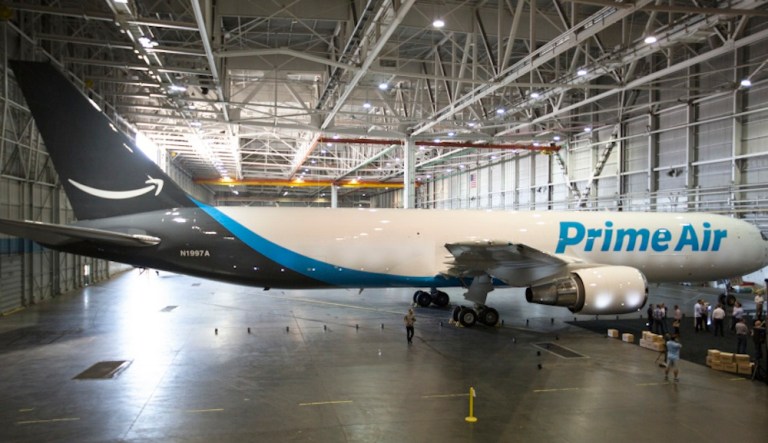
The world got its initial peek at the first Prime Air-branded cargo aircraft today in Seattle as the airplane enjoyed its maiden flight at the annual Seafair Air Show.
Called Amazon One (because of course it is), the plane on display in Seattle is one of 11 in the air for Amazon through various air partners including Atlas Air and ATSG.
The plane exists to buttress Amazon’s ever expansive desire to fully control is logistics and fulfillment effort. And of course to bring just a little bit of Amazon’s peculiar sense of humor to the friendly skies, Amazon One’s tail number is a prime number.
The move comes out of necessity for Amazon. Prime memberships are growing and consumers are growing ever more demanding about getting their good ASAP, but that has left Amazon with fulfillment costs growing faster than its revenue. Instead of scaling back their efforts, Amazon is leveling them up to make them more cost-efficient. Prime One joins a series of other efforts including Amazon Flex, drone delivery service and its extremely aggressive fulfillment center construction project scheduled for this year.
“Creating an air transportation network is expanding our capacity to ensure great delivery speeds for our Prime members for years to come,” Dave Clark, Amazon’s SVP of worldwide operations, said in a statement. “I cannot imagine a better way to celebrate the inaugural flight than in our hometown at Seafair alongside Amazon employees and Seattle residents.”
However, the launch (literally) of Prime One raises the same question that has been recurring for much of the last year: Is Amazon moving to become a shipper itself, or is it simply trying to push down fulfillment costs?
Advertisement: Scroll to Continue
Financial research firm Cowen & Co. has argued that Amazon lacks the density and reach to form its own shipping outfit, and that it is unlikely to get support from competitor retailers.
“By delivering for other customers, Amazon would be able to tap into sales data and could undercut shippers using their service,” Becker wrote. “Most retailers view Amazon as their largest competition and probably won’t want to share this data.”