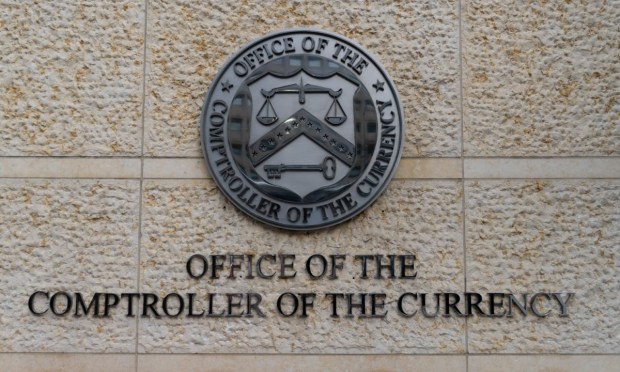
The rule, issued Wednesday (Oct. 21), translates the GENIUS Act’s requirements into a supervisory framework for bank subsidiaries, federally approved nonbank issuers and certain other providers. It takes effect Jan. 18, giving prospective issuers a short runway to prepare for regulated operations.
“We are providing a clear, practical framework for payment stablecoin innovation, with strong standards for reserve backing, redemption, and risk management,” Comptroller Jonathan Gould said in a Wednesday press release.
Enacted July 18, 2025, the Guiding and Establishing National Innovation for U.S. Stablecoins Act establishes a regulatory and licensing framework for payment stablecoins. It generally prohibits anyone other than a permitted issuer from issuing a payment stablecoin in the United States.
The law also restricts distribution. Digital asset service providers cannot offer or sell payment stablecoins to U.S. customers unless the issuer is permitted under the framework or is a foreign issuer meeting specified requirements. The framework reaches both companies creating stablecoins and businesses providing access to them.
In a statement, Treasury Secretary Scott Bessent compared the legislation to Abraham Lincoln’s National Currency Act of 1863, which “established a national framework for bank-issued currency.”
The OCC’s rule covers subsidiaries of national banks and federal savings associations, nonbank entities seeking or holding federal issuer approval, and state-qualified issuers over which the agency has statutory regulatory or enforcement authority. It also addresses foreign payment stablecoin issuers and certain custody activities conducted by OCC-supervised entities.
Most requirements appear in a new section of the agency’s regulations, 12 CFR 15. They address permissible activities, reserve assets, redemption, risk management, audits, reporting and supervision. The framework also includes capital requirements and an operational backstop.
We’d love to be your preferred source for news.
Please add us to your preferred sources list so our news, data and interviews show up in your feed. Thanks!
Together, those categories place financial resources, operational resilience and supervisory accountability at the center of the new regime. For businesses evaluating issuance, the scope indicates that obtaining approval is only one element of operating under the framework. Reserve management, redemption arrangements, custody and reporting will also fall within regulatory oversight.
The rule establishes application and registration requirements, procedures for state-qualified issuers transitioning into the federal framework, and provisions governing examination and supervision of foreign issuers. It also addresses circumstances in which an issuer’s approval can be revoked or rescinded.
Related amendments revise the OCC’s existing regulations covering capital adequacy, prompt corrective action, assessment fees and administrative procedures. The changes connect stablecoin oversight with the agency’s broader supervisory machinery.
A significant piece of the GENIUS Act remains separate, however. The final rule excludes requirements involving the Bank Secrecy Act, anti-money laundering obligations and sanctions administered by the Office of Foreign Assets Control (OFAC), included in the statute. Those subjects will be addressed through another rulemaking coordinated with Treasury.
According to Decrypt, Treasury’s Financial Crimes Enforcement Network and OFAC proposed requirements in April covering anti-money laundering programs, suspicious activity reporting and sanctions compliance programs. Issuers will need to track that process alongside the OCC framework.
The final rule follows a February proposal and a 60-day comment period. The OCC received hundreds of comments from cryptocurrency companies, community bankers, trade associations, academics and others, Decrypt reported. Regulators had missed the law’s earlier July deadline for finalizing implementing rules.
Application timing remains another practical consideration. The OCC will separately announce when it begins accepting applications and waiver requests from prospective issuers, according to Decrypt.
The agency also signaled that supervision will evolve with the market. Citing “the nascency of the industry,” it said it would monitor developments and adjust the framework where necessary. For prospective issuers, finalization establishes the regulatory architecture while leaving further implementation steps ahead.


 Add as Preferred Source