March 28, 2022 - 4 years ago
Today in retail, retailers face hyper activism, while BigCommerce launches Multi-Storefront. Plus, buy now, pay later (BNPL) options aren’t taking away from private-label credit cards, Ted Baker turns down a pair of takeover offers from Sycamore Partners, and PayPal’s reverse logistics brings some happiness to the returns process.
Retailers Face Spate of Hyper Activism Amid Post-COVID, Pre-Inflation Transition
Retailers and brands are transitioning from a digital shift and two years of pandemic-era transformation, while also re-tooling their business propositions to fit consumers’ current concerns about inflation. A third trend is emerging that also threatens the status quo: activist investors. The ongoing spate of external demands being put forth by large institutional investors onto the retail sector is something more akin to hyper activism. In the past week alone, there have been at least six different buyout, breakup and board shakeup plans in the retail trade press.
BigCommerce Debuts Multi-Storefront to Help Merchants Manage Multiple Brands in One Store
eCommerce platform BigCommerce has debuted Multi-Storefront, a new feature that helps enterprise merchants create and manage multiple storefronts within one BigCommerce store. Multi-Storefront merchants can manage their entire businesses from one dashboard. All Multi-Storefront shops can be powered by BigCommerce’s native stencil theme framework or by a third-party headless front end. Brands can also mix and match headless and native stencil storefronts in a single account.
New Data Shows BNPL Doesn’t Cannibalize Private-Label Credit Cards at Checkout
While 52 million United States consumers used buy now, pay later (BNPL) options to make purchases in December, BNPL’s meteoric rise into the limelight has given some retailers pause. They are facing mounting pressure to provide customers with BNPL options, but they are also concerned that providing BNPL options could cut into their store card sales. In “The Truth About BNPL And Store Cards,” a PYMNTS and PayPal collaboration, PYMNTS surveyed 2,161 U.S. consumers about their propensity to use BNPL, store cards and other payment methods at the retail point of sale (POS) to get the inside scoop on why BNPL is not store cards’ competition, but rather their natural complement.
Ted Baker Declines Sycamore’s Takeover Offers
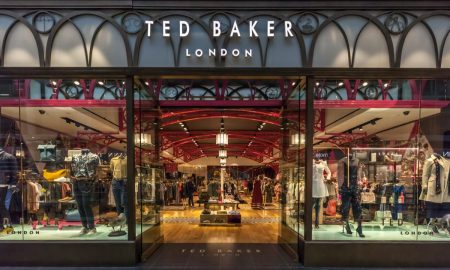
British fashion retailer Ted Baker has turned down a pair of takeover offers from private equity investor Sycamore Partners Management, saying the proposals greatly undervalue the company. The retailer said Sycamore’s offers did not “compensate shareholders for the significant upside that can be delivered by Ted Baker as a listed company.”
PayPal’s Reverse Logistics Unit Brings ‘Happy’ to the Dreary Returns Biz
In January, the National Retail Federation said that merchants expect more than $761 billion in merchandise sold last year to be returned by consumers — that’s nearly 17% of U.S. retail sales, pegged at $4.5 trillion in 2021. That’s bad news for merchants on many levels, said David Sobie, vice president of Happy Returns at PayPal. PayPal has that it’s offering merchants that are part of the PayPal network use of its Happy Returns service and exchange portal at no additional cost.
Apple Slashing iPhone SE, AirPods, iPhone 13 Production
Apple will make about 20% fewer iPhone SEs next quarter than the tech giant had originally planned, a sign that consumer electronics demand has been lowered as the Russia-Ukraine war continues. The company will also cut back on AirPods earphones production by 10 million units for 2022. The company has also asked its suppliers to slow down iPhone 13 production by a couple of million units across the entire range, based on seasonal demand.
Walmart Ends Some Cigarette Sales
Walmart will stop selling cigarettes in some U.S. stores — including some locations in Arkansas, California, Florida and New Mexico — after a years’ long debate among the company’s management about the issue. The company is replacing the tobacco products with more self-checkout registers, grab-and-go food options and candy.
In Bid to Be Heard, Angi Makes Oddly Satisfying Bet on Ryan Reynolds and ‘ASMR’
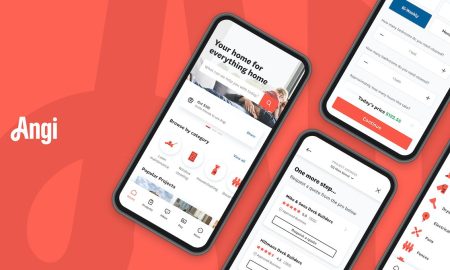
Sometimes the best way to be heard is to whisper. That’s the thinking behind a new big-budget ad campaign by home improvement platform Angi in the form of three, 30-second spots. Autonomous sensory meridian response, or ASMR, is a media production technique that relies on whispering and other highly mic’d sounds and tightly shot, mesmerizing images to deliver what Google Trends referred to as a sedative “brain massage.” In Angi’s case, with the help of Ryan Reynolds’ Maximum Effort creative agency, the home improvement platform turns steam cleaning, caulking and painting from mundane chores into some sort of hypnotic moment of household Zen under the tag line, “That oddly satisfying feeling when you don’t do it yourself.”
Livestreamed Personal Shopping Lets Influencers Walk Endless Aisles — Rather Than Customers
In the new era of livestreamed personal shoppers, social media influencers with great style are taking center stage in creating the curated digital shopping experiences consumers now expect. Inspired by the ubiquity of the new app-based streaming shopping she’s seen in Asia, ShopThing Founder and CEO Maggie Adhami-Boynton brought it to North America — and tailored it to a new audience. It’s estimated to do $430 billion this year, up from $18 billion in 2018. ShopThing’s smartphone-armed influencers made short videos in-app, curating items based on comments in their feeds and filling empty stores with virtual shoppers.
Low-Cost Self-Checkout System Aims to Disrupt Retail POS Market
The pandemic has completely changed consumers’ shopping and buying behavior, accelerating the adoption of digital technologies and a boom in eCommerce within the retail sector. As a result of this shift, brick-and-mortar retailers looking to create a winning post-pandemic business model have turned to self-service solutions like buy online, pick up in-store (BOPIS) and click-and-collect methods to keep physical contact to a minimum and entice consumers back into stores.
March 28, 2022 - 4 years ago
British fashion retailer Ted Baker has rebuffed two takeover offers from private equity investor Sycamore Partners Management, saying the proposals greatly undervalue the company, Reuters reported Monday (March 28).
The retailer said the offerings from Sycamore did not “compensate shareholders for the significant upside that can be delivered by Ted Baker as a listed company,” the report stated
See also: British Retailer Ted Baker Could Be Purchased by US Investor
The overtures from Sycamore come at a time of heightened interest in British companies amid declining valuations in the wake of the pandemic and the U.K.’s post-Brexit misfortunes.
And as PYMNTS noted Monday, it’s also happening at a time when activist investors are leaning on retailers.
Read more: Retailers Face Spate of Hyper Activism Amid Post-COVID, Pre-Inflation Transition
Last week, Ryan Cohen, Chewy founder, Gamestop chairman and RC Ventures activist, was able to place three board members on Bed, Bath & Beyond, where he controls a 9.5% stake.
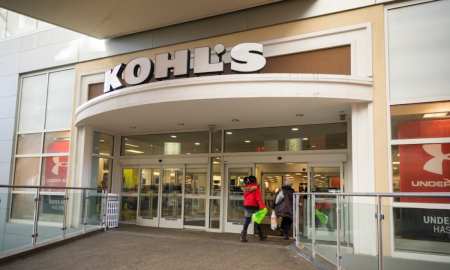
Meanwhile, there’s the saga of Kohl’s, which has said no to multiple outside offers and investor reorganization demands this year that have attempted to break the company into pieces, bring in new directors or simply buy it out entirely for as high as $9 billion.
See also: Why Are Activists Suddenly Swarming Kohl’s and Other Retailers Now?
Reuters reported that Sycamore first made its offer to Ted Baker earlier this month, proposing 130 pence per share, before raising that number to 137.5 pence per share, which would have valued the chain at 253.8 million pounds (about $333.7 million).
“It’s unsurprising that management’s not keen to give up the reins after a few difficult years,” Laura Hoy, equity analyst at Hargreaves Lansdown, told Reuters. “We’re finally starting to see some green shoots from the group’s turnaround efforts now that formal occasions are back on the social calendar.”
March 28, 2022 - 4 years ago
Apple will make about 20% fewer iPhone SEs next quarter than the tech giant had originally planned, a sign that consumer electronics demand has been lowered as the Russian attacks on Ukraine continue and escalating fears about global wars persist, according to a Nikkei Asia report Monday (March 28).
Apple launched the 2022 edition of the iPhone SE, a more affordable 5G-capable phone, less than three weeks ago, but is scaling back production by 2 to 3 million this quarter, four people told Nikkei Asia for its report. The company will also cut back on AirPods earphones production by 10 million units for 2022.
The tech giant shipped about 76.8 million AirPods last year. That number is likely to drop in 2022.
Finally, Apple also has asked its suppliers to slow down iPhone 13 production by a couple of million units across the entire range, based on seasonal demand.
The Russia-Ukraine war has put a further crimp on the shortage of chips for electronics that have hurt the production of everything from smartphones to PCs to automobiles. Several countries have imposed sanctions on Russia during the ongoing conflict, leading to higher prices and lower supply on some items.
Apple ended its sales in Russia shortly after their military attacked Ukraine. Apple is the third-biggest smartphone maker in Russia. The country saw sales of about 5 million iPhones last year.
Related: Apple Developing iPhone Hardware Subscription Service
Last week, Apple Inc. announced a subscription service for the iPhone and its other hardware products that would allow people pay for their devices with a monthly fee, similar to app fees, saying they are still in development.
Apple has typically used installments or carrier subsidies to sell its devices at full cost, but the shift to a subscription model could help the tech giant generate more revenue and make it easier for people to afford their gadgets.
The iPhone generated almost $192 billion in sales last year, more than half the company’s revenue, Bloomberg reported. An Apple spokeswoman declined to comment on the company’s plans.
March 28, 2022 - 4 years ago
At a time when retailers and brands are already busy transitioning from a digital shift and two years of pandemic-era transformation, while also re-tooling their business propositions to fit consumers’ current concerns about inflation, a third trend is emerging that also threatens the industry’s status quo: activist investors.
Beyond the routine process of outsiders showing interest in businesses they perceive to be undervalued, the ongoing spate of external demands being put forth by large institutional investors onto the retail sector is something more akin to hyper activism.
In the past week alone, no less than six different buyout, break up and board shake up plans have burst onto the front pages of the retail trade press, with seemingly nothing in common amongst the target companies other than the fact that they sell stuff to consumers.
For example, toymaker Hasbro, as well as London-based designer Ted Baker, both reportedly rejected the advances of their particular suitors Monday (March 28).
In the case of the former, Reuters reported Sunday (March 27) that the Rhode Island-based toymaker, whose new CEO has been on the job for less than a month, has rejected Alta Fox Capital’s bid for five board seats, and turned down a settlement offer to allow even one.
In the latter instance, the British retailer and designer said its board is focused on “delivering value for Ted Baker’s shareholders well in excess of the [$335 million] price offered by Sycamore,” a company notice stated.
What Is Up?
And it’s not just those two. Last week, Ryan Cohen, Chewy founder, Gamestop chairman and RC Ventures activist, successfully placed three board members on Bed, Bath & Beyond where he controls a 9.5% stake in a company that has delivered a 70%, peak-to-trough slump over the past 15 months.
Read more: Bed Bath & Beyond Adds Three New Board Members in Deal with RC Ventures
There’s also the ongoing pursuit of department store Kohl’s, which has rebuffed multiple outside offers and investor reorganization demands this year that have sought to break the company into pieces, bring in new directors or buy it out entirely for as much as $9 billion.
See more: Why Are Activists Suddenly Swarming Kohl’s and Other Retailers Now?
In a letter to shareholders sent March 21, ahead of the retailer’s annual meeting May 11, Kohl’s board and CEO Michelle Gass confirmed the company had hired Goldman Sachs to coordinate a non-binding, preliminary expressions of interest, while also urging investors to reject the other proposals.
“Kohl’s Board and management team are producing strong results and continuing to successfully execute on the company’s long-term strategy,” the company’s most recent response to the activists said, while also stressing its ongoing commitment to evaluating opportunities that would increase shareholder value.
“Unfortunately, one of our shareholders, Macellum Advisors, is seeking to take control of your board with a slate of less qualified nominees,” the retailer told its shareholders. “We believe Macellum’s efforts to take control of Kohl’s are unjustified and unwarranted and highly concerning given Macellum’s intentions to engineer short-term financial actions that could damage the long-term future of the company.”
In February, Macy’s CEO Jeff Genette said a three-month independent analysis had determined that the retailer’s current omnichannel approach was the best business model for the brand, rather than splitting its digital assets from its physical stores.
“In every single scenario we considered, we found that the combination of our profitable digital platform with our national footprint will deliver greater value to shareholders than a separation of our digital and physical assets,” Gennette said, noting that Macy’s multiple nameplates, serving off-price to luxury consumers, was the most appealing way to serve the retailer’s diverse and multi-generational customer base.
Other firms that have been targeted this year amid the burst of hyper activism include Peloton, denim retailer/designer Guess?, as well as the consumer health unit of pharmaceutical giant GlaxoSmithKline.
Read more: New Peloton CEO Says No Plans to Sell Floundering Connected Health Brand
Activists Call for Guess Founders to Step Down From Denim Retailer’s Board
GlaxoSmithKline, Unilever Spar Over Future of GSK’s Consumer Health Business
March 28, 2022 - 4 years ago
Walmart Inc. will stop selling cigarettes in some U.S. stores — including some locations in Arkansas, California, Florida and New Mexico — after a yearslong debate among the company’s management about the issue, The Wall Street Journal reported Monday (March 28).
The company is replacing the tobacco products with more self-checkout registers, grab-and-go food options and candy, people familiar with the situation told the WSJ.
A Walmart spokeswoman confirmed the move at some of the company’s 4,700 stores.
“We are always looking at ways to meet our customers’ needs while still operating an efficient business,” she said, declining to say how many stores are pulling tobacco products.
U.S. health officials say cigarettes are linked to 480,000 deaths in the country each year. Walmart’s decision to pull tobacco products from some stores came before the start of the COVID-19 pandemic, some of the people told WSJ.
Walmart Chief Executive Doug McMillon has repeatedly challenged company executives to stop selling tobacco, people familiar with the discussions said.
It’s become an especially hot topic as Walmart has moved more fully into the healthcare space in recent years, with fear about creating a double standard. Many Walmart executives argued for keeping tobacco products on the shelves since they are both legal and wanted by their customers, the report said.
Related: Walmart Holds Shrinking Lead in Health and Personal Care as Amazon Momentum Builds
Walmart took in almost $50 billion in 2021 in the health and personal care category, up by about 30% in the past five years and about one-third, or roughly $13 billion, larger than Amazon’s total sales in this segment.
Still, Walmart has seen Amazon chip away at its 8-to-1 market advantage in 2014 and cut it to 1.6% at the end of last year.
PYMNTS’ latest Whole Paycheck data showed that Walmart closed 2021 with a 5.9% share in its second-largest category (behind only groceries), compared to Amazon’s 4.3% stake. Despite that, Walmart’s revenue growth in health has been unable to add market share in a category that has experienced outsized growth for the past 30 years.
By comparison, Amazon has grown its revenue in this segment by nearly 340% over the past five years, and seen its share of the pie go up year after year. Even so, health and personal care is taking on a growing importance for Amazon, where it is now the company’s fourth largest contributing category of seven retail segments tracked by PYMNTS, behind its Top 3, including electronics and appliances (24.5%) sporting goods, hobbies, music and books (16.9%) and clothing and apparel (14.6%).
Amazon’s overall sales growth and 57% share dominance within U.S. eCommerce are the result of consumers’ massive mindset and wallet shift to online shopping over the past decade, where the Seattle-based retailer has been taking over categories once led by Walmart.
In 2014, Amazon’s 2.9% share of furniture sales in the U.S. was small and sharply trailed Walmart’s 10.9% stake. Fast forward to 2019, the leadership cross-over year, and Amazon suddenly found itself with a slight lead, as consumers became increasingly comfortable with the idea of buying bulky furniture items without touching them.
That trend has only accelerated over the past two years of pandemic lockdowns, where the nesting trend has seen people investing heavily to make their homes and home offices more inviting, and Amazon’s lead in the category widened to 14.8% in 2021, amounting to a 6 percentage-point lead.
The point with furniture is two-fold. First, no category lead is safe or too large for Amazon to attack, and second, once it starts to gain traction, it historically adds sales and share and momentum until it is the dominant player.
March 28, 2022 - 4 years ago
Open Software-as-a-Service (SaaS) eCommerce platform BigCommerce has debuted Multi-Storefront, a new feature that helps enterprise merchants create and manage multiple storefronts within one BigCommerce store, according to a Monday (March 28) press release.
Multi-Storefront merchants can manage their entire businesses from one dashboard, the release stated
“Multi-Storefront marks a significant milestone in our platform’s ability to serve the most complex use cases and is expected to be the most transformative of our enterprise product enhancements,” said BigCommerce CEO Brent Bellm in the release. “This powerful new capability gives merchants the flexibility to grow their brand, segment and geographic scope within the scalable context of a single account.”
All Multi-Storefront shops can be powered by BigCommerce’s native stencil theme framework or by a third-party headless front end, such as Next.js, Bloomreach and WordPress, according to the release. Brands can also mix and match headless and native stencil storefronts in a single account.
Multi-Storefront, which is accessible from the BigCommerce control panel, “enables merchants to deliver tailored shopping experiences to their different buyers by setting up unique storefronts with separate domains, customized design, transactional and promotional emails, and custom pricing with preferred payment methods,” the release stated.
Merchants using Multi-Storefront can also “simplify management through holistic views to manage customers, products, order fulfillment and storefront analytics and data insights,” according to the release.
Earlier this month, BigCommerce announced a partnership with checkout and shopper network Bolt that gives BigCommerce merchants the chance to integrate Bolt One-Click Checkout.
Read more: BigCommerce, Bolt Partner on One-Click Checkout
Bolt can be pre-built into merchants’ BigCommerce stores, which allows them to offer secure one-click transactions. Through Bolt, merchants have access to the tens of millions of checkout-ready shoppers, allowing them to shop with a single identity across a merchant’s site, removing login or password requirements and establishing an instant connection.
Merchants can turn on Bolt’s agnostic architecture through the BigCommerce control panel and may see increased conversion rates, further customer reach, flexible integration, data insight and easy configuration.
March 28, 2022 - 4 years ago
At a time when brands are struggling to capture shrinking consumer attention spans within a torrent of competing images and content, sometimes the best way to be heard is to whisper rather than shout.
Such is the thinking behind a new big-budget ad campaign launched Monday (March 28) by home improvement platform Angi, in the form of three, 30-second spots that look and sound more like the opening of a “Breaking Bad” episode than a sales pitch to repaint your kitchen.
“Obviously, you need products and marketing that cut through that noise,” Angi Chief Marketing Officer Dhanusha Sivajee told PYMNTS ahead of the national rollout of the most elaborate advertising campaign in its 27-year history.
“We wanted to have our creative [content] not just tell the message but actually demonstrate that message,” Sivajee added, “so that’s where we moved to this ‘oddly satisfying’ ASMR idea that makes you feel really calm and really happy and satisfied.”
‘Oddly Satisfying’
For those unfamiliar with autonomous sensory meridian response or ASMR, it is a media production technique that relies on whispering and other highly mic’d sounds and tightly shot, mesmerizing images to deliver what Google Trends referred to as a sedative “brain massage.”
In Angi’s case, with the help of Ryan Reynolds’ Maximum Effort creative agency, the home improvement platform turns steam cleaning, caulking and painting from mundane chores into some sort of hypnotic moment of household Zen under the tag line, “That oddly satisfying feeling when you don’t do it yourself.”
“We just thought, why not really partner and lean into that [ASMR] movement in terms of creating content that makes people feel really calm and positive and release those chemicals in the brain,” the CMO, who joined Angi six months ago, said. “I think in this day and age, with so much going on in the world, giving consumers a sense of calm was something that was really important to us.”
Satisfying, but Will It Sell?
To be sure, the unusual ad campaign comes at a time when Angi’s stock has slumped nearly 60% in the past year and marks the company’s second big branding initiative since it shortened its name from the original Angie’s List.
Whether the spots resonate with consumers enough to garner their own viral lift via social media remains to be seen, but in the meantime, Angi will be moving ahead with a national ad-buy aimed at reaching the wide demographic diversity of its target homeowner customers.
“Another reason why we really love this concept is that it works across all mediums, both on the large screen [TV] as well as on the smallest screens on mobile,” Sivajee said.
The new ads also come at a time when everything from large legacy retailers and brands to small direct-to-consumer (D2C) digital startups are not only contending with shortened consumer attention spans, but also with rising customer acquisition costs (CAC) where cost-per-click rates have risen as much as 40% without providing a commensurate increase in conversions.
While that is a consideration, in Angi’s case, nurturing referrals is also a significant driver of business, something Sivajee said was made easier by the fact that the brand has been around for nearly 30 years.
“Angie’s List was the original ‘OG’ of the internet, so we’re very lucky that we are able to drive a lot of our acquisition organically and through word of mouth,” she said.
March 28, 2022 - 4 years ago
As goes online sales growth, so grows the ocean of returns generated for any number of reasons, from fit to finances. The National Retail Federation (NRF) recently put a number on it.
In January the NRF said that merchants expect more than $761 billion in merchandise sold last year to be returned by consumers — that’s nearly 17% of U.S. retail sales, pegged at $4.5 trillion in 2021.
That’s bad news for merchants on many levels, said David Sobie, vice president of Happy Returns at PayPal. PayPal announced on Monday (March 28) that it’s surfing the returns tidal wave in 2022 by offering merchants that are part of the PayPal network use of its Happy Returns service and exchange portal at no additional cost.
Additionally, Happy Returns is expanding its Return Bars drop off locations program, introducing Return Bars in 1,300 Ulta Beauty stores. It’s a multifaceted development.
As Sobie told Karen Webster, consumers get a far easier way to do all those returns, while retail chains — now including Ulta — benefit because, “This is a new way to acquire customers.”
By building a process requiring no box, no printing of labels and a simple QR code scan at a Return Bar location, Happy Returns is taking the friction out of an irritating chore for shoppers and supplying an instant refund when they return an item – ideally to spend at that merchant location.
“We live in an instant gratification world,” Sobie told Webster. “For merchants using our software and offering the drop-off network as an alternative to mail, we see north of 70% of the time shoppers opt into Happy Returns.”
Ulta and other Return Bar retail partners benefit from instant refunds being instantly available as they stand in that store, a new way to acquire customers, he said. The consumer sees their refund appear instantly while still at the Return Bar, opening the door to some browsing and an incremental purchase from a customer that may be entirely new to the brand.
“That’s the connection we’re trying to facilitate,” he said.
See also: PayPal Acquires Happy Returns eCommerce Return Platform
Merchants Benefit From Efficiency With a Smile
As far as consumers are concerned, returns go to a great outlet store in the hereafter.
They don’t. They accumulate. Then merchants are unhappy.
Without a system to manage the mountain of eCommerce returns, it’s a problem from the loading docking to the boardroom as the cost of returns and the inefficiencies of dealing with them gum up operations and bog down associates.
“There’s been so much written about the relentless rise of e-commerce,” Sobie said. “What’s less written about is that as online shopping grows, this return challenge grows because shoppers return online purchases at rates that are three to four times higher than brick-and-mortar.”
Return Bar locations — now numbering in the range of 5,000 with the addition of Ulta Beauty — are supplied with reusable shipping totes and polybags prelabeled with QR codes. The system scans the code, and the magic begins with seamlessness for the consumer, and data for the retailer.
“Using that example,” he said, “I’m returning a pair of leggings, size large, color black. When I bring my QR code into a store and that QR code is scanned it’ll say, ‘This is David, we’re expecting him to bring a pair of black leggings,’ so the store associate will check the item in.”
Associates simply verify color, size, brand and confirm which items are present. The store takes those items, puts them into a polybag provided to the retailer and scans a QR code. As soon as that happens, the item associated with that bag is a piece of inventory that Happy Returns tracks. All items from all merchants go into the same bag.
Shipping aggregation lowers returns costs considerably. It also cuts contact center costs and ups consumer experience by reducing service calls and inquiries. And with buyers of other brands entering different stores for returns, it’s a customer-acquisition-cost-efficiency trifecta.
See also: Fighting The Friction In Retail Returns
Forward Sales, Reverse Logistics
Noting that other major players like Amazon are doing in-store returns with its Kohl’s partnership — a year after Happy Returns debuted — it’s a trend likely to grow if the NRF is even close on the returns figure. Retailers should be shopping for better ways to manage returns and transform them into sales opportunities cost-efficiently, and that’s what Happy Returns is going for, as it equips PayPal Checkout merchants with new ways to service customers.
Sobie said that today’s announcement is step one, the first time PayPal is explicitly linking Happy Returns as a benefit for PayPal Checkout merchants. The vision is how PayPal and Happy Returns can make each of their respective ecosystems more valuable and reinforce one another. For PayPal Checkout merchants, they now get best-in-class software to solve the returns problem that every online shopper has.
Asked by Webster as to whether this is also the first step to serving PayPal offers to shoppers who are returning merchandise to PayPal Checkout merchants instore as a way to boost PayPal instore acceptance, Sobie had this to say.
“Nothing I can comment on right now, but you’re definitely connecting the dots in a way that is logical and speaks to our ambitions as we think about trying to support the shopper throughout the journey – You’re on the right track.”
See also: Happy Returns by PayPal, Staples Team to Offer In-Person Returns
March 28, 2022 - 4 years ago
You’re browsing an upscale apparel store when someone enters and begins livestreaming themselves selling the clothes you’re personally browsing to a huge online audience.
It isn’t a practical joke. Rather, it’s the new era of livestreamed personal shoppers — social media influencers with great style and repartee who are going from fringe to center stage in creating the curated digital shopping experiences consumers now expect.
Inspired by the ubiquity of the new app-based streaming shopping she’s seen in Asia, ShopThing founder and CEO Maggie Adhami-Boynton brought it to North America — and tailored it to a new audience.
“I would love to say that I came up with this idea, but it is a massive industry and trend in Asia,” she told PYMNTS CEO Karen Webster. “In 2018, it was about an $18 billion industry. It’s estimated to do $430 billion this year — massive growth over the last three or four years in Asia. We were three to four years behind trend, mostly because the Asian consumer has always been early adopter of mobile.”
A not-uncommon case of COVID-19 being good for business, low foot traffic in stores catalyzed ShopThing in a big way. Its smartphone-armed influencers made short videos in-app, curating items based on comments in their feeds and filling empty stores with virtual shoppers.
“We’re taking these incredible influencers and allowing them to curate what really speaks to them,” Adhami-Boynton said. “It’s meant to be very authentic and bring you on this wonderful shopping adventure with them.”
While ShopThing is building strong brand partnerships, its handpicked influencers don’t wait for an invitation. They just go into a store, fire up the app and start selling. Adhami-Boynton explained the process, adding that influencers try on an item and take a video of it in the ShopThing app.
The influencers then input the item’s description, title, price, brand and related information, as well as what sizes are available. Then, once an influencer hits the publish button, the item goes into ShopThing’s cart. The payment happens there, and ShopThing fulfills the order.
Personal shopping via live video is becoming very popular with consumers, which helps explain the $10 million Series A fundraise ShopThing completed on March 23. The round, led by Origin Ventures with participation from Pritzker Group and Interplay, shows that the concept has legs — and feet.
“Everybody else in North America in this market is doing QVC-style two-to-five-hour live shopping,” Adhami-Boynton said. “We know that the North American consumer is not the same as the Asian consumer. For us, that means short video clips.”
It gets better. ShopThing is readying a multi-carting feature to build whole outfits in-app and launching a new membership program in April, Adhami-Boynton said.
See also: Instagram Influencers Explore Affiliate Shops
Authenticity Sells
Relying as it does on a growing army of fashion-conscious social media influencers, ShopThing selects these folks thoughtfully, always mindful to keep it real while selling.
“We have a shopper team and an influencer marketing team, and they both go through a separate vetting process,” Adhami-Boynton said. “Then we have a series of interviews and sort of like a casting call, where we bring them in and have them actually host a live shopping event just to make sure that they’re the right fit.”
There’s not as much QVC polish on these presenters, and that’s the point.
“We want it to feel very authentic,” Adhami-Boynton said. “We’re really leaning hard on the content creator economy, and they are already so good at what they do on social. But it is a little bit about figuring out if this makes sense for them and if they work well for our audience.”
As for the brands and merchants they work with, some they go to, while others come to them. Adhami-Boynton gave the example of the brand ba&sh — a brand that she knew, but which her audience was unfamiliar with. After introducing ba&sh to the ShopThing audience, the first sale resulted in about 50 items sold.
However, Adhami-Boynton added that since the ShopThing audience has become familiar with the brand, sales have quadrupled, “because we’ve now trained our audience to like it and educated them on ba&sh.”
Ba&sh is an LVMH company, so it’s a good get for them, for ShopThing and for the consumer.
Read more: The Most Successful Brands Treat Social Commerce Like a Focus Group
Scaling Fashionably
Adhami-Boynton said ShopThing “isn’t there yet” with full-concierge personal shopping, adding, “I like the one-to-many [model] because we are able to service a lot of people.”
Consumers pay a fee for using ShopThing, which is how the service makes money now. Influencers host their own sales, and customers pay a 20% service fee on items purchased. Right now, the ShopThing user is typically female, aged 25 to 45.
“She’s a busy mother, she’s an employee, she doesn’t quite have the time — it’s very daunting looking through thousands of upon thousands of static images,” Adhami-Boynton said. “She really appreciates an influencer or taste maker curating style for her and bringing it forward, and she doesn’t mind paying a little bit of a fee.”
Currently in four U.S. markets and eyeing 10 to 15 by the end of 2022, Adhami-Boynton is excited about new market opportunities based on content trends and her own metrics. ShopThing’s plan for scale it to put more boots on the ground, hoping to have between 1,000 and 5,000 shoppers on its marketplace by the end of the year.
After that — say 12 to 16 months from now — ShopThing will “open the floodgates and allow truly anybody to become a shopper,” Adhami-Boynton told Webster.
“I think we are saving retail,” Adhami-Boynton continued. “Three years ago, maybe the retailers would’ve thought that we were a scary concept. But we don’t take away anything from physical retail. We enhance it. We’re a new distribution channel for retailers.”
Related: Beyond Likes, Social Commerce Potential and Pitfalls Reach New Heights