April 19, 2022 - 4 years ago
Today in retail, a study shows deeper engagement is key to digital transformation, while PetMeds partners with Vetster. Plus, grocery delivery goes from pandemic-fueled luxury to mass-market option, Hasbro will narrow its focus to rebound from a tumultuous period, and digital consumers want digital incentives when they do their retail shopping.
11-Nation Study: Deeper Engagement Key to Expanding Digital Transformation
PYMNTS’ “Benchmarking The World’s Digital Transformation, The ConnectedEconomy™ Index Q1 2022,” created in collaboration with Stripe, studied consumer engagement across 40 key activities and the 10 categories we call “pillars of the connected economy.” Examining data from more than 15,100 respondents in 11 countries gathered between Jan. 13 and Feb. 16, we conclude that, while these nations generate 50% of the world’s gross domestic product (GDP) and represent a bloc of 700 million consumers with smartphones and web access, their economies are still in the early stages of digital transformation.
PetMeds Partners With Vetster on Pet Telehealth Platform
Online health company PetMed Express, or PetMeds as it’s more commonly known, has announced a collaboration with and investment in pet telehealth platform and care marketplace Vetster, giving PetMeds’ more than 2 million pet owners around-the-clock access to virtual pet care and medications. PetMeds is now the exclusive eCommerce provider of Vetster medications, and Vetster is the exclusive provider of telehealth services to PetMeds customers.
Grocery Delivery Evolves From Luxury Service to Mass-Market Option
For much of the pandemic, consumers with more disposable incomes shelled out for grocery delivery service, while those on tighter budgets continued to frequent brick-and-mortar stores. Now, as online grocery businesses look toward their post-pandemic future, many are trying to expand their audiences to include those of all income brackets. Instacart, for example, has announced two moves in the past week to bring its offerings to a wider audience. The online grocery marketplace will expand its partnership with discount grocer Grocery Outlet and team up with Wegmans Food Markets to accept electronic benefits transfer (EBT) and Supplemental Nutrition Assistance Program (SNAP) payments.
New Hasbro CEO Says Company to Focus on ‘Fewer Big Opportunities’
The continued popularity of Hasbro’s tabletop games since the start of pandemic alongside sustained growth of its digital gaming franchise and new TV and film partnerships, has marked the ongoing turnaround at the country’s largest toy maker by sales and market value. CEO Chris Cocks is not only trying to reverse a slump that has seen shares of Hasbro fall over 15% so far this year (compared to a 7% decline for the S&P 500 and a 6% increase by smaller rival Mattel), the maker of Play Dough and My Little Pony is also embroiled in a proxy fight that is looking to shake up the company’s board and spin off its digital operations.
Digital Consumers Demand Digital Incentives From Retailers
Amidst increasing inflation, new PYMNTS research has shown the growing importance for retailers to double down on solutions to attract and retain increasingly budget-minded consumers by incentivizing them to come in and come back. Retailers that might be unsure about the importance that rebates, loyalty and rewards play in the consumer decisioning process need only look at what their competitors are offering, per new findings in the latest edition of The Expanding Payments Choice Playbook, a PYMNTS and Onbe collaboration.
April 19, 2022 - 4 years ago
Offering in-store and curbside pickup options can encourage customers to spend more in brick-and-mortar stores.
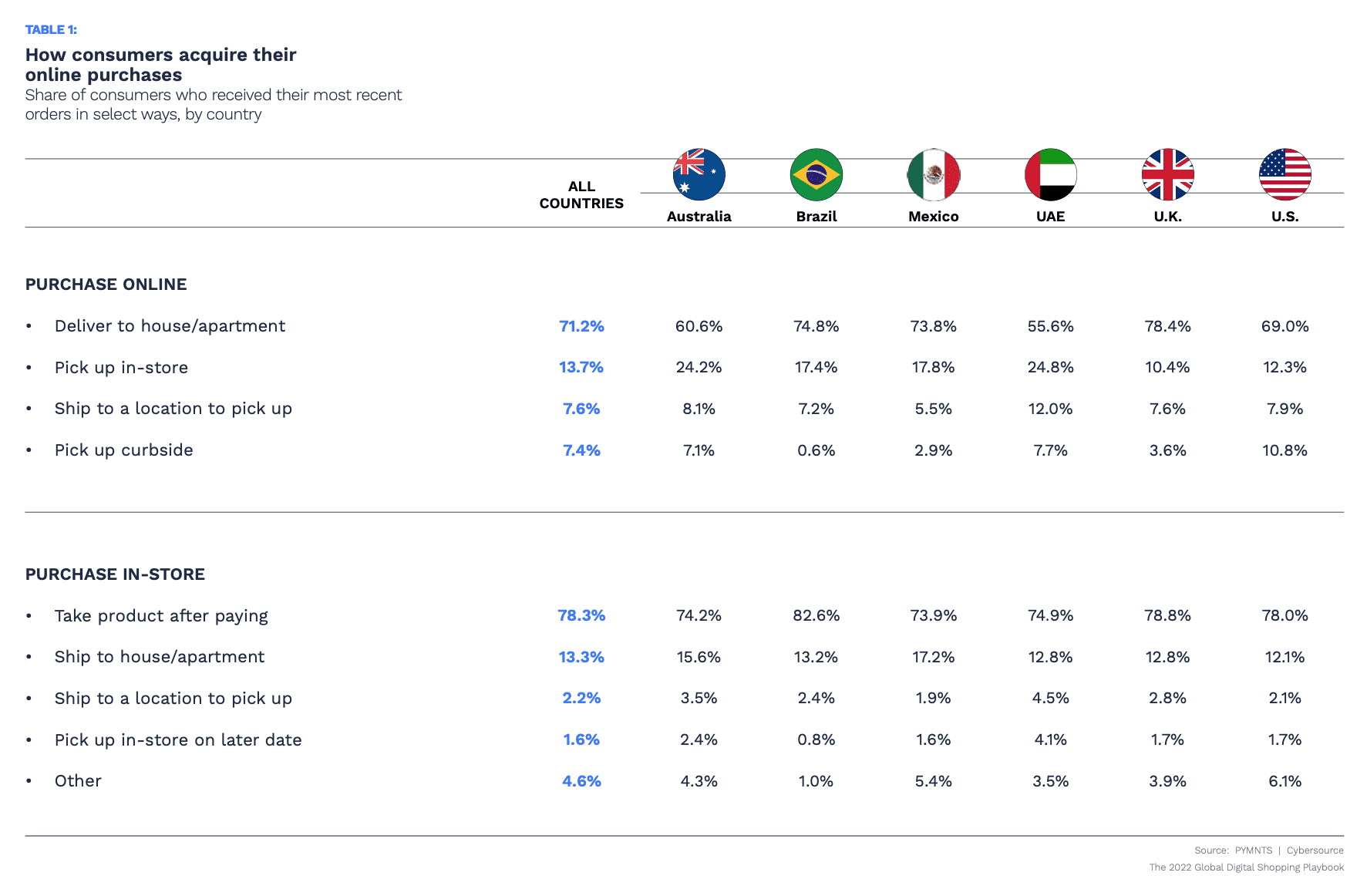
About one-quarter of eCommerce shoppers in the U.S. picked up their last online purchase in store or via curbside, according to “The 2022 Global Digital Shopping Playbook: U.S. Edition,” a PYMNTS and Cybersource collaboration based on a survey of 13,114 consumers and 3,100 merchants in six countries.
Get the report: The 2022 Global Digital Shopping Playbook: U.S. Edition
In fact, 12% of consumers received their most recent online order by walking inside a brick-and-mortar store to obtain it from an employee or an in-store kiosk, and another 11% picked their order up curbside.

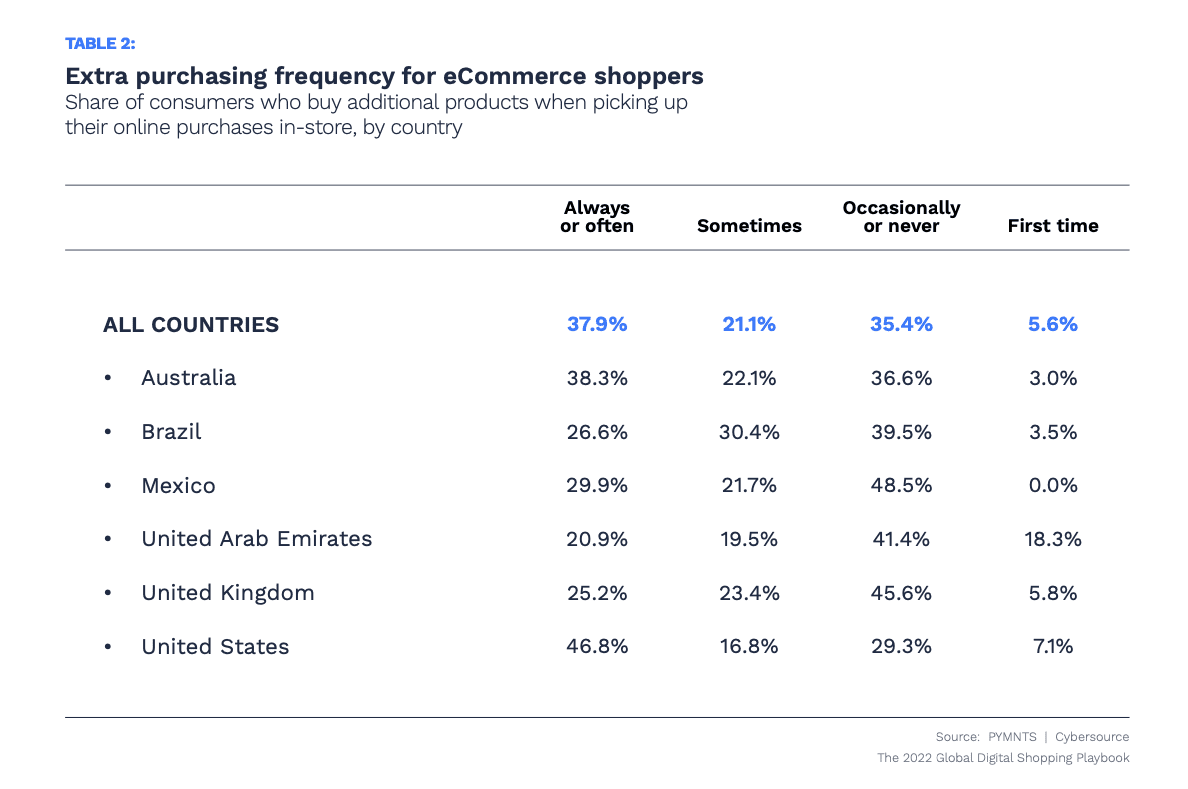
When they pick up those purchases in-store, these consumers often wind up purchasing additional products.
Among the roughly 9 million U.S. consumers who acquired their most recent online orders on-site, 47% say they wind up buying more products on their trip to pick eCommerce purchases up in-store or via curbside. Another 17% say they purchase additional items when picking up their orders in-store some of the time.

This indicates that as many as 5.5 million U.S. consumers sometimes, often or always buy extra items when they pick up online orders in brick-and-mortar stores.
This synergy between eCommerce and brick-and-mortar shopping underscores the importance of taking a cross-channel approach to retail. Offering in-store pickup options could help merchants convert 9 million eCommerce shoppers into brick-and-mortar buyers.
As the lines that once separated digital and brick-and-mortar shopping continue to blur, consumers are seeking not only to enhance siloed in-store or online checkout and payments processes but also do the same to their overall retail experiences.
Merchants that find new, innovative ways to leverage the full variety of their digital capabilities to enable these enhanced experiences can gain and maintain a competitive edge.
April 19, 2022 - 4 years ago
Grocery delivery tends to be expensive, with the added fees of the channel and the cost of the tip raising prices and with order minimums requiring larger purchases than one might be used to.
For much of the pandemic, consumers with more disposable incomes shelled out for the service, while those on tighter budgets continued to frequent brick-and-mortar stores. Now, as online grocery businesses look toward their post-pandemic future, many are trying to expand their audiences to include those of all income brackets.
Instacart, for example, has announced two moves in the past week to bring its offerings to a wider audience. The online grocery marketplace announced Thursday (April 14) the expansion of its partnership with discount grocer Grocery Outlet to include almost 400 stores across seven states.
“We know accessibility matters, and our successful pilot proved the value delivery in as fast as an hour provides Grocery Outlet customers,” Instacart Vice President of Retail Chris Rogers said in a statement. “As consumers continue to seek value, selection and convenience, we’re proud to support Grocery Outlet as the retailer continues to build an engaging online experience for their customers.”
The pilot of the program, which launched in October, included fewer than 70 stores in California.
Read more: On-Demand Economy Comes for Discount Grocery
The news came just one day after Instacart announced that it is partnering with Wegmans Food Markets to accept electronic benefits transfer (EBT) and Supplemental Nutrition Assistance Program (SNAP) payments at the grocer’s 106 stores in New York, Pennsylvania and New Jersey.
See more: Instacart to Accept EBT SNAP Payments on Wegmans Orders
“Online grocery shouldn’t just be a luxury, and to get there, we need to ensure delivery and pickup are affordable for everyone,” Sarah Mastrorocco, vice president of access to food and nutrition at Instacart, said in a statement. “We’re thrilled to provide households that rely on EBT SNAP benefits with more access to Wegmans’ quality produce and expansive selection across the East Coast.”
Over the past several years, a greater number of grocers have been adding options to pay with EBT SNAP online. For these companies, such initiatives expand their audience, given that, according to 2019 U.S. Department of Agriculture (USDA) data, 12% of the total population participates in the program.
Additionally, financial accessibility is the single greatest motivator of consumers’ grocery preferences. Research from PYMNTS’ January study, “Decoding Customer Affinity: The Customer Loyalty to Merchants Survey 2022,” created in collaboration with Toshiba Global Commerce Solutions, found that 37% of shoppers cite price as the most influential factor when selecting a merchant to purchase groceries from, a greater share than said the same of any other factor.
Get the report: The Customer Loyalty to Merchants Survey 2022
Moreover, the study, which drew from the results of a census-balanced survey of more than 2,000 U.S. consumers, found that price is an even more powerful motivator for consumers in the lowest income bracket than those in the middle or highest, and 77% of grocery shoppers reported that low prices would improve their loyalty to grocery merchants.
April 19, 2022 - 4 years ago
As consumers keep recasting routines and businesses invest hundreds of billions of dollars in new digital systems, the transformation we’ve undertaken is humming — but far from complete.
To measure gains being made and identify new areas of opportunity being created, PYMNTS’ Benchmarking The World’s Digital Transformation, The ConnectedEconomy™ Index Q1 2022, created in collaboration with Stripe, is a groundbreaking study of consumer engagement across 40 key activities and the 10 categories we call “pillars of the connected economy.”
Examining data from more than 15,100 respondents in 11 countries gathered between Jan. 13 and Feb. 16, 2022, we conclude that while these nations generate 50% of the world’s GDP and represent a bloc of 700 million consumers with smartphones and web access, their economies are still very much in the early stages of digital transformation.
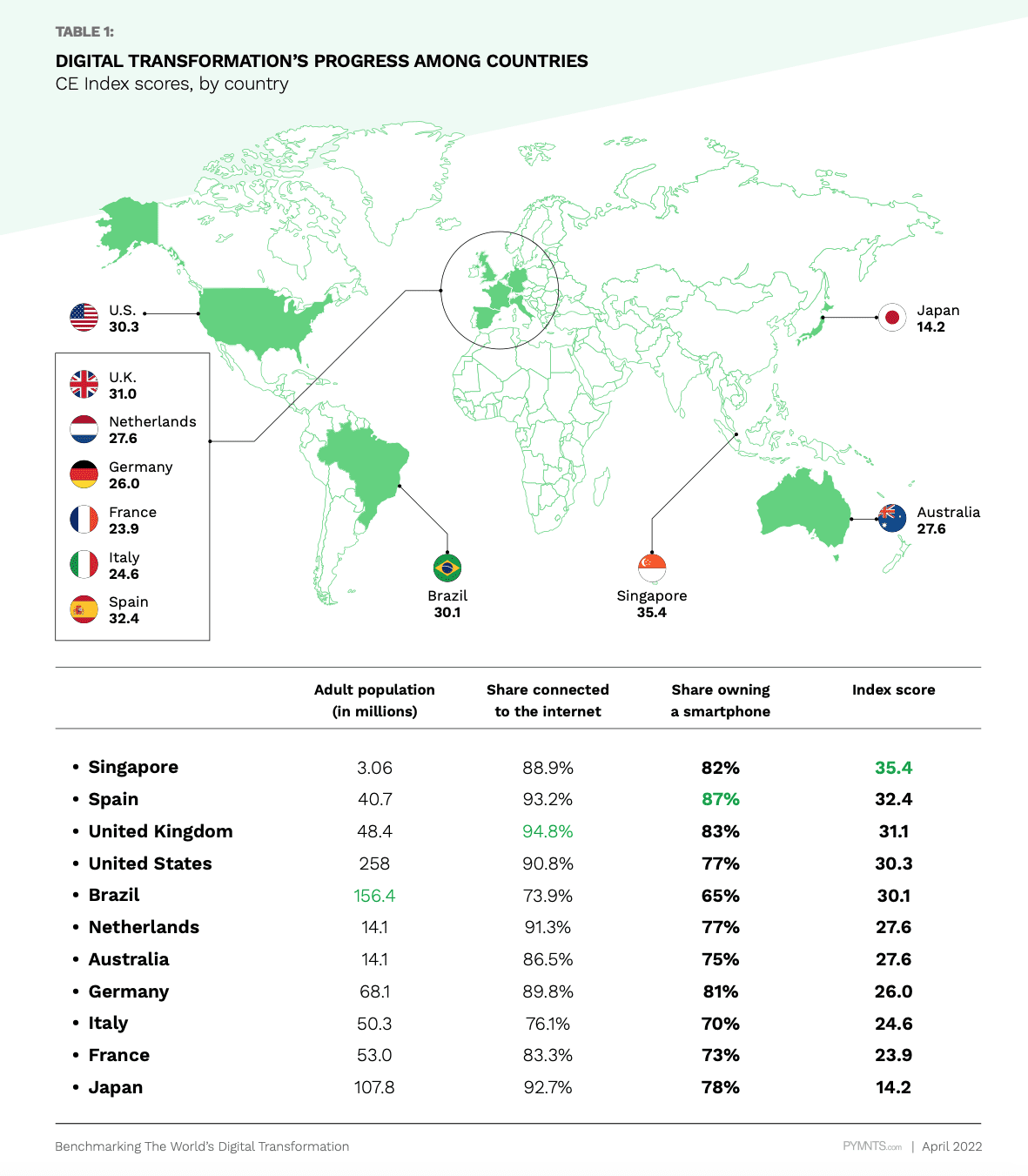
Calculating an average CE Index score of 27.1 out of a possible 100 across the 11 nations, we found “these countries collectively are a little more than a quarter of the way to complete digital transformation and a fully connected global economy.”
Looking at engagement as a key metric of the digital shift, it is highest in digital-first activities where tools and solutions are built for the digital economy and not grafted onto legacy methods. For example, 61% and 56% of the populations across the 11 countries studied engage in digital-first activities like streaming entertainment, with 31% and 25% respectively doing so daily.
This is also seen in mobile and online banking, where 59% of consumers across all 11 countries engage. Singapore, Spain and the U.K. are standouts as “availability of attractive mobile banking alternatives to brick-and-mortar banking — coupled with the widespread availability of smartphones — drives both adoption and usage,” and higher CE Index rankings.
Conversely, use of services like telehealth and online grocery subscriptions is seeing double-digital adoption but still lags digital-first alternatives due to strong ties with the physical.
Read the study: Benchmarking The World’s Digital Transformation, The ConnectedEconomy™ Index Q1 2022
Fun, Banking and Communicating Dominate
People gravitate to enjoyment and we find that in the new data, with engagement currently highest in the “have fun” pillar of the Connected Economy and activities related to it.
Overall, 61% respondents in the 11 countries studied “frequently go online to have fun, specifically to stream music and videos,” while 59% use digital banking frequently.
Somewhat surprisingly, communicating via social networks and apps comes in lower at 44%.
Digital demographics are changing too.
Benchmarking The World’s Digital Transformation notes that regions including as Singapore and Spain “see higher levels of digital engagement among all age groups, including baby boomers and seniors,” while in the U.S. and Japan, baby boomers and seniors “are far less engaged digitally in any of the 40 activities than millennials and Gen Z.”
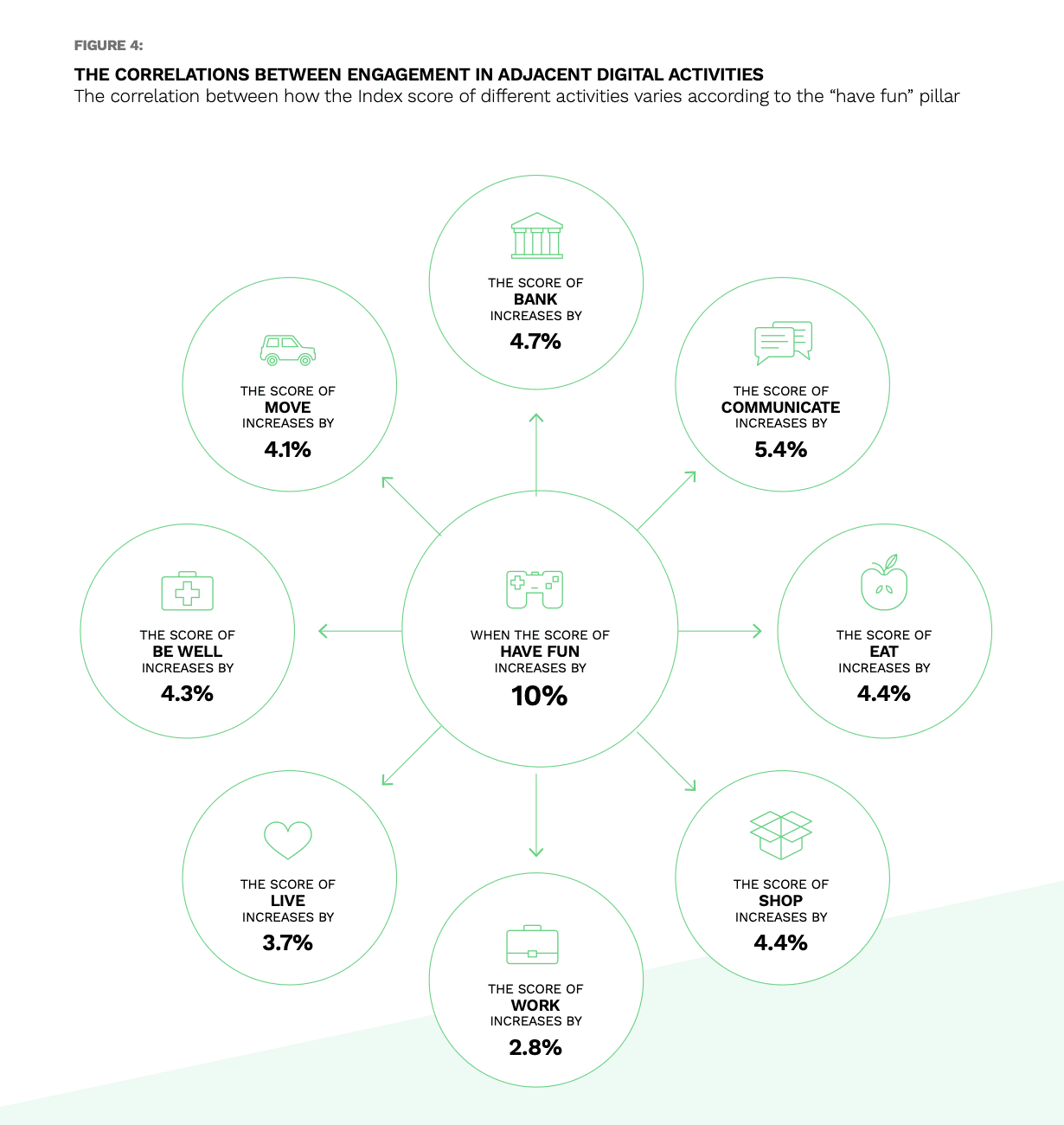
Index scores will be pushed higher as more people engage as each digital activity overlays with another. Such “inherent synergies” act as a powerful driver of engagement and transformation.
We found that for every 10% growth in the number of consumers who use digital channels to engage socially, the CE Index score across these 11 countries could increase by 5.4%.

See: Benchmarking The World’s Digital Transformation, The ConnectedEconomy™ Index Q1 2022
Making Transformation Pay
Monetizing opportunities created by digital transformation is a priority in all regions, although transactions need to become more engaging to consumers for that to happen.
“Consumers are 40% more engaged in the digital activities that don’t involve making a purchase,” the study reported, “such as streaming videos and hanging out with friends on social networks, than those that are only about transacting, such as shopping and paying bills.”
A clear takeaway here is that embedded payments can unlock the commerce potential of high-engagement activities and make them less of a chore. Expanding the demographic appeal of digital will also be a big contributor, as we found the most digitally engaged nations are age-agnostic.
For example, “One of the reasons Singapore’s progress is much higher than that of other nations is because more of its baby boomer and Gen X populations engage in digital activities than those of the other countries in our study.”
Similarly, 70% of those highly engaged digitally in the “shop” pillar (retail shopping) rank as highly digitally engaged in the “eat” pillar, showing how one pillar can be a driver in another.
“For many categories, like buying highly considered purchases such as cars or jewelry or buying items that shoppers want to hand select, such as groceries, consumers today still prefer a physical store experience,” the study states, adding “that will change over time as digital experiences and consumers’ trust in those digital experiences improve.”
Get the study: Benchmarking The World’s Digital Transformation, The ConnectedEconomy™ Index Q1 2022
April 19, 2022 - 4 years ago
The continued post-pandemic popularity of Hasbro’s tabletop games alongside sustained growth of its digital gaming franchise and new TV and film partnerships, marked the ongoing turnaround at the country’s largest toy maker by sales and market value Tuesday (April 19).
This, as the $13 billion Rhode Island-based company announced its earnings for the three months ending March 27, a period that marked the first quarterly results under the direction of new CEO Chris Cocks, who took the helm in late February following the surprise passing of former Hasbro lead Brian Goldner in October.
“Since taking over as CEO, our team has commenced a comprehensive review of our strategy and operations,” Cocks told analysts and investors on the company’s earnings call.
“A major theme of this effort is focus and scale; focusing on fewer bigger opportunities and [then] scaling those with reinvestment to drive profitable growth and enhanced shareholder return,” the 48-year-old executive who previously headed the company’s Dungeons & Dragons franchise since 2016 added.
That last part — enhanced shareholder returns — is proving to be a tricky situation for Cocks, who is not only trying to reverse a slump that has seen shares of Hasbro fall over 15% so far this year (compared to a 7% decline for the S&P 500 and a 6% increase by smaller rival Mattel), the maker of Play Dough and My Little Pony is also embroiled in a proxy fight that is looking to shake up the company’s board and spin-off its digital operations.
Read more: Hasbro Activist Investor Alta Fox Wants New Board Members, Wizards of the Coast Spinoff
While the company has defended its existing executive leadership team and strategic review process, it is clearly facing pressure from long-term investors who are dismayed by the fact that the stock is back to where it was in January 2017.
Playing a Bored Game
With that in mind, Cocks and his team are trying extra hard to keep customers and investors from getting bored, as the company looks to leverage its existing franchises while also nurturing new ones.
Excluding the sale of its music business last summer, Hasbro said its comparable Q1 revenues in its remaining five businesses were up 19% to $1.1 billion, roughly half of which came from its long-standing “Franchise Brands,” such as Magic: The Gathering, Peppa Pig and Transformers.
At the same time, Hasbro said its Partner Brands, which include toy deals with Marvel, Star Wars, Fortnite, and Ghostbusters, rose 10%, while its Wizards of the Coast & Digital Gaming segment rose 9%.
“What we can say is, traditionally the Q1 is one of our smallest quarters,” Cocks said. “We have a fantastic lineup coming up in the following quarters, along with a great [TV and film] entertainment lineup,” Cocks said, characterizing the positive upswing and improving trends the company expects as the year goes on.
According to Cynthia Williams, who was recruited from Microsoft’s Xbox business in February to become president of Hasbro’s Wizards of the Coast and Digital Gaming division, the toymaker’s upcoming calendar will be busy.
“One thing I’d say is we still have additional [game] sets we’re going to be releasing this year,” Williams told investors. “Two of those will be in the second quarter, which will be our biggest quarter of the year.”
April 19, 2022 - 4 years ago
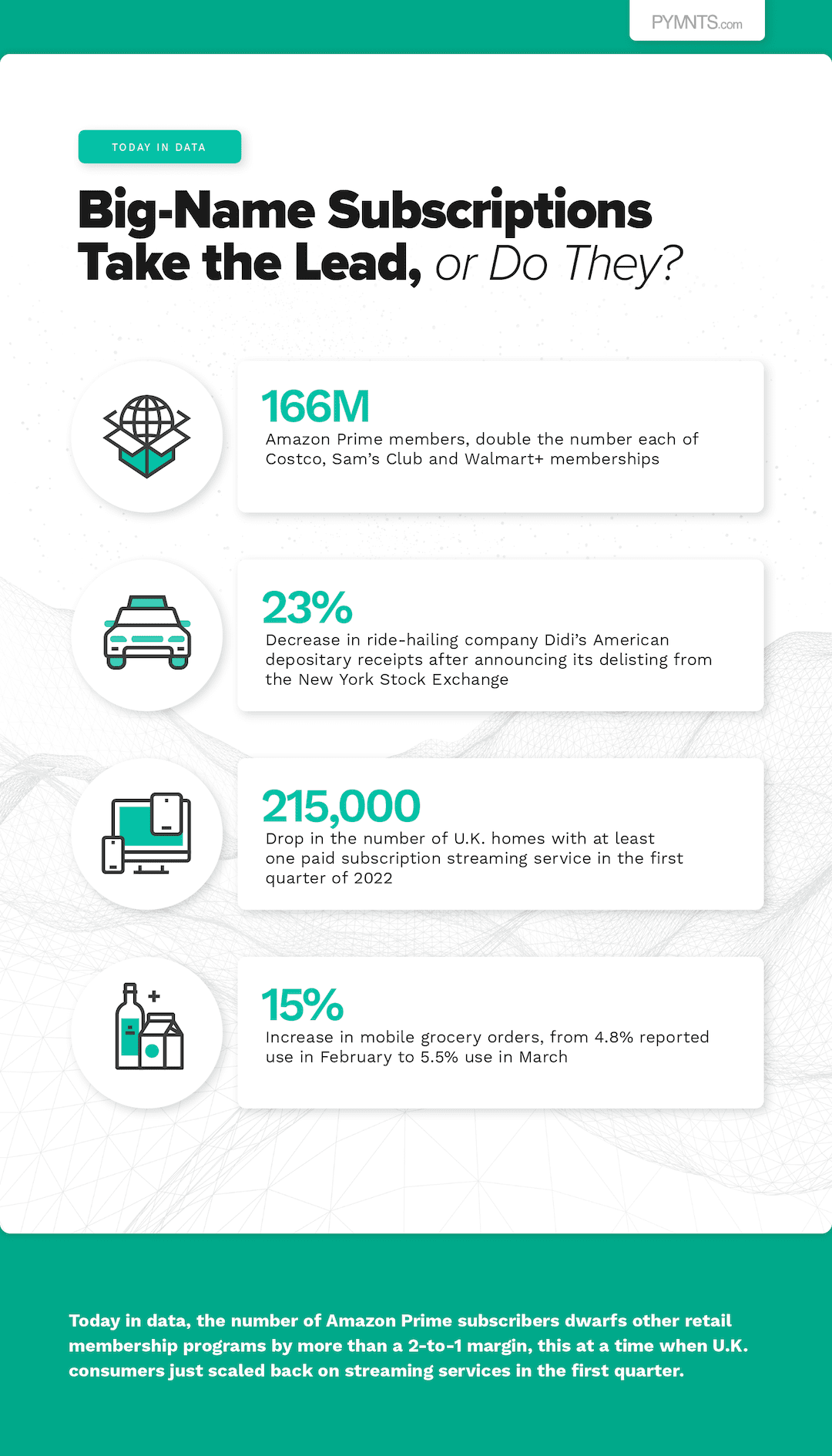
Today in data, the number of Amazon Prime subscribers dwarfs other retail membership programs by more than a 2-to-1 margin, this at a time when U.K. consumers just scaled back on streaming services in the first quarter.

Data
166M: Amazon Prime members, double the number each of Costco, Sam’s Club and Walmart+ memberships
23%: Decrease in ride-hailing company Didi’s American depositary receipts after announcing its delisting from the New York Stock Exchange
215,000: Drop in the number of U.K. homes with at least one paid subscription streaming service in the first quarter of 2022
15%: Increase in mobile grocery orders, from 4.8% reported use in February to 5.5% use in March
April 19, 2022 - 4 years ago
Looking to capitalize on the increasing number of pets that have found their way into Americans’ homes during the pandemic, online health company PetMed Express, or PetMeds as it’s more commonly known, announced a new collaboration Tuesday (April 19).
PetMeds has partnered with and invested in pet telehealth platform and care marketplace Vetster, giving PetMeds’ more than 2 million pet owners around-the-clock access to virtual pet care and their medications, according to a PetMeds press release.
As part of the agreement, PetMeds is now the exclusive eCommerce provider of Vetster medications, and Vetster is the exclusive provider of telehealth services to PetMeds customers, the release stated.
“PetMeds pioneered the online pet medication business over 26 years ago, and this partnership with Vetster is an important step in establishing PetMeds’ expanded strategy as the go-to expert in pet health,” said PetMed Express CEO and President Matt Hulett in the release. “Simply put, we love Vetster’s business model, their team and their technology, and we are excited for PetMeds’ customers to benefit from Vetster’s amazing telehealth and telemedicine services, available at their fingertips 24/7. We are looking forward to a partnership that improves the lives of pets and pet parents for years to come.”
PetMeds was among the minority investors in Vetster’s recent Series B fundraising round. The company could accrue additional shares through an exercise of warrants for an increased equity stake based on future performance milestones, according to the release.
“We’re very excited about the partnership and investment from PetMeds, which we believe truly represents a win-win for pet parents and their beloved pets, as well as for veterinarians,” said Vetster CEO and Co-Founder Mark Bordo in the release. “Pet parents receive the affordability and convenience of telehealth, pets benefit from world-class healthcare without the stress of a trip to the vet, and veterinarians tap into incremental revenue streams while providing quality care anywhere and anytime.”
In other news, online pet supply retailer Chewy’s fourth-quarter earnings results, announced in late March, presented a mixed bag, with positive metrics related to sales, spending, subscriptions and new commercial ventures amidst a $63 million quarterly loss.
Read more: Chewy Struggles to Turn Record Spending Into Profits, Investors Push Stock to 2-Year Low
April 19, 2022 - 4 years ago
As much as we’d all like to avoid it, there is simply no escaping inflation.
Everywhere you turn, it seems the ravages and ramifications of rising costs and reduced buying power are either in your face, your search results or your shopping basket leaving most consumers and households with no choice but to reassess their purchasing habits and undergo some form of proverbial belt-tightening to make ends meet.
Amid this inescapable and omnipresent economic hardship, new PYMNTS research has shown the growing importance for retailers, who are on the front line of this fight, to double down on solutions to attract and retain increasingly budget-minded consumers by incentivizing them to come in and come back.
Retailers that might be unsure about the importance that rebates, loyalty and rewards play in the consumer decisioning process need only look at what their competitors are offering, per new findings in the latest edition of The Expanding Payments Choice Playbook, a PYMNTS and Onbe collaboration.
I’m Digital, You Should Be Too
In short, the study reveals that since 70% of consumers, particularly younger ones, prefer to shop and deal with businesses digitally, it only makes sense that those same customers would want retailers and merchants to interact with them in a similar fashion.
Where 98% of consumers are more likely to purchase a product after receiving a coupon to try it for free, the report says, similar numbers of consumers will pass up a discount and product all together if it requires them to pursue a mail-in rebate.
Not only are digital incentives more effective, but they are also seeing increased use, demand and effectiveness, as the report also found when used as part of a collective approach, they can improve the customer experience and conversion rates.
“While traditional discounts encourage new customers to try our brand, the experience of earning and redeeming rewards goes far beyond the monetary value they receive,” Neal Cotter, director of customer advocacy and insights at women’s plus-sized retailer Torrid (CURV) told PYMNTS.
“Our loyalty program today focuses on forming stronger, more meaningful connections with our customers, incentivizing them to engage in the brand and keep coming back.”
An Omnichannel LTV Play
Using Torrid’s experience as an example, the Los Angeles-based operator of 600 stores and a digital storefront pointed to its latest results as proof that its approach to rebates and incentives was working, noting that its loyalty program had grown to 3.5 million members and was being used by 95% of its customers — and that was before the most recent super-spike in inflation took place.
Unsurprisingly, Cotter said, the brand continues to introduce and test new features to improve its program of customer incentivization to make it even more personalized, while acknowledging that any such plan is only effective if customers are also pleased with how the perks and benefits are distributed, which more times than not, means connecting with customers online.
“We’re looking for an omnichannel experience across eCommerce, mobile and our stores: offering multiple payment options; rolling out our buy online, pickup in-store services; and launching a mobile app that allows customers to conveniently manage their rewards and payment options all in one place,” Cotter said, while holding up results that showed more frequent engagement, larger purchases and higher overall long-term value of its an increasingly digital and budget-minded customer.