Using Efficiency To Find Lost Productivity

Oberthur Partners On Mobile Payment Platform

The world is becoming more digital, and digital-transaction-friendly, at an almost exponential rate over the last few years. All to the good — and all adding to the case of greater efficiency. However, inefficient pockets hang on. Transparent allocation processes often make corporate spending opaque, even to CFOs most of the time — and even though they should presumably know such things. That is also true for the 78 percent of firms that have not yet embraced sandboxing as a method to speed innovation to market, or in the lives of caregivers for older adults, who will see their lifetime earnings diminished by $350,000 as a result of their efforts for others.

    Get the Full Story

    Complete the form to unlock this article and enjoy unlimited free access to all PYMNTS content — no additional logins required.

    yesSubscribe to our daily newsletter, PYMNTS Today.

    By completing this form, you agree to receive marketing communications from PYMNTS and to the sharing of your information with our sponsor, if applicable, in accordance with our Privacy Policy and Terms and Conditions.


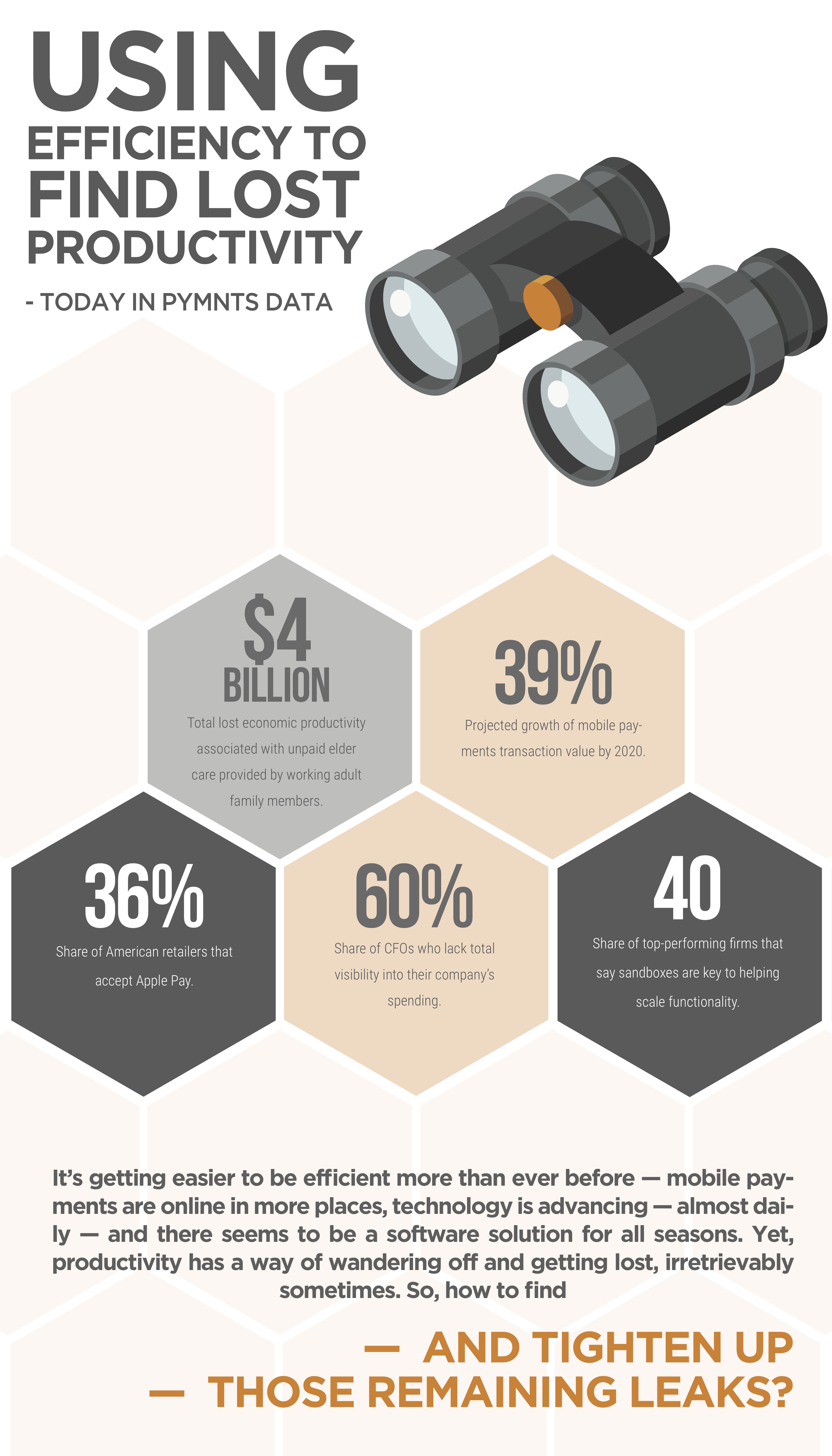
    $4 billion: Total lost economic productivity associated with unpaid elder care provided by working adult family members.

    39 percent: Projected growth of mobile payments transaction value by 2020.

    36 percent: Share of American retailers that accept Apple Pay.

    60 percent: Share of CFOs who lack total visibility into their company’s spending.

    40: Share of top-performing firms that say sandboxes are key to helping scale functionality.

    Advertisement: Scroll to Continue