

The Federal Trade Commission (FTC) received 3 million fraud reports from consumers in 2025, and those consumers reported $15.9 billion in losses, an official told a congressional committee Wednesday (March 25). Those figures were up from 2.6 million fraud reports and $12 billion in losses...

The most damaging threat vectors of the cybersecurity landscape are presumed to be technological ones. We can thank Hollywood for that. But while enterprise security budgets increasingly favor defenses reliant on advances like automation, zero-trust architectures and artificial intelligence (AI)-driven detection, a stubborn truth persists....

Merchants fighting fraud increasingly face a strategic challenge that extends beyond blocking criminals. The real task is protecting revenue while keeping checkout smooth for legitimate customers. A new PYMNTS Intelligence report suggests the industry is beginning to solve that problem by orchestrating fraud defenses across...
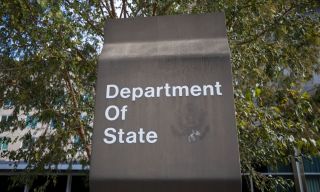
Cyberattackers, increasingly state-linked criminal groups, are not merely extracting information. They are orchestrating multifaceted campaigns designed to disrupt operations, extract leverage, and erode competitive advantage. Putting an exclamation point on the emerging threats, the U.S. State Department launched the Bureau of Emerging Threats on Monday...

A scam often works because the payment happens before the victim has time to think. More than half of scam payments are made within 24 hours, according to “Financial Scams and Consumer Trust,” a November PYMNTS Intelligence report commissioned by Block. Based on a survey...

Know your customer (KYC) and know your business (KYB) remain the first formal barrier between legitimate commerce and organized fraud. Their durability, however, depends on how organizations put them into practice. Zac Cohen, chief product officer at Trulioo, said too many organizations still rely on...

Watch more: What’s Next in Payments With Spreedly’s Adam Hiatt The fraud economy has always been adaptive. For every 12-foot wall that a firm stands up, fraudsters have tried to find a corresponding 13-foot ladder. But the rise of generative artificial intelligence (AI) and synthetic...

Watch more: What’s Next in Payments With Visa’s James Mirfin There’s an innovation race growing over digital identity. On one hand are banks and merchants that have traditionally been reliant on tools like passwords, one-time passcodes, biometric selfies and voice checks to power online authentication....

Watch more: What’s Next in Payments With One Inc’s Kevin Ostrander The never-ending battle against payments fraud is entering a more complicated phase as artificial intelligence (AI) allows criminals to replicate human activity with unsettling accuracy. Voices can be synthesized, identities can be fabricated from...