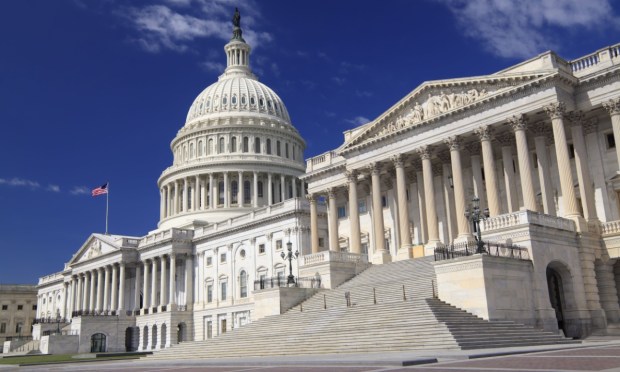
The Clarity Act may be dead in its current form after Democrats swept the midterm elections, but the drive to establish federal crypto market structure rules could continue in the next Congress. The emerging debate concerns who would supervise digital asset markets and how much protection a revised framework would give investors.
House Democrats reportedly plan to expand Rep. Maxine Waters’ Crypto Investor Consumer Bill of Rights into a broader market structure proposal, according to Decrypt, citing reporting by journalist Eleanor Terrett. The measure originated as an amendment to the Clarity Act. Its potential expansion suggests Democrats could pursue their own framework rather than simply abandon the legislative effort.
That approach would reshape a central issue in crypto regulation: the division of authority between the Securities and Exchange Commission (SEC) and the Commodity Futures Trading Commission (CFTC). Sources told Terrett that the proposal would strengthen the SEC’s supervisory role and limit the CFTC’s role. For companies seeking clearer rules, market-structure legislation could remain possible, but with a different allocation of regulatory power.
The report describes plans, rather than an agreed legislative package. It does not establish whether a revised measure could secure sufficient support in both chambers. But the direction could still be significant. The Clarity Act stalled in the Senate earlier this year, and Democratic control of Congress gives its critics greater influence over the terms of any successor.
“I wouldn’t say it’s game over for Clarity, but passing it has become tougher,” Carlos Guzman, vice president of research at crypto trading firm GSR, told Decrypt. “Some Democrats support clearer crypto rules, but I wouldn’t expect it to be high on their agenda. Any agreement will likely require stronger provisions on things like consumer protection and conflicts of interest.”
Those conditions point to substantive changes. Beyond a stronger SEC role, negotiations could involve tighter safeguards against officials benefiting personally from the industry they oversee. Democrats have criticized President Donald Trump’s crypto conflicts of interest, and Sen. Elizabeth Warren, D- Mass., likely incoming chair of the Banking Committee, has pushed for legislation barring officials and their families from profiting from the sector.
There are nevertheless signs that support for market structure legislation crosses party lines. Stand With Crypto, an advocacy group representing leading crypto firms including Coinbase, Gemini and BTC, endorsed 45 candidates in the midterms, nearly half of them Democrats. At the time of Decrypt’s report, 27 endorsed candidates had won, 12 had lost and six races were still not called. The results provide evidence of a bipartisan constituency for crypto policy, although endorsements do not establish agreement on specific legislative provisions.
James Butterfill, head of research at CoinShares, highlighted Democratic winners Chris Pappas in New Hampshire and James Talarico in Texas, alongside Wyoming Republican Harriet Hageman, as supporters of crypto policy. The challenge, he said, is converting that support into enacted legislation.
The industry also lost an influential advocate. Butterfill described Wisconsin Republican Bryan Steil’s defeat as a “meaningful loss.” Steil chaired the House digital assets subcommittee and was closely involved in efforts to advance the Clarity Act.
Meanwhile, congressional negotiations will proceed alongside agency action. Guzman noted that the election does not automatically change SEC or CFTC leadership or halt their rulemaking. Democratic control could, however, bring closer scrutiny of regulatory decisions and greater influence over agency funding and future appointments.
Butterfill said the industry is becoming less dependent on the Clarity Act as both agencies pursue regulatory rulemakings. Competing priorities, including AI regulation, could further slow congressional work.
For crypto businesses, the election leaves an opening accompanied by tougher bargaining conditions. Bipartisan support may sustain the pursuit of market structure rules, but advancing a bill will require agreement on investor protections, conflicts of interest and regulatory jurisdiction. The next Congress could keep the legislative project alive while substantially changing the framework that supporters originally sought.