The medical bill that lands in the mailbox six weeks after an appointment is one of the least popular pieces of paper in American life. The visit is a memory. The symptom may be gone. And the number on the statement rarely matches whatever the front desk collected at check-in. A lot of those bills never get paid.
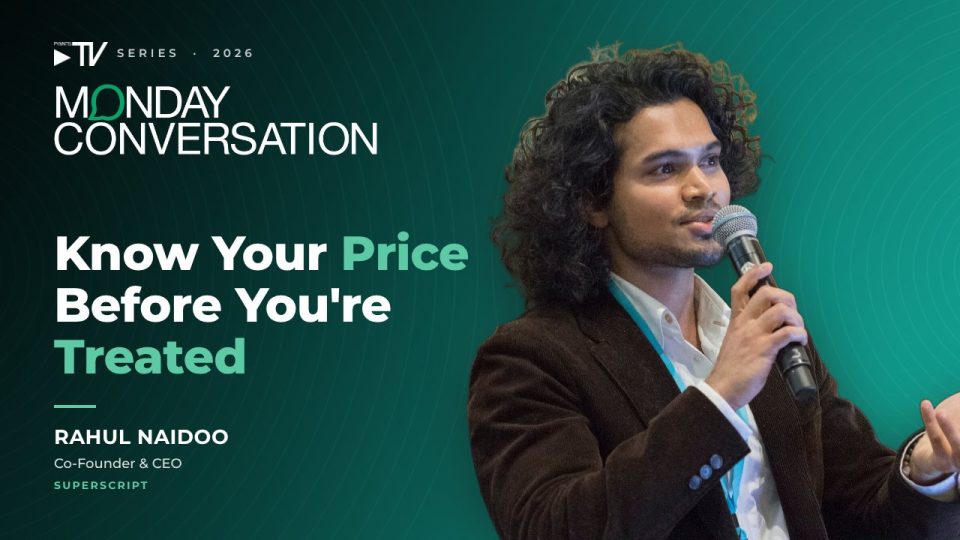
“Most medical providers are sitting between a 20 to 40% patient default rate because patients don’t pay bills when the bills arrive six weeks later,” Rahul Naidoo, CEO and co-founder of Superscript, told PYMNTS CEO Karen Webster in a recent Monday Conversation.
That default rate is the problem Superscript set out to fix. Its answer is to give the practice an accurate, patient-specific price before care is delivered, collect it at the point of care, and attach payment options to it so the patient has a way to say yes. Superscript’s real-time pricing API now covers more than 25 medical specialties and 3,000 services.
Webster’s take: The model is clever, and it will reduce collections. The open question is whether patients are ready to pay, in full and up front, for care they haven’t received yet. That’s both the challenge and the opportunity.
The Front Desk Has Been Collecting the Wrong Number
Most practices already collect something at check-in. The trouble is what they collect. According to Naidoo, the average visit priced with a conventional copay-only estimator comes to $18.34. Price the same visit with technology that accounts for the patient’s deductible, coinsurance and other plan-specific benefits, and the estimate rises to $52.34.
That $34 gap isn’t new money the patient owes. It’s money the patient already owed that the practice didn’t know to ask for. So it got billed later, and later is where the default rate lives.
Close the gap at the front desk and two things happen. The practice collects more of what it’s owed while the patient is standing there. And the balance that would have aged into collections gets much smaller.
Estimating a Visit Is Harder Than Publishing a Price
Federal disclosure rules have put negotiated rates into the open. That hasn’t made the patient’s bill predictable. “There is a huge gap between rates data and your price, given your insurance plan,” Naidoo said. Turning a negotiated rate into a patient-specific number still requires data from providers, insurers and claims systems.
There’s a second problem. Unlike a plane ticket or a television, the scope of a medical visit often isn’t known until a physician has examined the patient. Superscript handles that by splitting an encounter into a predictable base service and the tests or procedures that might follow. The consultation carries a known price. Imaging or lab work is presented as a potential add-on, with probabilities drawn from historical data.
Naidoo said Superscript can estimate prices for about 92% of visits. Most of the remaining misses come down to incomplete insurance data rather than the model.
Payments Companies Are the Distribution Channel
A good estimate only matters if practices use it, and persuading thousands of independent practices to adopt a standalone pricing tool is slow, expensive work. Superscript’s plan is to skip that step. Rather than selling practice by practice, it wants to distribute its pricing through the platforms practices already use.
Electronic health record vendors are one channel. The newer one is payments. Acquirers and processors already sit in the practice’s checkout flow, already touch every patient transaction and already have the relationships. Embed the estimate there and it reaches scale without asking the practice to learn another application. Webster noted that embedding pricing into established workflows could overcome the inertia that slows individual practice adoption.
For the payments companies, the math is appealing. Better pricing at the point of care means more of the patient’s responsibility gets paid at the point of care, which means more volume runs through their rails instead of through a collections agency.
A Price Up Front Makes Payment Options Possible
An accurate number before treatment does more than improve collections. It makes financing possible in a market where financing has been awkward. Today, patients receive care, find out what they owe weeks later, and then maybe negotiate installments.
“If you don’t have a price ahead of time, there is no BN, it’s just the PL part,” Naidoo said.
With a price in hand before the visit, a provider can offer buy now, pay later or an installment plan at check-in, which gives the patient a choice other than paying the full amount or deferring care. Financing brings its own questions about underwriting, affordability and consumer protection. A predictable cost isn’t the same thing as an affordable one. But a patient can’t choose a payment option for a bill nobody has quoted yet.
The Patient Still Has to Say Yes
The data is there. The distribution channels are there, including a payments channel that can embed this at scale. The payment options are there. What remains is the patient.
Webster pressed on whether people are ready to hand over the full estimate for care they haven’t yet received. Healthcare isn’t bought like other goods. “Most people walk into their doctor with a symptom, not a checklist,” she said. “They don’t know what they’re buying until their healthcare provider tells them what’s wrong.”
Nor does a price by itself give the patient much choice. “It’s not just about what is the price,” Webster said. “It’s how accessible is that provider and what are your options? Because you don’t always have options.”
That’s the test. The provider’s incentive is clear: collect more, send less to collections. The payments company’s incentive is clear: more volume at the point of care. The patient’s incentive is less obvious. They’re being asked to pay sooner, and pay more at check-in than they’re used to, in exchange for no surprise bill later. For the model to work, patients have to decide that certainty up front is worth the cash up front.
Superscript has built the number and found the channels to deliver it. Getting the patient on board is the part that comes next, and it’s where the opportunity gets decided.
Watch the full PYMNTS interview with Superscript CEO Rahul Naidoo and PYMNTS CEO Karen Webster to hear more about:
- Why healthcare’s $34 pricing gap is a collections problem, not a price problem. Naidoo explains how copay-only estimators miss much of what the patient actually owes, and why collecting the right number at check-in shrinks the balance that ends up in default.
- Why acquirers and processors may be the channel that takes upfront pricing to scale. Naidoo and Webster discuss distributing pricing through the platforms practices already use rather than selling to practices one at a time.
- Whether patients are ready to pay in full before they’re treated. Webster challenges whether a price up front gives patients a real choice when they don’t know what they’re buying until the doctor tells them, and what that means for payment options like BNPL.