Payment fragmentation can slow cross-border expansion when each new market and each new method mean a new integration project. Bundling things up can simplify it all.
The underlying transaction is familiar, like a software subscription, video gaming purchase or digital service. Yet the method customers use to pay can change from Brazil to India, Colombia or the Philippines. For companies selling to businesses and consumers across emerging markets, each new country can add another set of local rails, wallets, cards and technical requirements. Even regional labels can conceal differences.
Payment bundles are one attempt to contain that integration burden and tackle fragmentation. Rather than treating every payment method as a separate project, the model groups methods that share technical characteristics or serve related commercial requirements, allowing portions of an integration to be reused across methods and markets.
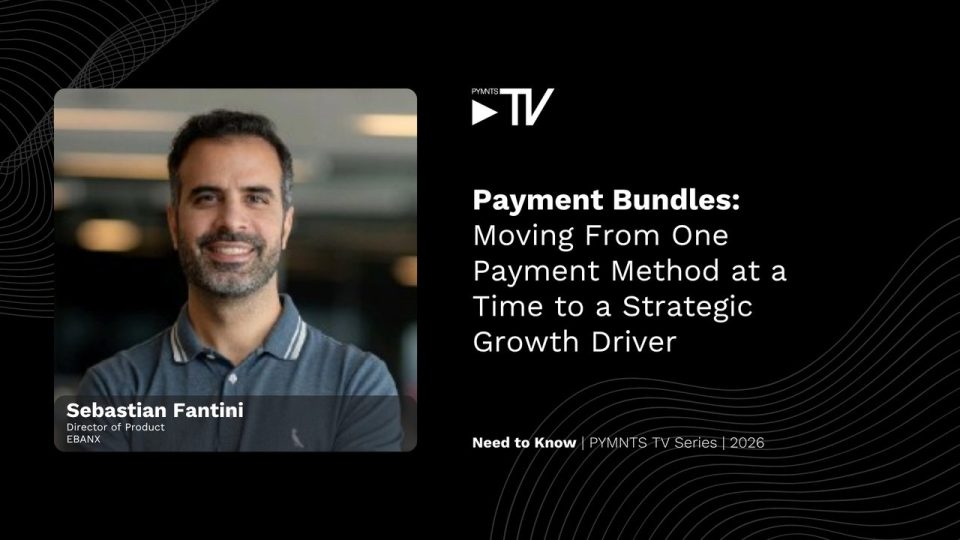
“When we talk about Latin America, it’s quite wrong to treat [it] as one single block,” Sebastian Fantini, director of product at EBANX, told PYMNTS in an interview, offering one example. “Each country has its own payment ecosystem, players, payment methods, and maturity level as well.”
That fragmentation can become an engineering problem. Companies entering several markets can either integrate local methods individually or use an intermediary that handles multiple methods through a common architecture.
With the latter approach in mind, EBANX created payment bundles, grouping more than 200 supported payment methods into four families defined by technical architecture and strategic purpose. The approach connects reusable integration patterns to clear business outcomes, such as expanding card reach, acquiring customers beyond cards, enabling recurring revenue, and connecting consumers to trusted wallets and banking apps. Ultimately, the bundle integration becomes a growth strategy.
EBANX’s documentation says methods within a bundle use similar integration patterns, allowing merchants to adapt an existing connection rather than start over for each method.
Fantini described the reasoning in less technical terms.
“What we understood is when looking at companies in the same business line, they tend to meet similar needs when operating in emerging markets,” Fantini said.
A gaming company, for example, may find digital wallets relevant in Colombia and the Philippines even though the specific payments ecosystems aren’t the same. The question then becomes how to preserve those local choices without treating each as an unrelated technology project.
Recurring Payments Put Bundles to the Test
Recurring commerce provides a particularly clear example because the business requirement remains constant while the payment mechanism changes.
A subscription provider needs permission to collect subsequent payments regardless of where its customers live. Cards have traditionally supplied that capability, but local instant payment systems and wallets can now support recurring transactions in some emerging markets.
“It doesn’t matter if, let’s say, a subscription merchant is selling products in Brazil or in India,” Fantini said. “They want to offer UPI AutoPay [in India], which is recurring for UPI customers, or Pix Automático in Brazil.”
The underlying payment infrastructure supports both examples. UPI AutoPay permits customers to authorize a recurring mandate through UPI, after which recurring debits can be initiated subject to India’s notification and payment rules. In Brazil, Pix Automático similarly uses a one-time authorization, allowing recurring charges to be scheduled and processed each billing cycle.
We’d love to be your preferred source for news.
Please add us to your preferred sources list so our news, data and interviews show up in your feed. Thanks!
EBANX internal data shows the impact of both recurring payment systems. In Brazil, 64% of consumers using Pix Automático through EBANX are new to the platforms they subscribe to. In India, a major global artificial intelligence company gained an average of more than 4,000 new subscribers per day for the first three months after adding UPI AutoPay.
For merchants, Fantini said the starting point should be how customers can pay.
“The main reason behind that is to, of course, always look at the customer perspective,” Fantini said.
The bundle model doesn’t standardize the payment systems themselves. India’s UPI AutoPay and Brazil’s Pix Automático retain different operating rules. UPI AutoPay transactions are subject to pre-debit notifications under India’s mandate framework, while Pix Automático payment instructions generally need to be sent within a defined window before the scheduled billing date.
What can be standardized is part of the merchant’s integration.
Fantini said EBANX estimates that merchants already connected to one of its bundles can reuse as much as 90% of the implementation effort when taking that bundle into another supported country. That’s a company estimate rather than an industry benchmark, but Fantini tied the rationale directly to a constraint merchants encounter.
Some companies know which local payment methods they want to add but “lack technical resources,” he said.
According to EBANX, the broader value is that the initial integration stops being a one-off development project and becomes a reusable asset for expansion, lowering the marginal engineering effort required to add another relevant method or enter another supported market.
For global businesses, the checkout is where global reach meets local payment preferences. That makes payment bundling as much a customer experience question as a technical one.
Offering dozens of methods has little purpose if the resulting checkout doesn’t correspond to how people in a particular market prefer or are able to pay. Fantini said payment methods should therefore be considered within the broader purchasing journey rather than treated simply as transaction plumbing.
“Think about bundles first,” he said, rather than thinking, “‘I just want to integrate one single payment method at once every time.’”
Watch the full interview with EBANX’s Sebastian Fantini to learn more about:
- Why digital wallets can serve similar commercial purposes despite operating within different national payment systems.
- How installment capabilities fit alongside recurring payments and other locally prevalent payment options.
- What companies should consider when deciding which payment capabilities to prioritize before entering another emerging market.


 Add as Preferred Source