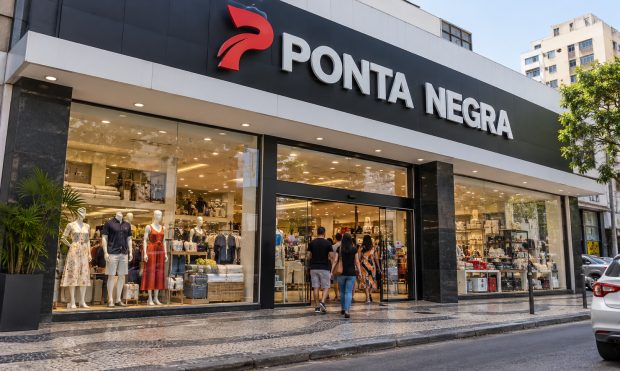
The shopper standing in a Brazilian store may be looking at merchandise on the shelf, but the merchant no longer has that shopper to itself.
PYMNTS Intelligence’s August 2026 “Global Digital Shopping Index: Brazil Playbook,” produced in collaboration with Visa Acceptance Solutions, found that 51% of Brazilian in-store shoppers used a mobile device to compare prices at other merchants during their latest store purchase. That was up from 48% in 2024 and made competitor price checking the most common shopping-related use of a phone in the aisle.
The implications go beyond showrooming. The phone gives consumers a way to test the store’s price, product information and payment options against alternatives before they have committed to buying.
Overall, 57% of Brazilian shoppers used a mobile device for at least one task during their latest in-store purchase. Twenty-five percent looked up product information, 25% checked product reviews and 25% checked which payment methods were accepted. Thirty-eight percent searched for coupons and discounts.
Price comparison stands apart because it explicitly introduces another merchant into a transaction already underway.
A retailer can attract the customer, put the product within reach and still face a new competitive test before checkout. The shopper can discover within seconds whether another merchant has a lower price and potentially reconsider where to complete the purchase.
The data suggest that this behavior is becoming more important even as some traditional forms of deal hunting lose ground. Coupon and discount searches declined from 44% in 2024 to 38% in 2026. Competitor price checking moved the opposite way, rising 6% from 48% to 51%.
That puts greater weight on what retailers can show customers while they are still making the purchase decision.
We’d love to be your preferred source for news.
Please add us to your preferred sources list so our news, data and interviews show up in your feed. Thanks!
Product information and reviews are part of that equation. Both rose to 25% of digitally assisted in-store shoppers in 2026, from 23% in 2024. Mobile product-location tools, however, remained much less common, used by 5%.
The report identifies a corresponding gap between the features consumers want and what merchants provide. Sixty-five percent of Brazilian consumers use or would use mobile product locators, compared with 48% of merchants offering them. Digital coupons show another gap, with 70% consumer demand versus a 53% merchant offering rate. For targeted promotional codes, the figures are 67% and 53%, respectively.
Mobile Shoppers Are Also Heavier Buyers
The competitive importance of the phone becomes clearer when looking at who uses it most.
Daily mobile browsers average 40 digital buying days per month, compared with 12 among infrequent window shoppers and 27 across Brazilian consumers overall. Consumers who used AI during their most recent purchase averaged 38 buying days.
That means some of the shoppers most comfortable using digital tools to evaluate a purchase are also among the most commercially active consumers.
Payment acceptance adds another potential point of comparison. Sixty-five percent of Brazilian consumers say knowing their preferred payment method is accepted has at least some influence on where they shop, a share that has remained broadly steady since 2023. PIX now accounts for roughly one-quarter of purchases, according to the report.
For retailers, the data put the competitive moment before checkout. Price, product information, reviews, promotions and payment acceptance can all be evaluated while the shopper is standing in the store.
The 51% price comparison rate makes that particularly tangible. Physical retailers aren’t competing only to get shoppers through the door. Once shoppers arrive, merchants can still find themselves competing against every rival accessible through the phone in the customer’s hand.


 Add as Preferred Source