

 Amrit Mohanty
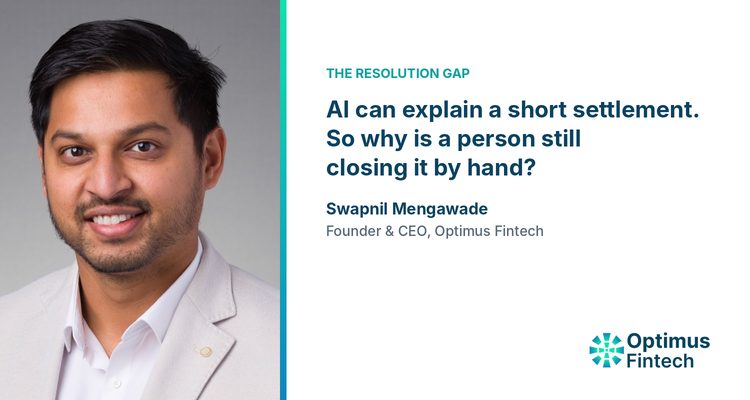
Anyone running payments finance at scale knows the moment. The settlement report comes in, the bank deposit comes in, and they don’t match. AI often spots the difference before anyone opens a spreadsheet.
Then the team does what it did before. Someone pulls the processor statement, traces the batch, books an adjustment and closes the item. Some people call this the resolution gap: the distance between knowing something is wrong and getting it fixed. Most finance AI still stops on the near side of it.
One card payment can pass through a gateway, a processor, a settlement batch, a bank account and an ERP, picking up fees, refunds or a reserve hold along the way. Closing a break takes software that knows which payment sits in which settlement, which fees hit which transaction and what it may do when something looks off.
Say a merchant captures $100,000, refunds $2,000 and pays $1,500 in fees, so it expects $96,500. The bank receives $95,700. A typical copilot will say the deposit is $800 short and list possible causes. True, but it closes nothing.
An agent working from a connected model of the money goes further. It traces the payments, refunds and fees to the deposit, finds an $800 reserve withholding on the processor statement and checks it against the merchant’s reserve terms. It updates the reconciliation and sends a draft journal entry for approval. If it can’t confirm the reserve, it hands the item to a person. I’d much rather have an agent that escalates often than one that invents a plausible story to clear its queue.
That changes what we should measure. A CFO wants to know how long a break stayed open, how many people touched it and whether the money was recovered. The numbers I watch are exceptions closed without anyone stepping in, time to a verified fix and leakage actually recovered.
None of this works without controls. Amounts should come from validated calculations, not a language model’s arithmetic. Agents should act only through approved integrations, with the same sign-off a person would need, and every action should trace back to its records.
Finance technology has spent decades reporting what happened to the money. The next step is software that deals with what happens next. The test for any AI tool is simple: how many problems has it closed?
About Optimus Fintech
Optimus is the AI canvas for enterprise finance operations. It connects payment, core banking, bank, billing and ERP data into one reconciled foundation and runs AI agents across it, from the payment rail to the ledger, so finance teams can understand, control and account for every transaction.
Enterprises including Under Armour, Sephora, QuikTrip, Virgin Voyages, Tillo and SuperBet, along with Tier-1 banks and payment service providers, rely on Optimus to reconcile payments, recover fee overcharges and close their books faster. The platform handles more than 3 billion transactions and over $100 billion in annual transaction value. Optimus is headquartered in San Francisco. Learn more at optimus.tech.
