In an era when real-time is the standard, many B2B payment cycles still stretch across weeks or even months.
But a shift is underway. A new breed of financial infrastructure, embedded payments and AP payments-as-a-service, promises to abstract away the complexity of business transactions and replace it with seamless integration, speed and strategic value.
Embedded B2B payments are projected to handle $16 trillion in transactions by 2030. That number is less a forecast than a flashing neon signal to corporate finance leaders.
Once a niche integration, embedding payments directly into enterprise workflows has emerged as a strategic imperative for companies facing competitive, operational and technological pressures.
And according to the latest PYMNTS Intelligence data in the July 2025 Accounts Payable Tracker® Series, “Embedded B2B Payments: The Next Frontier in AP Digitization,” the roadmap to capturing this value is increasingly grounded in platform-native integration, operational transformation and monetization potential.
The embedded B2B payments decision is not purely technological. It’s a strategic posture that touches customer and supplier experience, working capital, risk management and even talent allocation.
ERP Integration as the Cornerstone
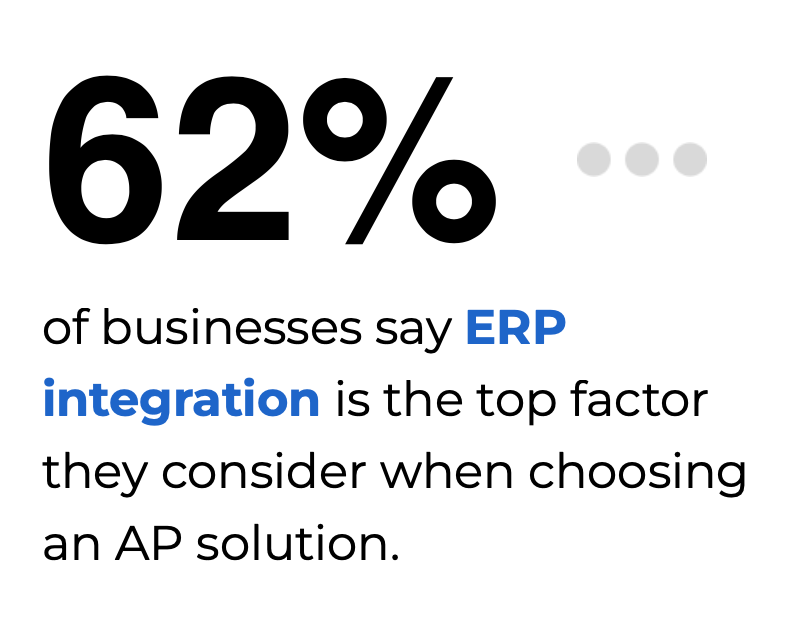
When finance executives evaluate accounts payable (AP) solutions, 62% say ERP integration is the most important factor. That single statistic reframes the entire embedded finance conversation. The message: payments tools cannot be an add-on to enterprise systems. They must live inside them.
It’s a pragmatic position. For decades, AP teams have fought the drag of manual reconciliation, duplicate entries, and visibility gaps. Embedding payment capabilities directly into ERP platforms, whether SAP, Oracle NetSuite, Microsoft Dynamics or vertical-specific systems, eliminates many of those pain points before they metastasize into missed discounts, supplier disputes or compliance exposures.
At the same time, for many firms, adoption is no longer a matter of curiosity but a matter of urgency. Per the PYMNTS Intelligence report, 36% of executives say they fear being left behind if they don’t embrace embedded B2B payments. That’s a shift from earlier innovation cycles, where hesitation often stemmed from perceived risks in new technology. It mirrors what happened when cloud ERP systems moved from “optional” to “mandatory” in under a decade.
We’d love to be your preferred source for news.
Please add us to your preferred sources list so our news, data and interviews show up in your feed. Thanks!
Embedded payments aren’t just about APIs or slick UI. They’re about control, experience, and strategy. The real shift is not in code. It’s in corporate posture.
Read the report: Embedded B2B Payments: The Next Frontier in AP Digitization
Embedded B2B Payments Are a Power Move, Not Just a Tech Upgrade
A framework is emerging for operationalizing embedded B2B payments.
The first step is frequently to diagnose current workflows by mapping pain points such as manual approvals, siloed data, high invoice exceptions and poor liability visibility. Businesses can establish a baseline to track ROI.
To help streamline the integration of embedded AP within core ERP and procurement system, firms can use AP-as-a-Service to offload execution (payments, exceptions, reconciliation, fraud screening, supplier onboarding) to providers, retaining strategic oversight without operational burden.
Beyond efficiency, embedded finance opens new revenue streams. Virtual cards, dynamic discounting and cross-sold financial services are helping some companies turn AP into a profit contributor. Research from centime.com and PYMNTS shows 65% of executives are exploring such monetization plays.
Embedded payments let businesses offer consumer-grade convenience in B2B contexts. Think one-click settlements, real-time invoicing and self-service portals. These features are more than UX improvements — they’re competitive differentiators.
Finally, there’s the talent question. When payment processes are streamlined, finance and operations teams can refocus on strategic work like scenario modeling, forecasting, vendor negotiation. That’s a quiet but significant ROI.
The urgency is rising. Waiting risks slower cash cycles, weaker supplier terms and missed opportunities competitors may already own. As the embedded finance curve steepens, laggards could find the market has moved on without them.



 Add as Preferred Source