The company said it will convert the Fremont, California, factory space used for Model S and Model X into a dedicated Optimus facility, targeting long-term capacity of 1 million robots per year. Elon Musk said the move reflects a broader transition toward autonomy and robotics as Tesla’s next growth engines.
“It is time to bring the S and X programs to an end and shift to an autonomous future,” he said.
Tesla did not provide a detailed timeline for reaching meaningful Optimus volumes, beyond indicating that material production is unlikely before the end of the year.
Optimus: Growth Driver With Long Timelines
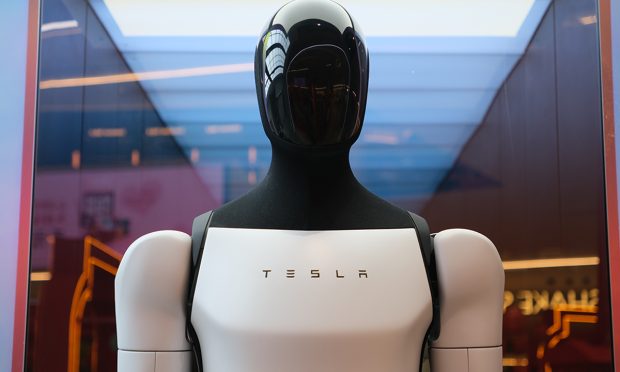
Optimus featured prominently throughout the call, positioned as a general-purpose humanoid robot designed to perform physical tasks across factories, logistics and service environments. Tesla expects to unveil Optimus Gen 3 in the coming months, which Musk described as a significant leap in capability.
At the same time, the company acknowledged that Optimus remains in the research and development phase. Limited deployments inside Tesla factories are used to test basic tasks, with older versions retired as designs evolve. “We wouldn’t expect to have any kind of significant Optimus production volume until probably the end of this year,” Musk said.
Musk framed Optimus as a product with macroeconomic implications, saying it could “move the needle on U.S. GDP significantly.” Tesla, however, did not outline expected unit economics, pricing, or margins, leaving open questions around how quickly technical progress can translate into financial returns.
The company also cautioned that Optimus faces a slower manufacturing ramp than vehicle programs because its supply chain is largely new. Musk said production will follow a “stretched-out” curve, constrained by the weakest links in a complex, first-principles manufacturing process.
Focus on Autonomy Expands
We’d love to be your preferred source for news.
Please add us to your preferred sources list so our news, data and interviews show up in your feed. Thanks!
Tesla said unsupervised autonomous driving is operating in Austin, Texas, where vehicles are completing paid rides without a safety driver, chase vehicle or human inside the car. Musk emphasized that expansion is proceeding cautiously, with safety prioritized over speed.
Tesla expects unsupervised autonomy to reach dozens of major U.S. cities by year-end, pending regulatory approval. Musk said coverage could extend to between one-quarter and one-half of the U.S., though the lack of federal preemption continues to require a city-by-city and state-by-state rollout.
The company reiterated plans to allow vehicle owners to add their cars to an autonomous fleet and earn income when not in personal use. Tesla did not provide updated assumptions around utilization, pricing or revenue sharing, making the near-term financial impact difficult to quantify.
What Else Stood Out on the Call
- Automotive margins excluding regulatory credits improved sequentially to 17.9% from 15.4%, despite lower deliveries, supported by a regional mix shift toward APAC and EMEA. The improvement comes as Tesla transitions to a subscription-based full self-driving model, which is expected to pressure margins in the near term.
- Full self-driving adoption reached nearly 1.1 million paid customers globally, with about 70% opting for upfront purchases. Future net additions will primarily come via subscriptions.
- Energy revenue reached $12.8 billion for the year, up 26.6% year over year. Tesla warned of potential margin pressure from tariffs, policy uncertainty, and rising low-cost competition.
- Chip supply was identified as a medium-term constraint, particularly for Optimus. Musk said Tesla may pursue a large-scale U.S. semiconductor fabrication facility, adding further capital intensity and execution risk.
Topline Results
Tesla ended the quarter with total gross margin of 20.1%, its highest level in more than two years, despite lower fixed-cost absorption and more than $500 million in tariff impacts. Free cash flow totaled $1.4 billion.
Capital expenditures came in slightly below prior guidance at $9 billion for 2025, before rising sharply in 2026 as spending accelerates across robotics, autonomy, AI compute, and manufacturing infrastructure. The scale of planned investment points to a multiyear period of elevated spending before newer initiatives materially contribute to cash flow.
Musk closed the call by underscoring Tesla’s willingness to take on long-term risk. “I don’t know how you create value by solving easy problems,” he said.


 Add as Preferred Source