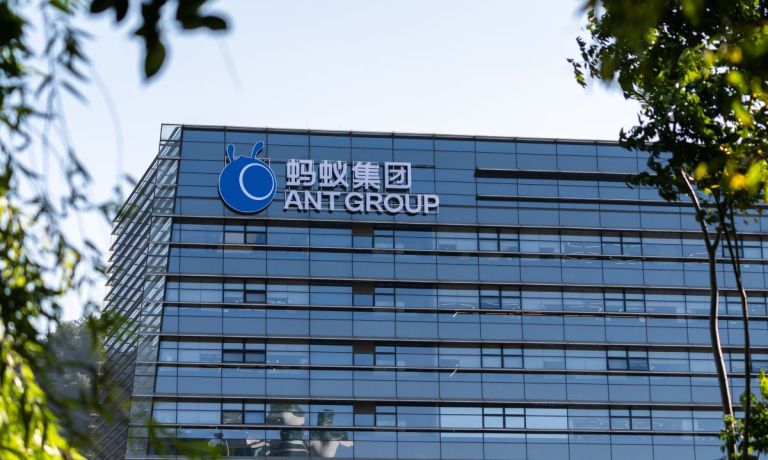
As Coindesk reported Sunday (April 5), Anvita was unveiled at the Chinese conglomerate’s Real Up summit in Cannes, and represents its investment in an “agent-to-agent” economy, letting bots hold assets and make payments with little to no human input.
According to the report, Anvita is launching with two main products. One is Anvita TaaS (tokenization-as-a-service), which focuses on the tokenization of real-world assets (RWAs) for institutions, such as custody and treasury tools. The other, Anvita Flow, is a platform where AI agents can connect, coordinate tasks and settle payments in real time.
“Pure RWA is just the ‘static infrastructure’ of digital assets,” said Zhuoqun Bian, president of blockchain business at Ant Digital Technologies. “The real transformation lies in moving toward an onchain agentic economy, where autonomous agents will not just analyze data — they will hold assets, execute trades, and optimize portfolios.”
As Coindesk noted, Ant is part of a larger collection of companies developing infrastructure for AI-driven commerce.
Visa and Coinbase have launched competing protocols for agent-based payments, with Visa’s Trusted Agent Protocol focused on card-rail checkout and Coinbase’s x402 more concerned with stablecoin micropayments.
Google in September debuted its Agent Payments Protocol, while Mastercard recently acquired stablecoin firm BVNK for $1.8 billion, the largest stablecoin infrastructure deal ever. The report characterizes this as a signal that traditional payment networks also view a future where blockchain settlement plays a key role.
Writing about the Mastercard/BVNK deal last month, PYMNTS argued that the transaction underlined the way incumbents like Mastercard aim to to address gaps in stablecoin adoption by integrating the tokens “into the existing systems where they can best provide value while ensuring their own centrality to future transaction flows, regardless of the underlying rails.”
Research by PYMNTS Intelligence has found that gaps in governance have kept many corporations from experimenting with, much less adopting, blockchain solutions.
“The biggest problem in crypto is not adoption; it’s the user experience,” Mesh CEO and Co-Founder Bam Azizi told PYMNTS in an interview last spring. “You need to make payments so simple that even a grandmother will use it one day, maybe without even knowing that the mechanism behind the scenes is a stablecoin … to do that, you need to do a lot of heavy lifting.”
For all PYMNTS AI coverage, subscribe to the daily AI Newsletter.