



 Katherine Xuan
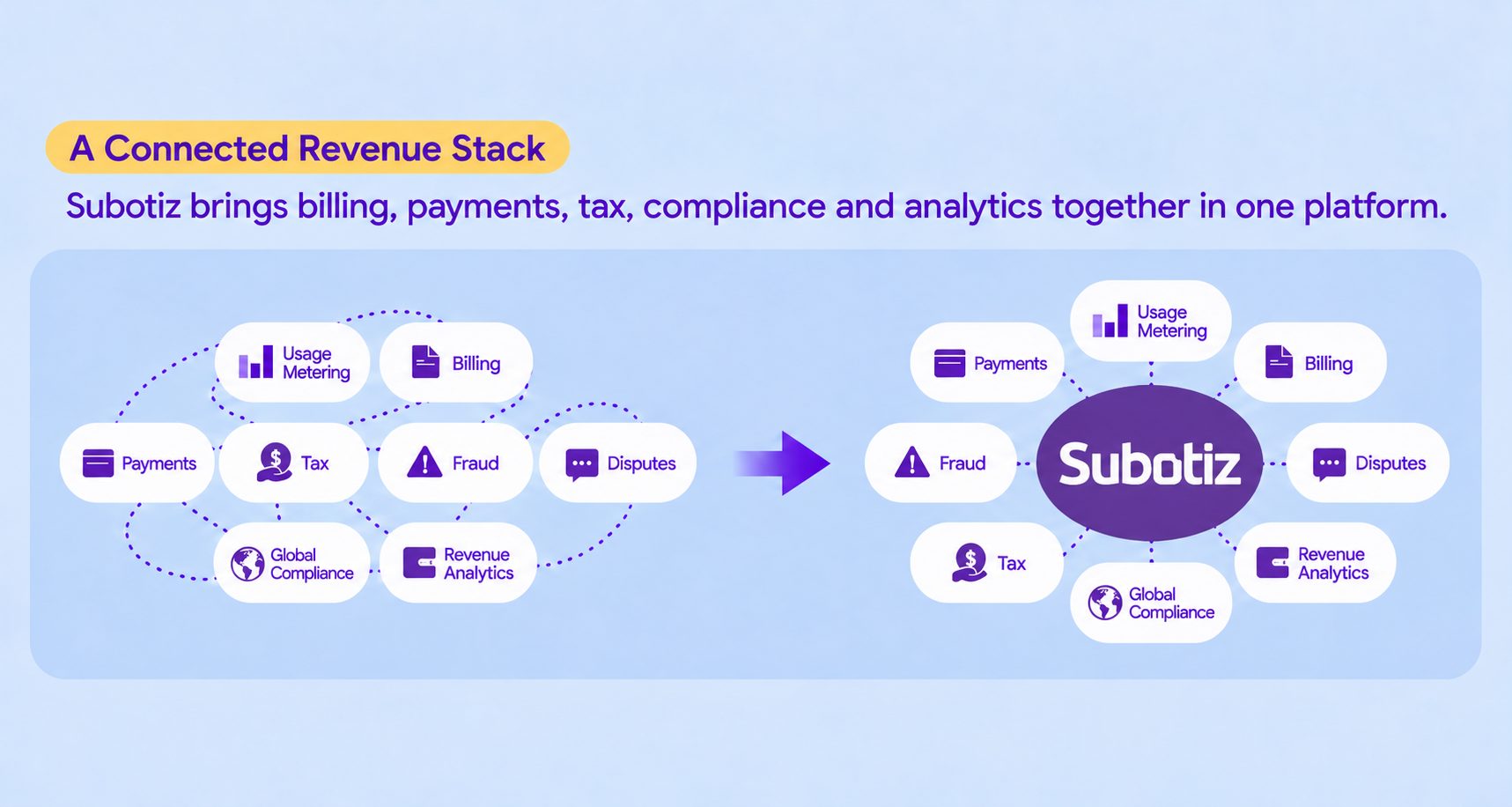
AI usage is changing how software is priced. Tokens, API calls, credits, agent activity and hybrid models are giving businesses more ways to align pricing with how customers actually use their products.But deciding how to charge is only the beginning.
An AI product can generate billable usage in seconds, but turning that activity into revenue can take considerably more work. Usage has to be measured, the amount owed calculated, and the payment processed. In recurring models, failed transactions may need to be recovered. For global businesses, tax, refunds, and disputes add another layer of operational complexity. Companies need billing and payment systems that can keep up with rapidly growing usage. Otherwise, they risk generating plenty of customer activity without efficiently turning it into revenue.
For AI companies, growth can also come with a bigger price tag. Expenses such as computing power and third-party API fees can balloon as more customers embrace their AI tools. Factors in the different systems needed to handle billing, payments, and other financial operations, and higher usage can start eating into profit margins.
“What we increasingly see is that pricing is rarely the only problem,” said Adam Mawdesley, Chief Revenue Officer at Subotiz. “A company may know exactly how it wants to charge for usage, but then run into payment recovery, tax, settlement or cross-border complexity. That is the gap between having a pricing model and actually monetizing it.”
Expanding into new markets brings another set of challenges. AI businesses can reach customers globally relatively early in their development, but their financial infrastructure has to expand with them. Each new market can bring different requirements around payments, taxes, and other financial operations, turning global reach into a financial infrastructure test.
Getting that infrastructure right can help companies convert more customer demand into revenue. For one AI creative software company, a competitive product wasn’t enough: payments were limiting conversion. Looking to smooth out the payment experience, the company turned to Subotiz for help. In just five days, it completed its integration and began to see results. Card payment success rates soon stabilized at around 85%, while digital wallet payments reached about 90%. The business went on to process hundreds of thousands of dollars in additional monthly total payment volume (TPV).
Subotiz approaches monetization as more than a billing problem. Its platform combines AI-native billing, subscription management, payments, Merchant of Record capabilities and revenue recovery to help digital businesses move from product usage to collected revenue.
AI-native billing supports usage patterns such as tokens and consumption-based services, while Subotiz’s Merchant of Record capabilities handle payment collection, tax, invoicing, refunds and disputes for eligible businesses.
Subotiz also moves beyond collection through Subotiz Accounts, which supports global accounts, foreign exchange, payouts and business spending. That gives Subotiz a view of monetization that extends beyond calculating what a customer owes to how revenue is collected, managed and eventually put back to work.
“Today, modern businesses are operating in an environment where products, customer usage and costs can all change quickly,” Mawdesley said. “Revenue infrastructure should not stop at generating the bill. The more connected the path from usage to collection and funds management becomes, the less operational friction companies have to absorb as they grow.”
Companies are likely to keep experimenting with subscriptions, usage, credits and hybrid pricing as their products and economics evolve. But pricing flexibility is only part of the equation. Monetization is not complete when usage is measured or an invoice is generated. It is complete when the value a product creates can be efficiently collected, managed, and put back to work in the business.
About Subotiz
Subotiz is a next-generation payment and revenue infrastructure platform designed for global digital businesses. By combining payments, subscription management, usage-based billing, tax and compliance automation, and Subotiz Accounts into a unified platform, Subotiz enables SaaS, AI, eCommerce, and platform businesses to scale globally with greater operational efficiency and revenue flexibility. Learn more at www.subotiz.com.
