More than ever, consumers across sectors expect a more simplified online experience to meet the challenges of busy modern life, which extends to their interactions with medical care. Providers are increasingly aware that they must connect with their patients online and in person. The simplicity of an all-in-one digital platform can provide a more streamlined approach to costly administrative tasks that can bloat office overhead.
Omnichannel, a strategy using some combination of online, in person and apps for a seamless customer experience, has long been a retail requirement — and in recent years, it has extended to industries such as medicine. Forty-six percent of U.S. consumers engage with healthcare providers using a mix of patient portals, telehealth, apps and in-person visits. Moreover, the number of patients interacting in multiple channels has grown by 8% since November.
Pandemic-driven lockdowns were a factor in patients’ initial adoption of telemedicine appointments and other activities traditionally associated with strictly in-person care. Still, today the use of online portals continues to rise.
Medical providers seeking to provide technology-driven care may benefit from an all-in-one healthcare platform. A recent PYMNTS collaboration with Lynx found that 71% of consumers prefer a unified digital channel for everything from scheduling appointments to accessing benefits.
Consumers seeking a unified digital platform aim to reduce barriers to care — particularly when sharing medical records with various providers.
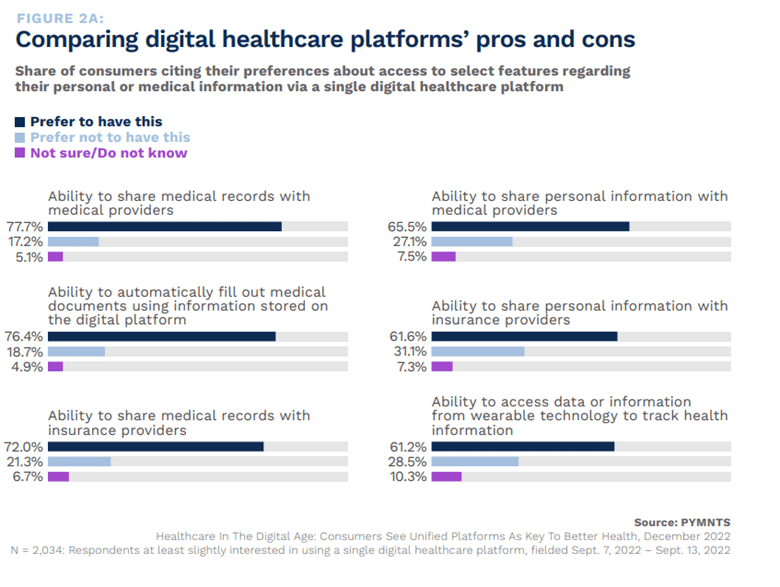
Another consumer demand is for greater efficiency. Seventy-six percent of consumers would like to use a platform to automatically fill out a digital form for medical treatment. Centralized information is also appealing, with 41% of consumers interested in having all their healthcare information in one place.
Providers could meet these patient needs with a well-designed, easy-to-navigate healthcare platform, which could include the ability to reach providers and help patients track and pay off their outstanding bills. Implementing a streamlined digital payment system would cut administrative costs associated with billing inefficiencies and free up staff for other tasks.
An all-in-one platform is only one of multiple approaches providers can consider to meet patients’ omnichannel expectations. Other possibilities include online booking for in-office visits, online-only consultations and the ability to access information on a website or app.
Although many consumers still have a strong interest in maintaining the in-office relationship, there is a simultaneous need to leverage digital technology to improve access to healthcare and better manage insurance benefits. By offering these capabilities within the same platform while also providing in-person and telehealth care, digital-minded providers could help define the next era of healthcare service delivery.