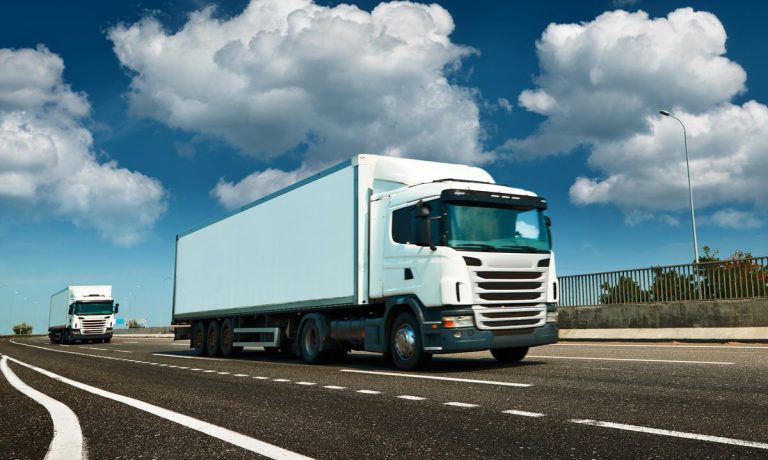
The demand for the over-the-road trucking that carries goods across the country has been booming, but at the same time, the providers of this service have been facing many challenges — soaring fuel prices, a truck shortage, a driver shortage and insurance rates that have been rising 10% per year for the past decade.
“Fleet businesses generally are running at somewhere between 3% and 5% margins, and those can get squeezed in all kinds of ways,” Reid Spitz, chief product officer and co-founder at High Definition Vehicle Insurance (HDVI), told PYMNTS.
To deal with the insurance rates, larger fleets with 100 or more trucks can implement solutions such as self-insurance and sophisticated risk management practices. Small to mid-size fleets with 10 to 99 trucks generally don’t have the resources to do that.
Using Data and Technology
Now, technology is providing a solution. When the federal government mandated electronic logging devices (ELDs) in many commercial trucks in 2018, those trucks became connected. The rising popularity of forward-facing cameras in trucks has added more tech that can be used to promote safety and lower insurance rates.
“Innovation is the solution, we feel, to that problem — better use of data and technology,” Spitz said.
For example, HDVI uses this tech to provide usage-based insurance (UBI) to fleets. With telematics data from those devices, the company assesses the risk and provides dynamically priced insurance with rates that change monthly to reflect improvements in the fleet’s safety. The company also coaches drivers in safe driving practices through an app, a dashboard and monthly consultation calls.
“These help them identify the safety issues in their fleet and where they should be focusing their attention,” Spitz said.
Providing Dynamically Priced Insurance Based on Safety
The telematics data can provide insurers with information about driver behavior such as speeding or hard braking that can be used to provide UBI. While UBI has been offered by some insurers in the personal auto insurance space for 20 years, it’s just now coming into the commercial insurance market. With real-time data, they can provide dynamically priced insurance.
“So, as fleets see safety improvements, they also see insurance cost savings in a real-time fashion,” Spitz said. “Whereas before, if their fleet was getting safer, they may not see the benefit of that for several renewal terms because the insurance companies have to wait to see how their losses develop.”
With the training and incentives enabled by data and UBI, fleets become safer, Spitz said. For example, HDVI has found that within the first quarter of becoming an insured of the company, 75% of fleets get safer on the metrics of harsh braking and speed, and by the second quarter, 90% do so. That translates into discounts of 7% to 10% on their insurance by the third month.
“It’s really all about bringing it together in a well-managed risk management program,” Spitz said. “You cannot just stick a camera or stick an ELD into a truck and expect that fleet will get safer just as a result of the telematics being there — you really have to wrap it into a holistic, well-managed risk management program.”