Nuro, the robot delivery startup created by two former self-driving car engineers for Google, Dave Ferguson and Jiajun “JZ” Zhu, have raised $92 million in funding.
According to a report in Forbes, the Series A round of fundraising was led by Banyan Capital, the Chinese venture firm, and Greylock Partners of Silicon Valley. Nuro is betting that by this year, it can create self-driving delivery robots that transport only goods.
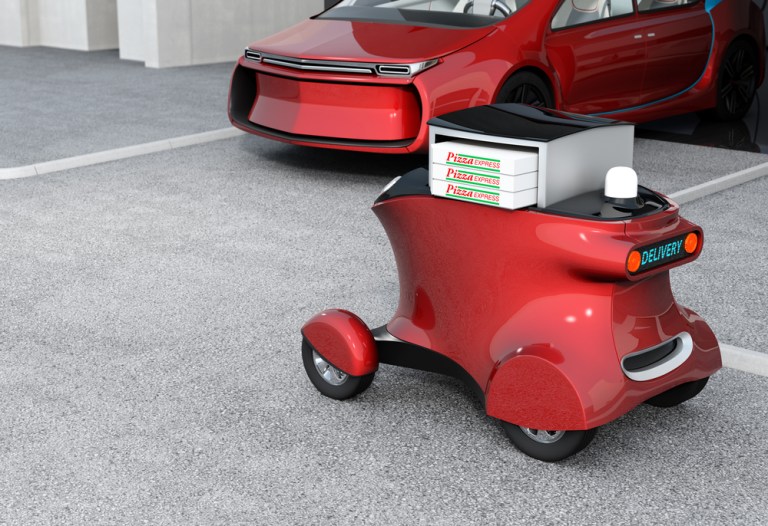
The company will initially build a fleet of six electric, self-driving vehicles that will reportedly be half the size of a passenger vehicle. The vehicles will deliver groceries, take-out food, flowers, packages and boxes to homes and businesses. Nuro’s self-driving delivery robots will target both urban settings and suburban homes.
“We’re hoping that this year they are providing a useful service,” Ferguson told Forbes. “Obviously, it will be a limited area, it won’t be thousands of people, but we are hoping they are serving real customers.”
Details are still forthcoming about the service launch date and which retailers might be involved, as Ferguson declined to comment to Forbes on both topics. He also wouldn’t say if it would launch in China, a country whose government has made self-driving cars a priority.
Among Nuro’s early focuses will be small stores and businesses, including dry cleaners, restaurants and food stores, noted Forbes.
Advertisement: Scroll to Continue
“We are in chats with potential retail partners around what we can do together and how we can get this out into the world quickly,” Ferguson said. “But we also see this as a way to leverage the local presence retailers and other goods and service providers, both very big but also very small, have in their communities … with a service like this, they suddenly get logistics capability that rivals the biggest players, and they can now reach everyone in the community with a service to leverage their existing footprint.”