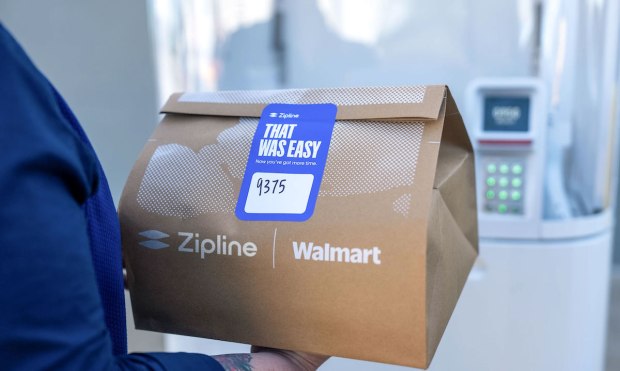
Walmart, which said in the release that it has the largest drone delivery program in the country, has teamed with Zipline on drone deliveries since 2021.
“We see customers try drone delivery for the novelty and then continue to come back to it for the convenience when they need something in minutes,” Greg Cathey, Walmart’s senior vice president for eCommerce fulfillment transformation, said in the release. “Walmart’s stores put us close to the communities we serve. With Zipline, we can build on that proximity and bring this fast delivery option to even more customers across the country.”
The program lets customers choose from tens of thousands of items for delivery in as little as 30 minutes where available, according to the release, which added that 90% of U.S. consumers live within 10 miles of a Walmart store.
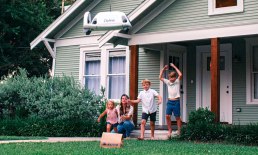
Customers will see drone delivery as an option on the Walmart app or website if the address associated with their account is within delivery range, the release said. From there, customers can add items to their cart as they would with any other order, and orders are delivered to the customer’s home in the front yard, backyard or driveway.
The expanded partnership is the latest example of Walmart’s efforts to compete with rival Amazon on delivery, using the prevalence of its brick-and-mortar locations to its advantage.
“Walmart has spent years converting stores from a potential eCommerce liability into fulfillment assets,” PYMNTS reported in September. “Half of its eCommerce fulfillment center volume is now automated, while 65% of stores receive freight from automated distribution centers.”
Amazon had historically held the edge in fulfillment technology and digital commerce while Walmart’s advantage came from physical proximity. Now, each company is embracing the other’s strengths. Walmart is embedding automation and software into thousands of locations already near its shoppers. Amazon is combining local infrastructure onto a system already built around automation and eCommerce.
The destination for both is “dense networks of inventory, software and automated fulfillment capable of predicting demand and getting products to consumers within hours,” the report said. A household that reflexively opens a retailer’s platform whenever it needs groceries, medicine or household staples is more valuable than one that simply turns to a specific retailer for occasional purchases.