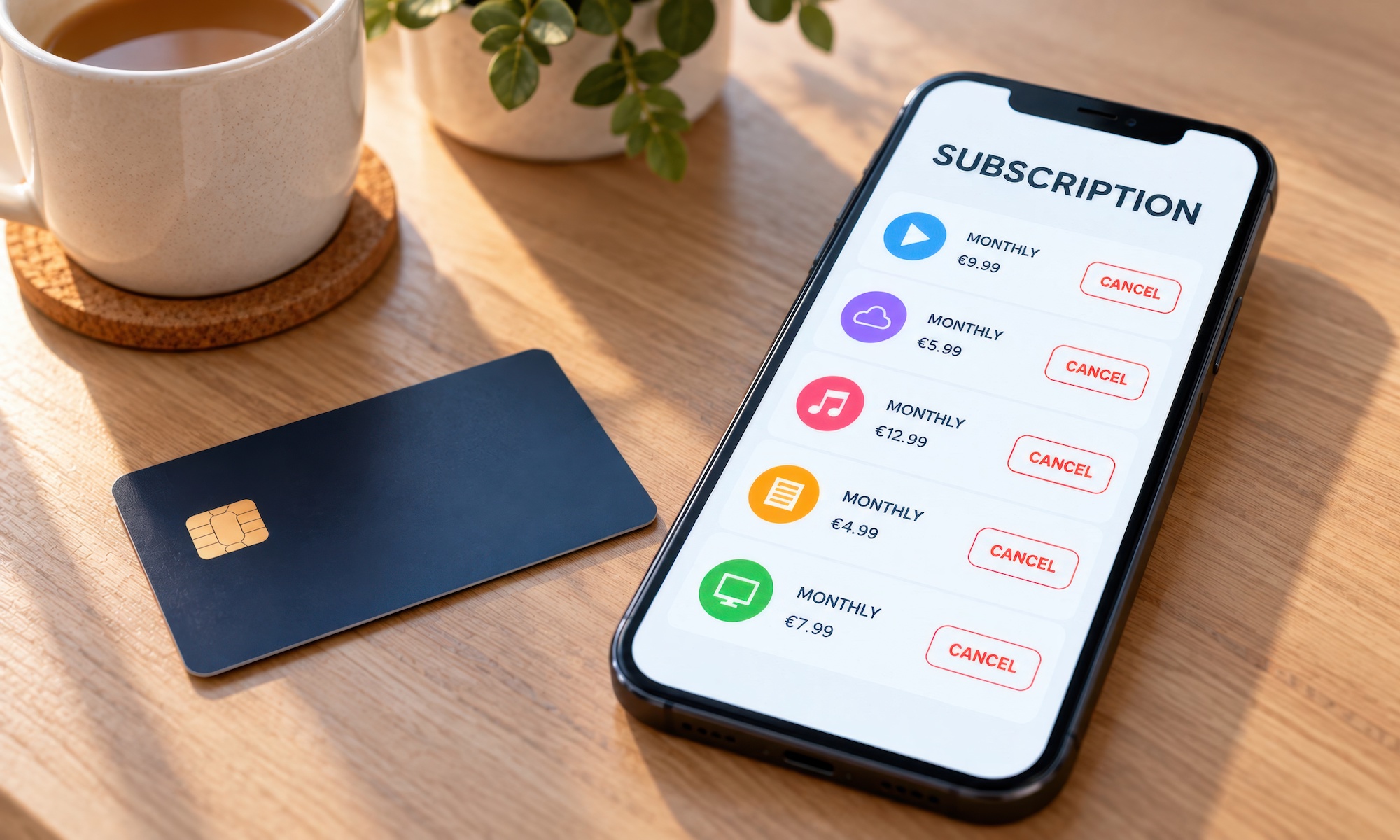
Subscription management is becoming part of the everyday business of banking. As issuers add controls for recurring payments, they are taking on some of the work historically handled by merchants, from identifying unfamiliar charges to facilitating subscription cancellations where supported.
The October PYMNTS Intelligence report “Keep the House, Cut the Subscription: How Consumers Rank Spending” found that consumers living paycheck to paycheck without difficulty paying bills were nearly as likely as those struggling financially to put subscriptions among their first spending cuts.
Among consumers who had purchased subscriptions in the previous year and considered them discretionary, the respective shares were 57% and 60%. Even among those who did not live paycheck to paycheck, 39% identified subscriptions among the first expenses they would reduce or eliminate.
Within the past three months, banks in the United States, New Zealand and the United Arab Emirates have introduced new ways to manage recurring spending. U.S. Bank’s Oct. 19 launch of Payment Switch lets customers move eligible subscription payments to its cards through its banking app. In September, Citi introduced Mastercard’s Smart Subscriptions in the UAE, its first deployment of the technology globally.
On Nov. 19, Visa introduced Recurrent. New Zealand’s Kiwibank became the first issuer to offer the service, displaying eligible recurring card payments, including the merchant, amount and frequency. Customers can stop future charges through the bank’s app or website.
Moving Recurring Payments
The ability to change payment details across multiple subscriptions introduces another consideration for banks competing for a greater share of household spending.
A consumer who gets a new credit card faces the prospect of updating payment information with multiple merchants. Visa’s Enhanced Subscription Manager, introduced in March, includes a card-switching capability. Issuers have a financial interest in shortening that process, particularly given that recurring card payments generate purchase volume throughout the year.
In its September announcement with Citi, Mastercard reported that issuers adopting Smart Subscriptions had observed an average 10% increase in customer subscription spending.
U.S. Bank’s October launch also incorporates information about changes in recurring payment amounts. Customers can identify price increases by comparing charges with those from previous months as they review which subscriptions to retain.
The September “Service Commerce Performance Gap,” produced by PYMNTS Intelligence and Paymentus, found that 40% of consumers had contacted customer support to resolve a billing problem. The study surveyed 2,566 U.S. consumers and 240 billing decision-makers across healthcare, utilities, home insurance and auto lending.
About one-third of consumers reported difficulty understanding a bill or its charges. Yet just 10% of surveyed providers were actively investing in post-payment services and issue resolution.
Giving customers access to itemized receipts, as Mastercard’s technology does for purchases from participating merchants, provides a means of addressing some inquiries through self-service. The timing of the information also affects its usefulness. Kiwibank advises customers that some charges may need to occur more than once before they are identified as recurring payments.
Merchants have a financial stake in how banks handle cancellation requests. Visa Recurrent allows participating merchants to receive notifications of supported actions taken through the banking app and direct customers to their own services. That gives merchants an opportunity to offer alternative membership terms to customers looking to reduce their expenses.
The extent of banks’ involvement in cancellations varies. Australia’s Westpac, which began rolling out its Subscription Manager earlier this year, accepts cancellation requests for eligible subscriptions directly through its app. Customers receive confirmation once those requests have been processed.
At Kiwibank, customers who block recurring card payments still need to contact the merchant to terminate their subscriptions. Wider merchant participation in direct cancellation services would reduce the number of separate accounts consumers need to access when revising their monthly budgets.