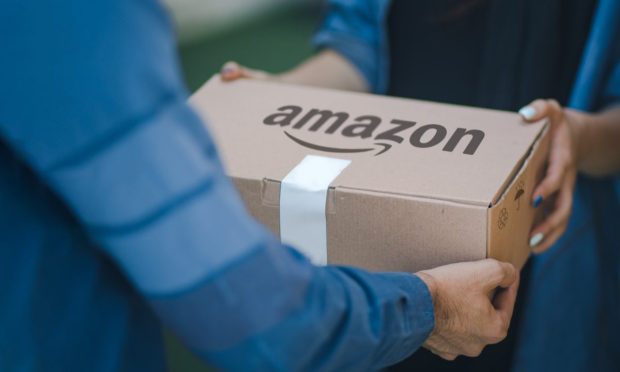
The defining retail battle of the 21st century has been around who controls the flow between click and doorstep. This has made the real competition less about shelves and inventory, and more about operational networks and their nodes.
Networks that retail giants like Amazon and Walmart are increasingly looking to build in-house and own themselves, as the Tuesday (Dec. 4) news that Amazon is reportedly preparing to cut ties with the U.S. Postal Service (USPS) underscores.
The consequences of Amazon’s potential exit could be profound. The Postal Service relies heavily on parcel delivery revenue to offset the steep decline in traditional letter mail. Without Amazon, many of the Postal Service’s existing “coopetition” arrangements in which legacy carriers like UPS or FedEx hand off last-mile delivery to USPS could unravel.
But for Amazon, the calculus is relatively more straightforward. Over the past several years it has poured billions into expanding its own fulfillment centers, sorting hubs, electric delivery vehicles and a gig-based driver network.
Equipped with density, scale, and proprietary infrastructure, Amazon now believes it can deliver at a lower “all-in” cost than shipping via the Postal Service. Amazon Logistics reportedly handled 6.3 billion packages in 2024, just shy of USPS’s 6.9 billion.
A spokesperson for Amazon told PYMNTS the company is committed to working with the Postal Service and looks forward to hearing more from the agency soon.
Read more: Rufus and Sparky Turn Amazon and Walmart Into Holiday Rivals
Why Control Beats Coordination for Retail Dominance
In the early days of Amazon’s growth, the company depended heavily on third-party carriers such as UPS, FedEx and the U.S. Postal Service. Walmart, too, relied on a web of trucking carriers and logistics partners to scale its massive distribution system. These relationships remain important, but they increasingly represent only one layer in a vertically integrated stack that the giants are racing to take in-house.
The logic is straightforward: coordination is fragile. Control is durable.
The USPS news comes as Amazon makes other adjustments to its delivery services. For example, the company announced earlier this week that it is testing ultra-fast delivery, in 30 minutes or less, of groceries and essential items in and around Philadelphia and Seattle.
Owning operational nodes does more than speed up delivery, it reshapes the physical footprint of retail itself. The geography of retail has historically revolved around proximity to shoppers; now it revolves around proximity to network efficiency.
This reality has led to Walmart quietly rethinking its own playbook. Once the poster child of sprawling suburban supercenters, it now sees opportunity in a very different retail paradigm: urban consumers with rising incomes and a preference for convenience and speed.
In a recent earnings-conference call, CFO John David Rainey confirmed that Walmart is trialing “dark-store” formats in dense urban neighborhoods. These facilities are not open to the public; instead, they serve exclusively to fulfill e-commerce orders for delivery or pickup, allowing Walmart to overcome the logistical and zoning challenges that have historically prevented successful urban supercenter expansion.
Parallel to these ecosystem realignments, Walmart is also navigating a leadership handoff that could reshape its U.S. operations going forward. With current U.S. head John Furner moving up the corporate ladder, attention has turned to two leading internal candidates for the top role at Walmart U.S.: Kath McLay, president and CEO of Walmart International, and Chris Nicholas, CEO of Sam’s Club.
Read more: Consumers Use Rewards to Subsidize Holiday Spending
How Competing on Cost Is Driving Retail’s Network Effect
As Walmart, Amazon and other retail giants race to compress the distance between click and doorstep, cost has become both the accelerant and the constraint shaping their strategies. What looks externally like a price war is, beneath the surface, a systems war: the more a retailer can lower the cost of fulfillment, the more volume it attracts; and the more volume it attracts, the lower its marginal cost to operate its logistics network and the greater the benefit to its customers.
This dynamic creates a loop of self-reinforcing advantage. Every parcel that moves through a retailer’s system yields more data, more density, more negotiating leverage with suppliers and more justification for capital investment in automation.
These benefits are becoming more important as everyday shoppers becoming increasingly financially sensitive. Data from the October “New Reality Check: The Paycheck-to-Paycheck Report” by PYMNTS Intelligence found that 26% of consumers had difficulties paying their bills in September, the highest share in at least two years.
Separate data from PYMNTS Intelligence’s “Black Friday on a Budget: How Discipline and Deals Shaped Holiday Shopping in 2025” found that consumers shifted from simply using credit to actively optimizing it as a reimbursement mechanism, and indeed as a form of income, for holiday budgets rather than as pure purchasing power.
The retail landscape is in a period of transition. And while the cliché of digital business is that network effects come from users, the emerging reality is that logistics networks can experience compounding advantages of their own — advantages Amazon and Walmart are both keen to own.