The transportation industry is a high-speed world of logistics and delivery, where efficiency and speed are paramount. Yet, the methods by which many transportation businesses conduct financial transactions are not moving at the same pace.
A recent PYMNTS Intelligence report, “Moving Faster Than Ever: Real-Time Payments in the Transportation Industry,” in collaboration with The Clearing House, explores this incongruity between the industry’s core operations and its payment systems as an obstacle to growth and profitability.
The Lingering Shadow of Legacy Payments
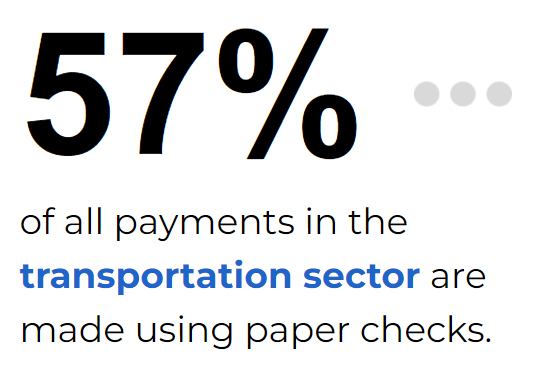
While the industry has made strides in adopting digital technologies, paper checks remain a common payment method. According to the report, 57% of total payment volume in the transportation sector is still processed through checks, followed by automated clearing house (ACH) payments and then credit cards.
This reliance on outdated infrastructure slows down operations, creates room for errors and increases costs. For truck drivers, who often work long hours away from banks or ATMs, cashing checks can be a time-consuming and inconvenient ordeal.
The use of checks introduces vulnerabilities into the supply chain. Lost or stolen checks can lead to financial losses and operational disruptions. The manual processing of checks is also labor-intensive and error-prone, increasing the risk of fraud and reconciliation issues.
The Roadblocks to Real-Time Payments
We’d love to be your preferred source for news.
Please add us to your preferred sources list so our news, data and interviews show up in your feed. Thanks!
Despite the clear advantages of real-time payments, their adoption in the transportation industry has been slower than in other sectors. Several factors contribute to this reluctance.
First, many transportation businesses, particularly smaller operators, may lack the technological infrastructure or financial resources to implement new payment systems. Second, concerns about security and fraud can deter companies from adopting real-time payments. Third, a lack of awareness of the benefits of real-time payments and the available options can hinder adoption.
Consider the 24% of transportation small- to medium-sized businesses (SMBs) that did not use digital payments who say their banks do not offer them. PYMNTS Intelligence found 29% of transportation SMBs that didn’t use instant payments in the past year cited difficulty of use or insufficient knowledge as barriers. Cost concerns were also a factor, with 23% saying instant payments were too expensive. Additionally, 22% pointed to limited payee acceptance.
The Promise of Real-Time Payments
The potential benefits of transitioning to real-time payments for the transportation industry are substantial. By eliminating the delays associated with check processing, businesses can improve cash flow, reduce operational costs and enhance customer satisfaction. Additionally, real-time payments can streamline financial processes, such as payroll and invoicing, leading to increased efficiency and accuracy.
For truck drivers, real-time payments offer a more convenient and secure way to receive compensation. By eliminating the need to physically cash checks, drivers can access their earnings promptly, improving their financial well-being and reducing stress.
Truck drivers overwhelmingly favor instant payments, with 93% saying they would use them if offered. Those who already receive instant pay cite speed, security and guaranteed funds as key benefits. Despite this preference, only 40% of truckers currently have access to these payment methods.
Realizing the full potential of real-time payments in transportation requires collaboration among stakeholders. Financial institutions should offer user-friendly solutions and education, technology companies must develop tools that integrate seamlessly, and government policies should provide incentives and support. Working together, these groups can address challenges and drive broader acceptance of real-time payments, improving efficiency and growth in the transportation sector.



 Add as Preferred Source