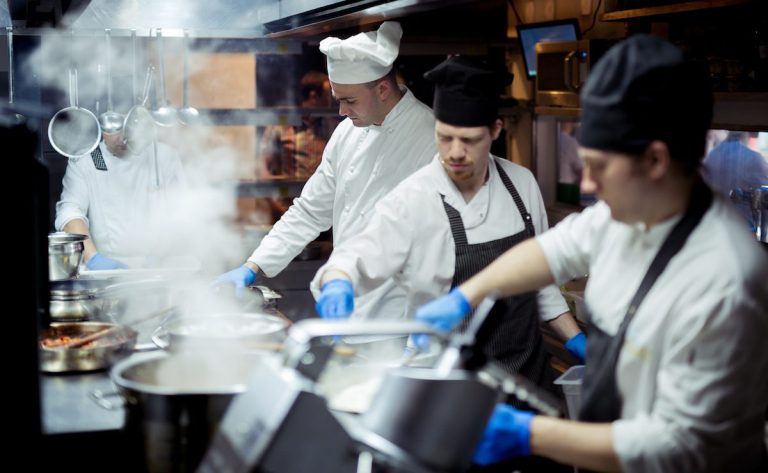
With ongoing labor challenges intensified by consumers’ increasing expectations of convenience and access, restaurants are facing a very different landscape than they were even a year ago.
In addition to running their on-premise and pickup businesses, restaurants are now expected to be available across different delivery marketplaces. Plus, many restaurants pivoted to other kinds of sales during the pandemic, selling meal kits or packaged sauces to fans of their foods — side hustles many have continued even as they’ve reopened their dining rooms.
Read more: Spurred by Pandemic, Restaurants Leverage Their Brands to Sell Packaged Goods
And given the proliferation of solutions that promise to streamline the process, an increasing number of restaurants are adding catering businesses to the mix. All good ways to boost sales, keeping everything coordinated across different parts of the business can create additional headaches along the way.
Nearly half of restaurants are having trouble hiring and retaining employees, according to data from the 2022 edition of PYMNTS’ “Restaurant Readiness Index,” which drew from a survey of 519 managers of quick-service restaurants (QSRs) and table-service restaurants. The study also found that 32% of restaurants reported that their level of service has decreased as a result of staffing issues.
See more: More Than Half of Restaurants Depend on Digital Sales, Despite Uptick in on-Premises Orders
Advertisement: Scroll to Continue
Consequently, many eateries are seeking out innovative ways to ease the burden. In the survey, 18% reported that they “have implemented technology that makes restaurant duties easier.” These kinds of technologies can include ordering kiosks and QR code menus.
Yet, consumers are split on whether they agree that more technology improves service. Take the QR code example. Data from the May/June edition of PYMNTS’ Digital Divide study, “The Digital Divide: Technology, the Metaverse and the Future of Dining Out,” which drew from an April survey of about 2,500 U.S. consumers, revealed that more than half (51%) of grab-and-go customers stated that viewing a menu with a QR code has a positive impact on their satisfaction. However, only 26% of dine-in customers said the same.
Read more: Restaurants Tinker With Tech Recipe to Balance Efficiency and Personal Service
However, other kinds of technology can boost efficiency for the restaurant without affecting the consumer experience at all, such as kitchen display systems that are integrated with the various ordering channels and smart inventory analytics or smart inventory management tools to reduce the time it takes to make the calculations. Plus, in the Restaurant Readiness Index survey, many restaurants noted that they have mostly or fully automated various aspects of operations. Thirty-three percent reported doing so for payroll, 29% for payments, 28% for pricing and so on.
In an interview, Rajat Suri, founder and CEO of voice, vision and touch technology firm Presto, told PYMNTS’ Karen Webster that most restaurants can’t afford a high quality of service that comes from satisfied front-of-house staff without the aid of automation elsewhere.
See more: The Three Things That Make a Good Fast Food Drive-Thru Great
“That’s why this industry needs to automate,” Suri said. “They just can’t [afford] that happy service. And the good thing about the voice [artificial intelligence (AI)] is, it can always be happy, and it can always be accurate.”