Today In Data: The High Cost Of Falling Behind In Payments

In a world that is moving quickly – and often in a lot of new directions at once – staying caught up is hard, and often costly, work. But the costs of falling behind are generally greater, as consumers and businesses gravitate to providers that can consistently and ubiquitously meet their needs. It’s why real-time payments have become a hot topic, and businesses across the board are rushing to embrace them. But keeping up with what’s next isn’t always easy, particularly for those with legacy systems to overcome. But falling behind is costly, not only in terms of keeping and attracting customers, but also in literal funds. Just ask the team at Bangladesh’s Central Bank, which fell behind hackers two years ago, to disastrous results.

    Get the Full Story

    Complete the form to unlock this article and enjoy unlimited free access to all PYMNTS content — no additional logins required.

    yesSubscribe to our daily newsletter, PYMNTS Today.

    By completing this form, you agree to receive marketing communications from PYMNTS and to the sharing of your information with our sponsor, if applicable, in accordance with our Privacy Policy and Terms and Conditions.


    Data

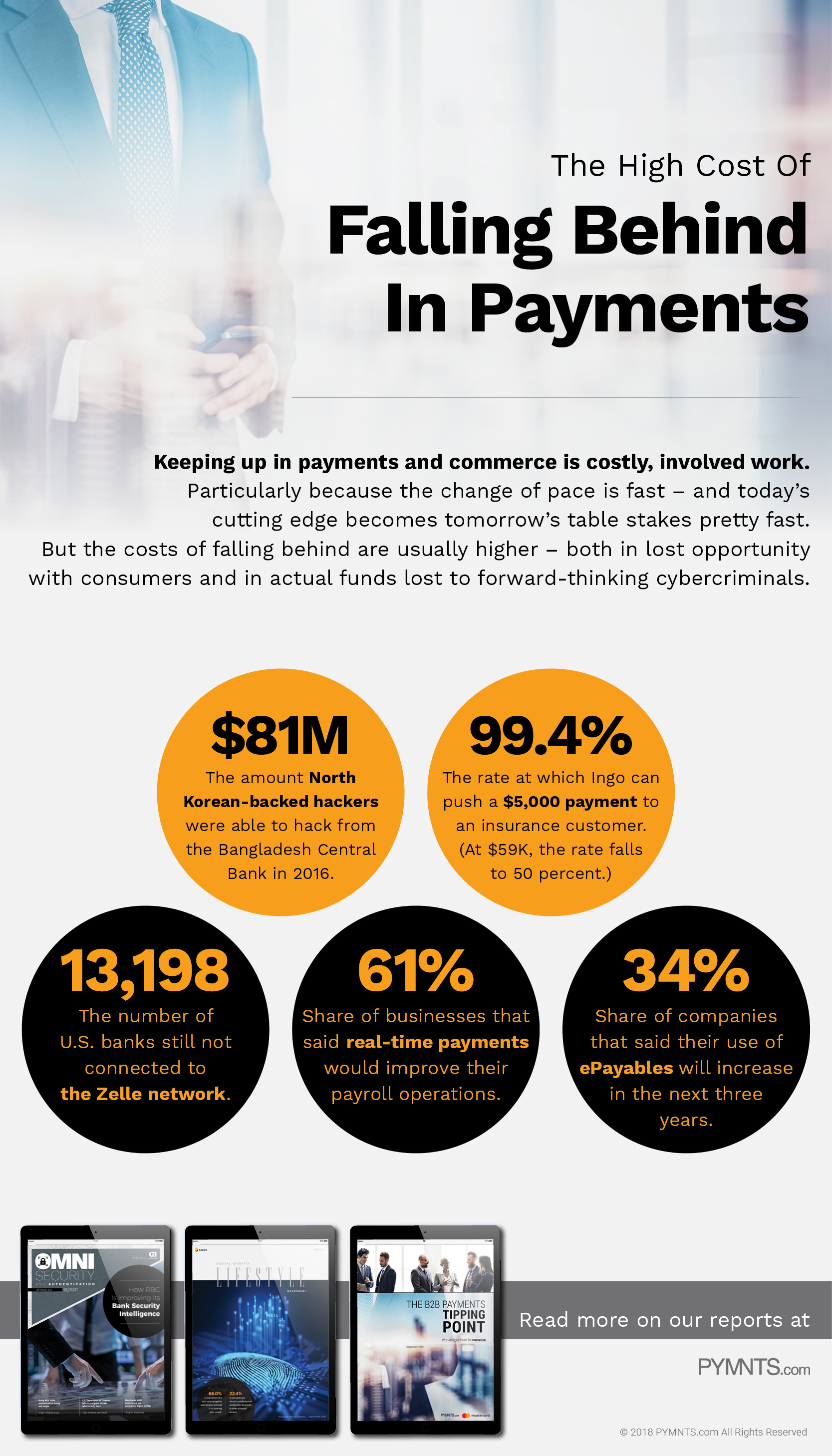
    $81 million: The amount North Korean-backed hackers were able to hack from the Bangladesh Central Bank in 2016.

    13,198: The number of U.S. banks still not connected to the Zelle network.

    99.4 percent: The rate at which Ingo can push a $5,000 payment to an insurance customer. (At $59K, the rate falls to 50 percent.)

    61 percent: Share of businesses that said real-time payments would improve their payroll operations.

    Advertisement: Scroll to Continue

    34 percent: Share of companies that said their use of ePayables will increase in the next three years.