The Changing Landscape Of eCommerce Fraud 

The Changing Landscape Of eCommerce Fraud

Fraudsters are wily, striving to stay one step ahead of authentication protocols and other efforts to stop bad actors from compromising consumers’ accounts. Merchants and eCommerce firms are grappling with an ever-increasing amount of data – much of it unstructured – as they seek to find patterns and red flags that signal fraudulent activity. It’s no easy task, as the recent Fraud Decisioning Playbook shows.
    Get the Full Story

    Complete the form to unlock this article and enjoy unlimited free access to all PYMNTS content — no additional logins required.

    yesSubscribe to our daily newsletter, PYMNTS Today.

    By completing this form, you agree to receive marketing communications from PYMNTS and to the sharing of your information with our sponsor, if applicable, in accordance with our Privacy Policy and Terms and Conditions.

    Data:

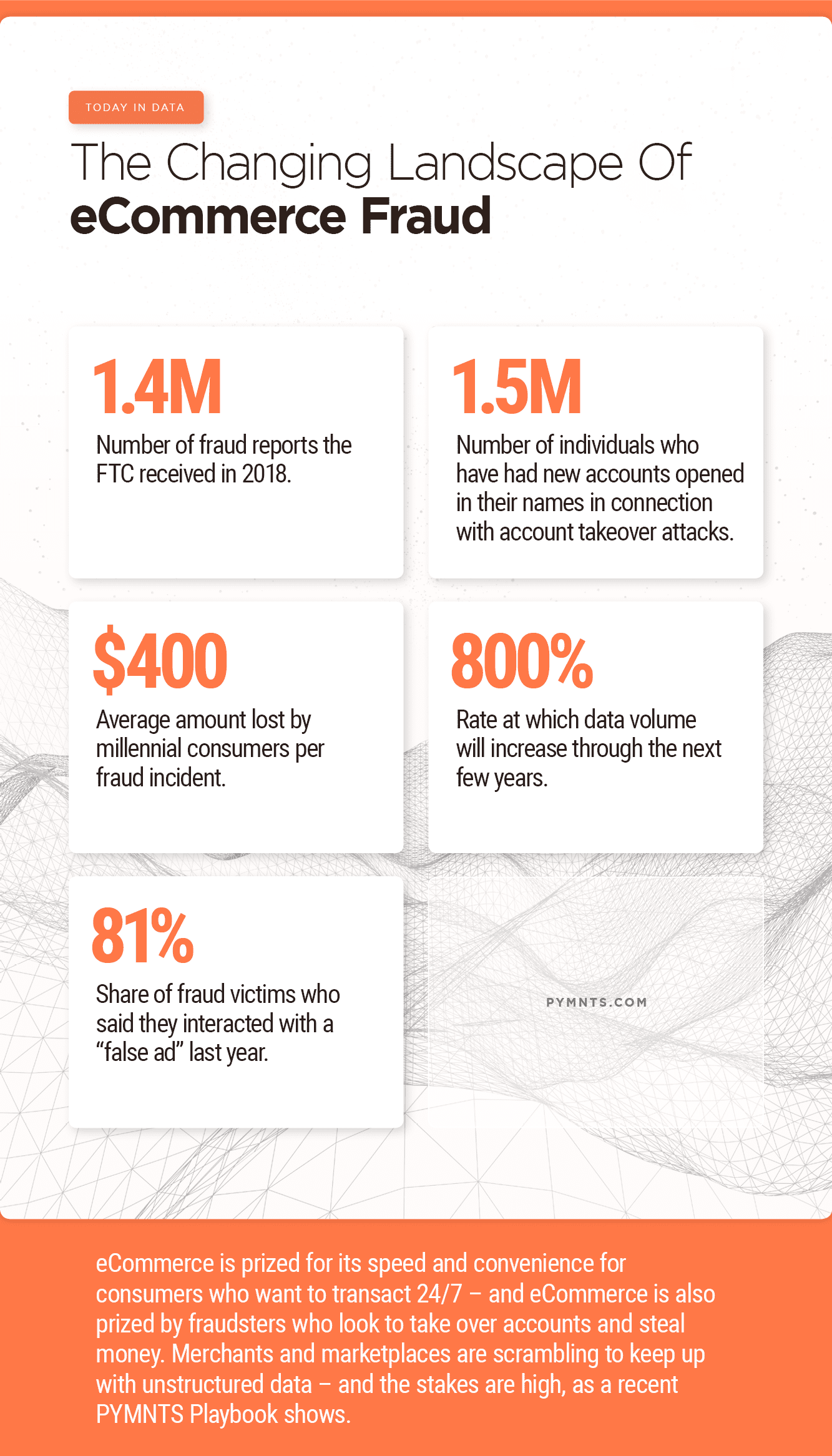
    1.4M: Number of fraud reports the FTC received in 2018.

    1.5M: Number of individuals who have had new accounts opened in their names in connection with account takeover attacks.

    $400: Average amount lost by millennial consumers per fraud incident.

    800%: Rate at which data volume will increase through the next few years.

    Advertisement: Scroll to Continue

    81%: Share of fraud victims who said they interacted with a “false ad” last year.