Innovation is writing the future of financial services.
“In the payments industry today, innovation is not a luxury; it’s a lifeline,” Nilesh Dusane, global head of institutional payments at AWS, told PYMNTS during a discussion for the “What’s Next in Payments: Trade Offs” series.
The sector is undergoing perhaps its most significant upheaval since the advent of electronic funds transfer.
Around the globe, real-time payments networks are gaining traction, with more than 80 countries deploying instant rails. At the same time, compliance demands like the global shift to ISO 20022 standards are placing new pressures on back-office systems, while digital-native customers demand seamless, hyper-personalized experiences at scale.
It’s a daunting matrix to solve, particularly as operational needs, customer expectations and ongoing cost pressures all collide.
“Legacy infrastructure simply can’t keep up,” Dusane said. “And the traditional model of procuring hardware, spending months building applications, then launching; those cycles are now too long and too costly.”
Enter cloud-based solutions and services, which can offer greater elasticity and speed to meet these evolving demands.
A Cloud-Centric Strategy for Complex Times
AWS can enable payment providers to create applications in a few weeks instead of several months, test them in real time, scale them up if they work, or shut them down if they don’t. The result is commonly not just lower capital expenditure but an innovation model that prizes experimentation and rapid iteration.
“The conversation is no longer about just ‘lifting and shifting’ to the cloud,” Dusane said. “It’s about re-architecting for cloud-native services that give you speed, resilience and long-term flexibility.”
In many ways, the payments industry today resembles the early days of cloud computing, as it is fragmented, rapidly evolving and ripe for reinvention.
Still, one might assume the current economic headwinds, ranging from fluctuating tariffs to geopolitical tensions and slowing consumer demand, could sap the industry’s appetite for innovation. According to Dusane, the opposite is happening.
“We’ve not seen any signals in the market for innovating less,” he said. “In fact, innovation is accelerating.”
But this is financial services innovation, meaning it is rooted in practical use cases, proven technologies, and, above all, customer impact, he said.
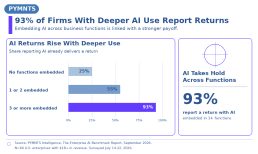
Nowhere is this acceleration more apparent than in the deployment of generative artificial intelligence, which AWS sees as a catalyst for the next wave of value creation in payments, Dusane said. Generative AI has immediate, practical applications that financial services leaders are already adopting.
We’d love to be your preferred source for news.
Please add us to your preferred sources list so our news, data and interviews show up in your feed. Thanks!
“These technologies are not only helping our customers do what they do in a much more efficient way, but they’re also helping our customers build new business models and deliver new kinds of services to the end customer,” he said. “…We have seen enough feedback from our customers to say that, ‘Hey, these technologies can really solve problems.’ It’s not just cool tech.”
With more structured data starting to flow, from ISO 20022 payment messages, for instance, these data assets can be parsed and used in new ways to help banks better understand client behavior, assess risk and offer bespoke services. The result is a shift from “utility” banking to something more personalized and intelligent, he said.
“This is where value shifts from pure transaction processing to differentiated service delivery,” Dusane said. “AI helps us unlock new revenue streams.”
For instance, a traditional bank might use generative AI to automatically suggest financial products based on a customer’s transaction history, flag anomalies for fraud prevention, or automate regulatory reporting. More ambitiously, some institutions are using it to power real-time conversational experiences in banking apps, offering insights, recommendations and alerts in natural language.
These AI-powered innovations must operate within the industry’s strict security framework. As security remains a top priority for financial institutions, modern cloud infrastructures are designed to meet the unique requirements of even the most sensitive workloads, delivering protection for financial institutions and their customers.
Customer Obsession as Innovation Compass
Whether it’s enabling a bank to modernize its payment hub without ripping out legacy cores, helping a FinTech scale a new app across multiple countries, or empowering developers to build and deploy features in weeks instead of months, AWS is betting on a future where resilience is built not by bracing for impact — but by building smarter, faster, and with more intention.
“Innovation is a common theme across every geography,” Dusane said. “The way customers innovate is different based on local needs.”
In Asia-Pacific, real-time payments are surging, with account-to-account payments becoming the norm. In Europe, the open banking movement — spurred by PSD2 — is inspiring innovation in embedded finance and cross-app data sharing. In North America, the ramp-up of the FedNow® Service and RTP® network is opening doors to new app-based, real-time experiences for consumers and enterprises.
“Depending on the maturity of the rails in different parts of the world, the applications that are being built are different,” Dusane said. “And that’s the best way we are supporting our customers — to build those applications for their local ecosystems.”
Innovation alone does not imply that the path forward for financial services is not without risk. The regulatory environment remains complex. Consumer expectations are constantly evolving. Economic headwinds are real. But the companies that embrace cloud-native agility, use AI responsibly, and stay relentlessly focused on their customers could be the ones that define the next era of financial services, he said.
“If you’re waiting for stability to innovate, you’ll be waiting forever,” Dusane said. “The winners are already building.”


 Add as Preferred Source