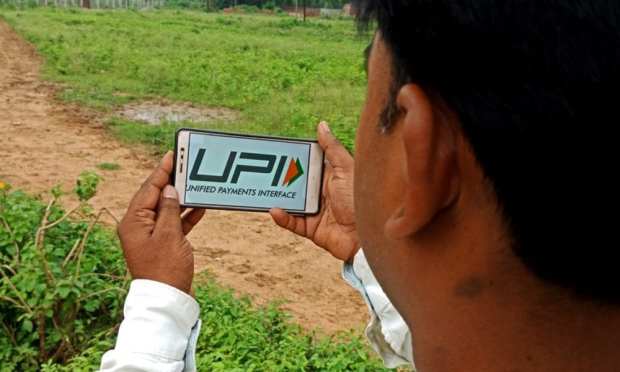
Starting Oct. 8, users of the United Payments Interface (UPI) will be able to approve payments with facial recognition and fingerprints, Reuters reported Tuesday (Oct. 7), citing three sources familiar with the matter.
Authentications will be carried out using biometric data stored under the Indian government’s unique identification system, Aadhar, one of the sources told Reuters.
PYMNTS has contacted the National Payments Corporation of India (NPCI), which operates UPI, for comment but has not yet gotten a response.
The Reuters report notes that this move comes in the wake of new guidelines from India’s central bank allowing alternative methods of authentication, departing from the current system, which requires a PIN to authenticate payments.
We’d love to be your preferred source for news.
Please add us to your preferred sources list so our news, data and interviews show up in your feed. Thanks!
The sources added that the NPCI is planning to demonstrate the new biometric feature at the Global Fintech Festival, happening this week in Mumbai.
As covered here earlier this year, UPI has boomed in popularity since it was introduced nearly 10 years ago, and has begun to rival Visa in terms of number of transactions, handling upwards 600 million each day in July.
The system’s introduction in 2016 “further accelerated the transition to digital payments, leveraging the existing trend of Indian citizens using mobile phones for various transactions,” as PYMNTS wrote earlier this year.
PYMNTS has documented the popularity of biometric authentication in other parts of the world. For example, research from the 2025 “Global Digital Shopping Index: UAE Edition” found that 32% of shoppers in the United Arab Emirates (UAE) have used biometric authentication such as fingerprint or facial recognition technology to make their latest online transaction.
This number is nearly double the global average rate of 18.5% and represents the second-highest level recorded across all countries by PYMNTS Intelligence.
“This high rate of adoption underscores a strong consumer preference for convenient yet secure methods of verifying purchases,” PYMNTS wrote in June.
“For financial institutions and payment processors, this signals a clear imperative: supporting and enhancing biometric payment solutions is no longer a niche offering but a mainstream expectation among UAE consumers.”
Biometrics are also playing an important role in the credit union (CU) space, with 64% of CUs telling PYMNTS Intelligence they plan to use things like facial recognition to enhance security.


 Add as Preferred Source