U.S. federal regulators are no longer circling the crypto question. They are building the machinery to answer it.
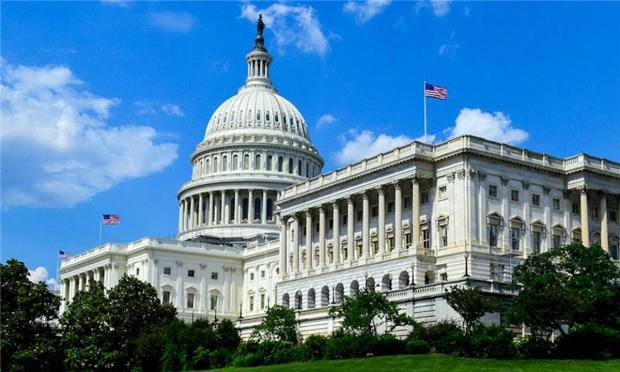
The Senate Agriculture Committee on Thursday (Jan. 29) morning voted 12–11, along party lines, to advance a major crypto market structure bill that would grant the Commodity Futures Trading Commission (CFTC) primary authority over spot trading in digital commodities.
Democrats, however, raised alarms about consumer protection and conflicts of interest; and the vote underscored a central tension around how far the legislation should go in constraining the industry.
Also on Thursday, the U.S. Securities and Exchange Commission (SEC) and CFTC held a jointly hosted event discussing regulatory harmonization in the “crypto era.” The message was deliberate and repeatedly reinforced: the era of dueling regulators, overlapping mandates and policy-by-enforcement across the digital asset sector is ending.
“Today’s markets do not divide neatly along regulatory lines. Trading, clearing, custody and risk management now flow across asset classes, technologies, and platforms… the turf war of years gone by must give way to a new era of cooperation,” said SEC Chairman Paul Atkins in his opening remarks.
Both Atkins and CFTC Chairman Michael Selig emphasized the need for clear lines between securities and commodities, consistent disclosure expectations and coordinated supervision that does not force firms to choose between regulators or jurisdictions.
The phrase “make the United States the crypto capital of the world” surfaced repeatedly.
See also: Why 2026 May Be Blockchain’s Maturity Test, Not Its Breakout Year
US Crypto Regulation Enters New Phase as SEC and CFTC Align
For more than a decade, U.S. crypto policy has been defined by fragmentation: overlapping jurisdictions, dueling enforcement actions and a regulatory vacuum filled largely by court rulings and staff guidance.
Thursday’s joint SEC and CFTC event was not about announcing final rules but about signaling alignment. Selig and Atkins framed harmonization as a prerequisite for American competitiveness, positioning regulatory clarity not as a concession to industry but as a strategic imperative.
We’d love to be your preferred source for news.
Please add us to your preferred sources list so our news, data and interviews show up in your feed. Thanks!
SEC Chair Atkins described the agencies as moving beyond conceptual debates toward operational frameworks, including joint rulemakings, coordinated examinations and shared data standards. CFTC Chair Selig echoed the point, arguing that market structure clarity must come before innovation can scale responsibly.
That market structure clarity, however, showed growing pains on Thursday during the Senate markup. Amendments that would have banned federal officials from issuing or endorsing digital assets, cracked down on crypto ATM fraud and prohibited bailouts for crypto firms were all rejected along party lines.
Complicating matters, the bill advanced by the Agriculture Committee represents only half of the puzzle. Provisions addressing securities regulation fall under the Senate Banking Committee’s jurisdiction and will need to be merged into a final package. That reconciliation process will test whether harmonization can survive partisan and jurisdictional divides.
See also: Crypto IPOs Are Getting Boring, and That’s the Point
Implications for Institutional Capital
On Monday (Feb. 2), the White House will convene closed-door talks with banking and cryptocurrency executives to address stalled crypto legislation, with a particular focus on interest and rewards paid on dollar-pegged stablecoins. The meeting, hosted by the White House’s crypto council, reflects growing concern that stablecoin policy could derail broader reform.
Banks argue that yield-bearing stablecoins blur the line between deposits and securities, potentially undermining prudential regulation and monetary transmission. Crypto firms counter that yield is a competitive feature necessary to attract users in a global market.
The significance of this week’s events lies less in any single announcement than in the cumulative signal they send. The SEC and CFTC’s joint posture, the Senate committee’s vote and the White House’s engagement all mark a turning point. Crypto policy in the United States is shifting from whether to regulate to how to regulate.
For banks and businesses, that shift is the most important signal of all. Regulatory ambiguity has been the single greatest barrier to participation. And for organizations interested in further education around the digital asset space and its opportunities, PYMNTS and Citigroup this month announced the launch of a weekly podcast series offering corporate leaders practical guidance on stablecoins and tokenized real-world assets.
“From the Block: Straight Talk on Stablecoins and Digital Assets for Corporate Leaders,” which debuted Jan. 13, will be co-hosted by PYMNTS CEO Karen Webster and Citi Global Head of Digital Assets, Treasury and Trade Solutions Ryan Rugg.


 Add as Preferred Source